
Personal Travel
Personal Travel


Albania

A M C MOBIL, vodafone
Pay As You Go
from
$
1.61
/GB
$10
POPULAR
$25
$50
$100
Select your starting balance
Get your eSIM
→

Your payment is fully secured |
Powered by

Rated
4.7


Install once, keep it on your phone.

Pay as you go, for actual use.

No fixed plans, no expiration.

Use balance only when you travel.

One eSIM for all trips, 200+ Countries.
Pay As You Go data, wherever you travel
💵 You add
$25
to your balance.
✈️ In
Albania
you use
3GB
at
$
1.61
/GB
.
🌍
United Arab Emirates
3 months later -
3GB at $
4.24
/GB.
🔥 Your same balance covers both trips -
one eSIM, no expiry, no wasted data, no new package.
Just $
1.61
per GB. No surprises, No bundles, No expiry.

Light Usage
~200 MB/day
$
0.00
/day
Maps, messaging, browsing

Moderate
~500 MB/day
$
0.00
/day

Heavy
~2 GB/day
$
0.00
/day
Streaming, uploads, video calls
Tirana: As the capital, Tirana offers strong and reliable 4G/LTE coverage across the city center, including Skanderbeg Square and the popular Blloku district. Public transport is primarily by bus, where the signal remains stable. Indoor coverage in modern cafes and hotels is excellent, though it can be slightly weaker in the basements of older, concrete-heavy buildings.
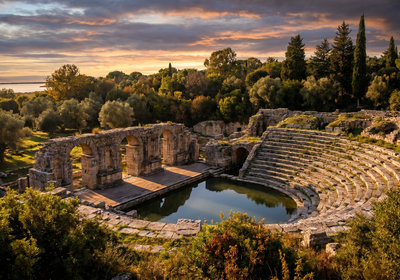
Durrës: Expect solid network performance along the extensive beach promenade and within the historical city center near the Roman Amphitheatre. Most hotels and restaurants provide good signal strength. Connectivity may be slightly reduced inside large port facilities or in the lower levels of some expansive seaside resorts.
Sarandë: This key tourist hub on the Albanian Riviera has dependable 4G coverage along its waterfront and in the main town. The connection holds up well for popular boat trips and visits to the nearby Ksamil beaches. You might notice weaker signals inside traditional stone guesthouses or when exploring more secluded coastal coves away from the city.
Shkodër: You'll find good connectivity in the city proper, along the shores of Lake Shkodra, and around the Rozafa Castle area. It's important for travelers to note that Shkodër is a gateway to the Albanian Alps- mobile service becomes very sparse and often unavailable once you venture into mountainous regions like Theth or Valbona National Parks.
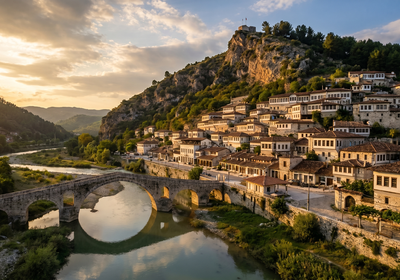
Berat: This UNESCO World Heritage city has consistent 4G coverage in its main districts, including the historic Mangalem and Gorica quarters. However, the signal can be intermittent when you are inside the ancient, thick stone walls of the Berat Castle (Kala) citadel or within some of the traditional stone houses.

Major Highways: Coverage is generally strong along the main A1 (Durrës-Kosovo border) and A3 (Tirana-Elbasan) motorways, though brief signal drops can occur in remote rural sections. The scenic SH8 coastal highway maintains good service in coastal towns like Vlorë and Sarandë, but the connection is often lost completely while crossing high-altitude areas like the Llogara Pass.
Albanian Railways (HSH): The national rail network is very limited, with infrequent service on its few operational lines. Cellular signal along these routes is highly unreliable and patchy, with long periods of no service between major towns. Do not expect a consistent connection while traveling by train.
Mountain Passes: Connectivity is extremely poor to non-existent when traversing Albania's numerous mountain passes. Expect total signal loss on key routes like Qafa e Llogarasë (on the SH8), Qafa e Thanës (on the SH3 near the North Macedonian border), and other high-altitude roads in the country's interior.
Major Tunnels: You will lose your mobile connection inside long tunnels. This is guaranteed for the Kalimash Tunnel on the A1 motorway and the Krrabë Tunnel on the A3. Service resumes promptly after exiting the tunnel structure.
Northern Albanian Alps: The remote mountainous region in the north, including the popular Valbona and Theth National Parks, has extremely sparse coverage. Service is typically only found within the main villages and is completely absent on the famous Valbona-Theth hiking trail and in most surrounding valleys.
How it works
Buy eSIM
Sign up and get your Global eSIM in just a few clicks.

Activate eSIM
Scan the QR code and get connected instantly — no physical SIM needed.

Pay as you go
Only pay for what you use. No contracts, no hidden fees.

Get your eSIM
“
I loved the per-country pricing model. I only paid for the countries I visited, and it was way cheaper than other eSIM providers. No hidden fees — just clear and simple.
“
The auto top-up feature is a lifesaver. I never have to check my balance — internet just works. And when I’m not traveling, I don’t pay. It’s fair and super convenient.


Angel Siphron
Rated
4.7


Bcengi charges $1.61 per gigabyte when operating on vodafone networks. You are billed solely for the data you consume, with no required bundles or minimum spending.
No. Bcengi functions alongside your current SIM card, leveraging dual-SIM capabilities. You can keep using your primary SIM for calls and text messages.
Yes, if your specific device supports eSIM technology (which includes most smartphones released from 2019 onward). You can verify compatibility at bcengi.com/travelpass/esim-compatibility.
Coverage is dependent on vodafone's existing network infrastructure. While major urban centers and popular tourist spots generally offer robust signal, more secluded regions might experience limited service.
Most travelers typically use between 500 MB and 2 GB of data daily. A week of moderate usage would cost approximately $5.64, based on pay-as-you-go rates.
Absolutely. A single Bcengi eSIM can be used in over 200 countries worldwide. Your existing balance rolls over, eliminating the need to purchase a new eSIM for each different destination.
You can top up your balance at any time by visiting travel.bcengi.com, or activate the auto-refill option to ensure your service is uninterrupted.
No. Your Bcengi balance never expires; it remains valid indefinitely, whether you decide to use it next week or next year.

$
1.61
/GB

Instant delivery

No expiry

24/7 support

Secure checkout

Pay As You Go
from
$
1.61
/GB
$10
POPULAR
$25
$50
$100
Select your starting balance
Get your eSIM
→

Secure Payments |
Powered by

Rated
4.7


💵 You add
$25
to your balance.
✈️ In
Albania
you use
3GB
at
$
1.61
/GB
.
🌍
United Arab Emirates
3 months later -
3GB at $
4.24
/GB.
🔥 Your same balance covers both trips — one eSIM, no expiry, no wasted data, no new package.
How it works


Install once, keep it on your phone

Use balance only when you travel

Pay as you go, for actual use.

No fixed plans, no expiration

One eSIM for all trips, 200+ Countries.
Learn more
Just $
1.61
per GB.
No surprises, No bundles, No expiry.

Light Usage •
200 MB/day
$
0.00
/day
Maps, messaging, browsing

Moderate •
500 MB/day
$
0.00
/day

Heavy •
2 GB/day
$
0.00
/day
Streaming, uploads, video calls
Tirana: As the capital, Tirana offers strong and reliable 4G/LTE coverage across the city center, including Skanderbeg Square and the popular Blloku district. Public transport is primarily by bus, where the signal remains stable. Indoor coverage in modern cafes and hotels is excellent, though it can be slightly weaker in the basements of older, concrete-heavy buildings.
Durrës: Expect solid network performance along the extensive beach promenade and within the historical city center near the Roman Amphitheatre. Most hotels and restaurants provide good signal strength. Connectivity may be slightly reduced inside large port facilities or in the lower levels of some expansive seaside resorts.
Sarandë: This key tourist hub on the Albanian Riviera has dependable 4G coverage along its waterfront and in the main town. The connection holds up well for popular boat trips and visits to the nearby Ksamil beaches. You might notice weaker signals inside traditional stone guesthouses or when exploring more secluded coastal coves away from the city.
Shkodër: You'll find good connectivity in the city proper, along the shores of Lake Shkodra, and around the Rozafa Castle area. It's important for travelers to note that Shkodër is a gateway to the Albanian Alps- mobile service becomes very sparse and often unavailable once you venture into mountainous regions like Theth or Valbona National Parks.
Berat: This UNESCO World Heritage city has consistent 4G coverage in its main districts, including the historic Mangalem and Gorica quarters. However, the signal can be intermittent when you are inside the ancient, thick stone walls of the Berat Castle (Kala) citadel or within some of the traditional stone houses.
Major Highways: Coverage is generally strong along the main A1 (Durrës-Kosovo border) and A3 (Tirana-Elbasan) motorways, though brief signal drops can occur in remote rural sections. The scenic SH8 coastal highway maintains good service in coastal towns like Vlorë and Sarandë, but the connection is often lost completely while crossing high-altitude areas like the Llogara Pass.
Albanian Railways (HSH): The national rail network is very limited, with infrequent service on its few operational lines. Cellular signal along these routes is highly unreliable and patchy, with long periods of no service between major towns. Do not expect a consistent connection while traveling by train.
Mountain Passes: Connectivity is extremely poor to non-existent when traversing Albania's numerous mountain passes. Expect total signal loss on key routes like Qafa e Llogarasë (on the SH8), Qafa e Thanës (on the SH3 near the North Macedonian border), and other high-altitude roads in the country's interior.
Major Tunnels: You will lose your mobile connection inside long tunnels. This is guaranteed for the Kalimash Tunnel on the A1 motorway and the Krrabë Tunnel on the A3. Service resumes promptly after exiting the tunnel structure.
Northern Albanian Alps: The remote mountainous region in the north, including the popular Valbona and Theth National Parks, has extremely sparse coverage. Service is typically only found within the main villages and is completely absent on the famous Valbona-Theth hiking trail and in most surrounding valleys.
Learn more about
Albania
How it works

1. Buy eSIM
Sign up and get your Global eSIM in just a few clicks.

2. Activate eSIM
Scan the QR code and get connected instantly — no physical SIM needed.

3. Pay as you go
Only pay for what you use. No contracts, no hidden fees.
Get your eSIM
Rated
4.7
“
I loved the per-country pricing model. I only paid for the countries I visited, and it was way cheaper than other eSIM providers. No hidden fees — just clear and simple.


Kaylynn Mango


Bcengi charges $1.61 per gigabyte when operating on vodafone networks. You are billed solely for the data you consume, with no required bundles or minimum spending.
No. Bcengi functions alongside your current SIM card, leveraging dual-SIM capabilities. You can keep using your primary SIM for calls and text messages.
Yes, if your specific device supports eSIM technology (which includes most smartphones released from 2019 onward). You can verify compatibility at bcengi.com/travelpass/esim-compatibility.
Coverage is dependent on vodafone's existing network infrastructure. While major urban centers and popular tourist spots generally offer robust signal, more secluded regions might experience limited service.
Most travelers typically use between 500 MB and 2 GB of data daily. A week of moderate usage would cost approximately $5.64, based on pay-as-you-go rates.
Absolutely. A single Bcengi eSIM can be used in over 200 countries worldwide. Your existing balance rolls over, eliminating the need to purchase a new eSIM for each different destination.
You can top up your balance at any time by visiting travel.bcengi.com, or activate the auto-refill option to ensure your service is uninterrupted.
No. Your Bcengi balance never expires; it remains valid indefinitely, whether you decide to use it next week or next year.
$
1.61
/GB
Instant delivery

No expiry
24/7 support
Secure checkout

Bcengi TravelPass keeps you connected worldwide with one reusable eSIM - no expirations, no wasted data.


Settings
English

USD


Bcengi TravelPass keeps you connected worldwide with one reusable eSIM - no expirations, no wasted data.



Secure Payments | Powered by