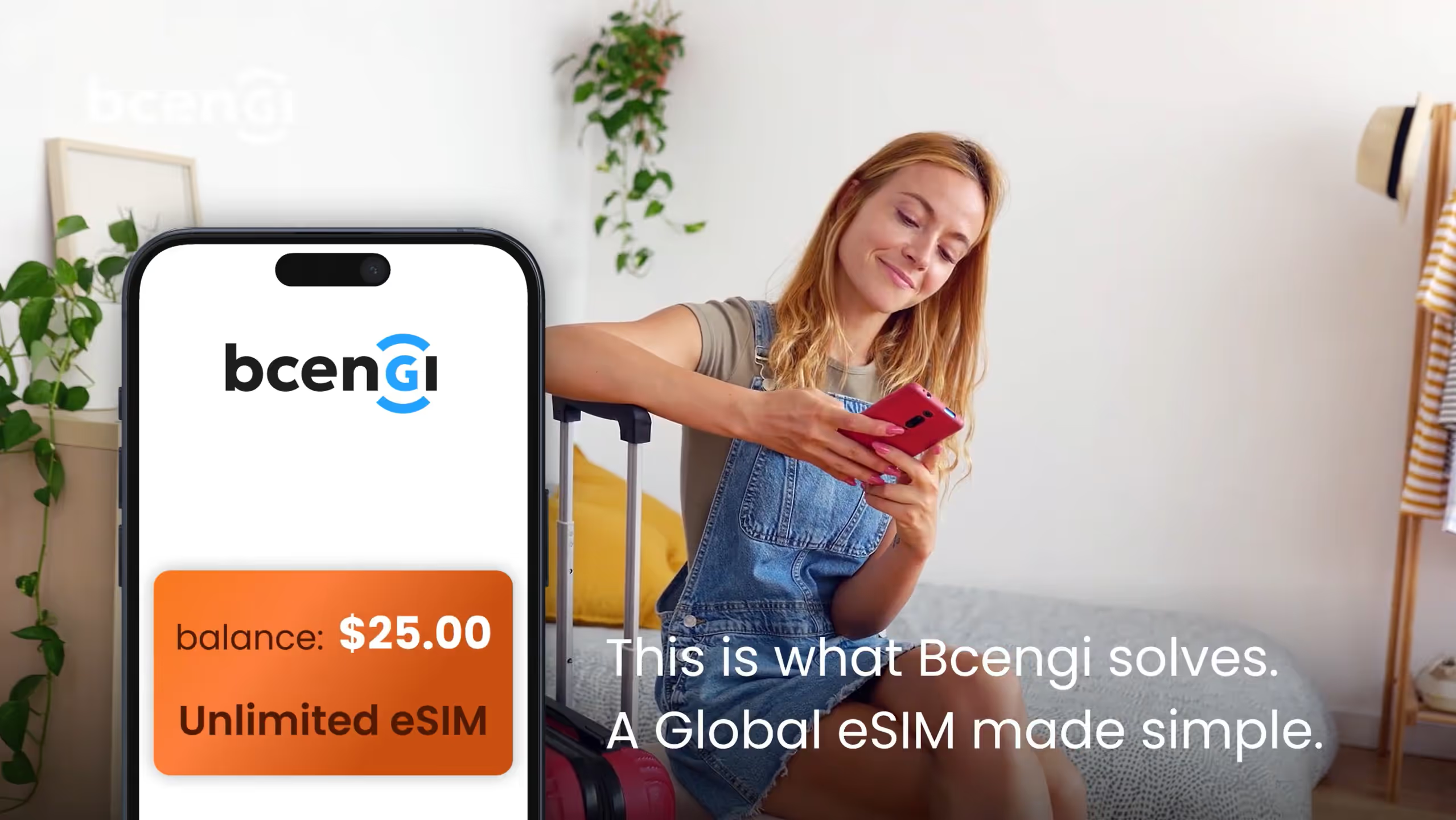

Personal Travel
Personal Travel



Azerbaijan

BAKCELL GSM 2000, Nar Mobile
Pay As You Go
from
$
3.89
/GB
$10
POPULAR
$25
$50
$100
Select your starting balance
Get your eSIM
→

Your payment is fully secured |
Powered by

Rated
4.7


Install once, keep it on your phone.

Pay as you go, for actual use.

No fixed plans, no expiration.

Use balance only when you travel.

One eSIM for all trips, 200+ Countries.
Pay As You Go data, wherever you travel
💵 You add
$25
to your balance.
✈️ In
Azerbaijan
you use
3GB
at
$
3.89
/GB
.
🌍
Italy
3 months later -
3GB at $
1.19
/GB.
🔥 Your same balance covers both trips -
one eSIM, no expiry, no wasted data, no new package.
Just $
3.89
per GB. No surprises, No bundles, No expiry.

Light Usage
~200 MB/day
$
0.00
/day
Maps, messaging, browsing

Moderate
~500 MB/day
$
0.00
/day

Heavy
~2 GB/day
$
0.00
/day
Streaming, uploads, video calls
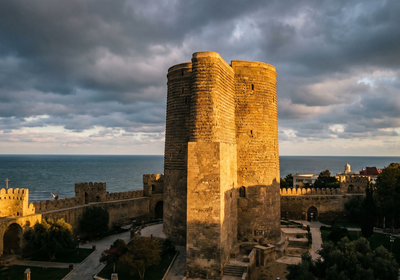
Baku: Strong 4G/LTE and emerging 5G coverage is available across the city center, including the Icherisheher (Old City) and the waterfront Baku Boulevard. The Baku Metro offers reliable connectivity on platforms and in most stations, though the signal can be intermittent while moving through deeper tunnels between stops. Indoor coverage in dense, Soviet-era apartment blocks or basements can sometimes be less consistent.
Ganja: Azerbaijan's second city has dependable 4G coverage throughout its main urban and commercial areas. You can expect a stable connection for maps and browsing in the city center. Performance may be slightly reduced inside buildings with very thick walls or on the immediate rural periphery.
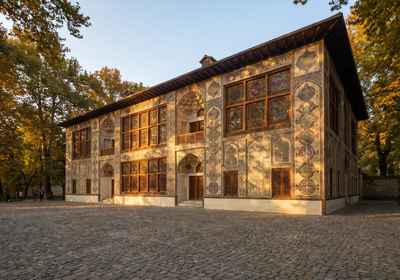
Sheki: This historic mountain town has good 4G service in the main tourist areas, such as around the Palace of the Sheki Khans and the central market. Due to the mountainous terrain, the signal can become weaker or drop to 3G as you travel into the surrounding villages and valleys. Indoor coverage in traditional stone guesthouses can also be variable.
Gabala: As a popular resort hub, Gabala provides excellent 4G connectivity around its main hotels, the town center, and attractions like the Tufandag Mountain Resort. The network is strong in these developed zones, but be prepared for the signal to weaken significantly if you venture onto more remote hiking trails in the surrounding Caucasus Mountains.
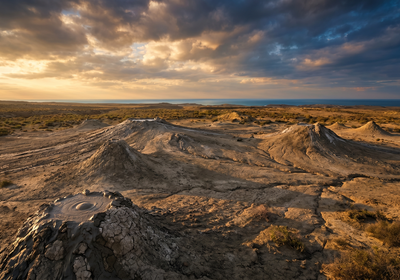
Major Highways (M1, M2): Coverage is generally strong along the main M1 (Baku-Quba-Russia border) and M2 (Baku-Ganja-Georgia border) highways, especially near major cities. Expect intermittent signal drops in more sparsely populated sections between urban centers, particularly on the stretches through the semi-desert plains of central Azerbaijan.
Azerbaijan Railways (ADY): The key Baku-Ganja intercity line maintains reliable connectivity for most of the journey, as does the Baku-Sumgait commuter route. On lines extending to more remote areas, such as the routes towards the Georgian or Iranian borders, the signal can become less stable between stations.
Greater Caucasus Mountains: Mobile service is significantly reduced or completely absent when traveling in the mountainous northern regions around Quba, Qusar, and Sheki. Roads through high passes and deep valleys, especially the route to remote villages like Khinalig, will have long periods with no signal.
Karabakh and Surrounding Regions: As infrastructure is actively being rebuilt, cellular coverage is inconsistent. While service is improving in urban centers like Shusha, expect very spotty or non-existent signals in rural areas, on mountain roads, and in the Lachin district.
Talysh Mountains: The coastal M3 highway towards Lankaran and the Iranian border has good coverage, but the signal weakens considerably when traveling inland into the dense forests of Hirkan National Park and the Talysh Mountains.
How it works
Buy eSIM
Sign up and get your Global eSIM in just a few clicks.

Activate eSIM
Scan the QR code and get connected instantly — no physical SIM needed.

Pay as you go
Only pay for what you use. No contracts, no hidden fees.

Get your eSIM
“
I loved the per-country pricing model. I only paid for the countries I visited, and it was way cheaper than other eSIM providers. No hidden fees — just clear and simple.
“
The auto top-up feature is a lifesaver. I never have to check my balance — internet just works. And when I’m not traveling, I don’t pay. It’s fair and super convenient.


Angel Siphron
Rated
4.7


Bcengi charges $3.89 per gigabyte when utilizing the BAKCELL GSM 2000 and Nar Mobile networks. You are only billed for the data you consume, with no mandatory bundles or minimum expenditure required.
No. Bcengi operates concurrently with your current SIM through its dual-SIM technology. You can keep your standard SIM card active for making calls and sending text messages.
Yes, provided your device supports eSIM technology (this includes most smartphone models released from 2019 onwards). For compatibility verification, please visit bcengi.com/travelpass/esim-compatibility.
Coverage depends on the network infrastructure provided by BAKCELL GSM 2000 and Nar Mobile. Major cities and popular tourist destinations typically offer robust signal strength. However, more isolated regions may experience limited service.
Most travelers use between 500 MB and 2 GB of data daily. A moderate week of usage would cost approximately $13.62 based on pay-as-you-go rates.
Yes. A single Bcengi eSIM is functional in over 200 countries. Your remaining balance rolls over, so there is no need to purchase a new eSIM for each subsequent destination.
You have the option to add more funds at any time by visiting travel.bcengi.com, or you can enable auto-refill to ensure your balance remains continuously active.
No. Your Bcengi balance does not expire, whether you plan to use it next week or at a later date in the future.

$
3.89
/GB

Instant delivery

No expiry

24/7 support

Secure checkout

Pay As You Go
from
$
3.89
/GB
$10
POPULAR
$25
$50
$100
Select your starting balance
Get your eSIM
→

Secure Payments |
Powered by

Rated
4.7


💵 You add
$25
to your balance.
✈️ In
Azerbaijan
you use
3GB
at
$
3.89
/GB
.
🌍
Italy
3 months later -
3GB at $
1.19
/GB.
🔥 Your same balance covers both trips — one eSIM, no expiry, no wasted data, no new package.
How it works


Install once, keep it on your phone

Use balance only when you travel

Pay as you go, for actual use.

No fixed plans, no expiration

One eSIM for all trips, 200+ Countries.
Learn more
Just $
3.89
per GB.
No surprises, No bundles, No expiry.

Light Usage •
200 MB/day
$
0.00
/day
Maps, messaging, browsing

Moderate •
500 MB/day
$
0.00
/day

Heavy •
2 GB/day
$
0.00
/day
Streaming, uploads, video calls
Baku: Strong 4G/LTE and emerging 5G coverage is available across the city center, including the Icherisheher (Old City) and the waterfront Baku Boulevard. The Baku Metro offers reliable connectivity on platforms and in most stations, though the signal can be intermittent while moving through deeper tunnels between stops. Indoor coverage in dense, Soviet-era apartment blocks or basements can sometimes be less consistent.
Ganja: Azerbaijan's second city has dependable 4G coverage throughout its main urban and commercial areas. You can expect a stable connection for maps and browsing in the city center. Performance may be slightly reduced inside buildings with very thick walls or on the immediate rural periphery.
Sheki: This historic mountain town has good 4G service in the main tourist areas, such as around the Palace of the Sheki Khans and the central market. Due to the mountainous terrain, the signal can become weaker or drop to 3G as you travel into the surrounding villages and valleys. Indoor coverage in traditional stone guesthouses can also be variable.
Gabala: As a popular resort hub, Gabala provides excellent 4G connectivity around its main hotels, the town center, and attractions like the Tufandag Mountain Resort. The network is strong in these developed zones, but be prepared for the signal to weaken significantly if you venture onto more remote hiking trails in the surrounding Caucasus Mountains.
Major Highways (M1, M2): Coverage is generally strong along the main M1 (Baku-Quba-Russia border) and M2 (Baku-Ganja-Georgia border) highways, especially near major cities. Expect intermittent signal drops in more sparsely populated sections between urban centers, particularly on the stretches through the semi-desert plains of central Azerbaijan.
Azerbaijan Railways (ADY): The key Baku-Ganja intercity line maintains reliable connectivity for most of the journey, as does the Baku-Sumgait commuter route. On lines extending to more remote areas, such as the routes towards the Georgian or Iranian borders, the signal can become less stable between stations.
Greater Caucasus Mountains: Mobile service is significantly reduced or completely absent when traveling in the mountainous northern regions around Quba, Qusar, and Sheki. Roads through high passes and deep valleys, especially the route to remote villages like Khinalig, will have long periods with no signal.
Karabakh and Surrounding Regions: As infrastructure is actively being rebuilt, cellular coverage is inconsistent. While service is improving in urban centers like Shusha, expect very spotty or non-existent signals in rural areas, on mountain roads, and in the Lachin district.
Talysh Mountains: The coastal M3 highway towards Lankaran and the Iranian border has good coverage, but the signal weakens considerably when traveling inland into the dense forests of Hirkan National Park and the Talysh Mountains.
Learn more about
Azerbaijan
How it works

1. Buy eSIM
Sign up and get your Global eSIM in just a few clicks.

2. Activate eSIM
Scan the QR code and get connected instantly — no physical SIM needed.

3. Pay as you go
Only pay for what you use. No contracts, no hidden fees.
Get your eSIM
Rated
4.7
“
I loved the per-country pricing model. I only paid for the countries I visited, and it was way cheaper than other eSIM providers. No hidden fees — just clear and simple.


Kaylynn Mango


Bcengi charges $3.89 per gigabyte when utilizing the BAKCELL GSM 2000 and Nar Mobile networks. You are only billed for the data you consume, with no mandatory bundles or minimum expenditure required.
No. Bcengi operates concurrently with your current SIM through its dual-SIM technology. You can keep your standard SIM card active for making calls and sending text messages.
Yes, provided your device supports eSIM technology (this includes most smartphone models released from 2019 onwards). For compatibility verification, please visit bcengi.com/travelpass/esim-compatibility.
Coverage depends on the network infrastructure provided by BAKCELL GSM 2000 and Nar Mobile. Major cities and popular tourist destinations typically offer robust signal strength. However, more isolated regions may experience limited service.
Most travelers use between 500 MB and 2 GB of data daily. A moderate week of usage would cost approximately $13.62 based on pay-as-you-go rates.
Yes. A single Bcengi eSIM is functional in over 200 countries. Your remaining balance rolls over, so there is no need to purchase a new eSIM for each subsequent destination.
You have the option to add more funds at any time by visiting travel.bcengi.com, or you can enable auto-refill to ensure your balance remains continuously active.
No. Your Bcengi balance does not expire, whether you plan to use it next week or at a later date in the future.
$
3.89
/GB
Instant delivery

No expiry
24/7 support
Secure checkout

Bcengi TravelPass keeps you connected worldwide with one reusable eSIM - no expirations, no wasted data.


Settings
English

USD


Bcengi TravelPass keeps you connected worldwide with one reusable eSIM - no expirations, no wasted data.



Secure Payments | Powered by