

Personal Travel
Personal Travel



Bangladesh

Banglalink
Pay As You Go
from
$
2.51
/GB
$10
POPULAR
$25
$50
$100
Select your starting balance
Get your eSIM
→

Your payment is fully secured |
Powered by

Rated
4.7


Install once, keep it on your phone.

Pay as you go, for actual use.

No fixed plans, no expiration.

Use balance only when you travel.

One eSIM for all trips, 200+ Countries.
Pay As You Go data, wherever you travel
💵 You add
$25
to your balance.
✈️ In
Bangladesh
you use
3GB
at
$
2.51
/GB
.
🌍
United Arab Emirates
3 months later -
3GB at $
4.24
/GB.
🔥 Your same balance covers both trips -
one eSIM, no expiry, no wasted data, no new package.
Just $
2.51
per GB. No surprises, No bundles, No expiry.

Light Usage
~200 MB/day
$
0.00
/day
Maps, messaging, browsing

Moderate
~500 MB/day
$
0.00
/day

Heavy
~2 GB/day
$
0.00
/day
Streaming, uploads, video calls
Dhaka: As the bustling capital, Dhaka offers extensive 4G and growing 5G coverage from all major networks, particularly in commercial hubs like Gulshan and Dhanmondi. The elevated Dhaka Metro Rail system maintains a consistent signal on its platforms and trains. However, indoor coverage can be less reliable deep inside large shopping malls or in the dense, narrow lanes of Old Dhaka (Puran Dhaka).
Chittagong: Bangladesh's main port city has strong and reliable 4G connectivity, especially in key business districts like Agrabad and GEC Circle. The city's hilly topography can occasionally lead to minor signal fluctuations in some residential neighborhoods. Coverage around popular spots like Patenga Sea Beach is generally excellent, though signal strength may weaken inside older, concrete market buildings.
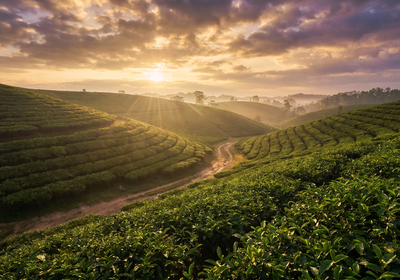
Sylhet: The city center of Sylhet provides dependable 4G service, ensuring good connectivity around major sites like the Shah Jalal Mazar. While the urban area is well-covered, travelers heading to nearby natural attractions such as the tea gardens or Jaflong will find that the signal can become intermittent and may drop to slower 3G or 2G speeds away from main towns and highways.
Cox's Bazar: Home to the world's longest natural sea beach, this top tourist destination has strong 4G coverage concentrated along the main hotel zones and the popular Laboni and Kolatoli beach points. During peak holiday seasons, networks can experience congestion, leading to slower data speeds. Connectivity becomes significantly less reliable when traveling to nearby areas like St. Martin's Island.
Khulna: This major southern city offers solid 4G network performance for everyday use within its urban limits. For travelers, Khulna's most important role is as the gateway to the Sundarbans mangrove forest. Be aware that once you venture deep into the Sundarbans by boat, mobile signal becomes extremely scarce and is often completely unavailable, so plan to be offline for your tour.

National Highways and Expressways: Major corridors like the N1 (Dhaka-Chittagong) and N8 (Dhaka-Khulna via the Padma Bridge) generally maintain strong 4G coverage in and around major cities and towns. However, in more rural agricultural sections between urban centers, the signal can weaken, occasionally dropping to 3G or becoming intermittent.
Bangladesh Railway: On intercity trains connecting hubs like Dhaka, Chittagong, and Sylhet, mobile signal is typically reliable when passing through or stopped at urban stations. In the vast rural landscapes between major stops, expect frequent connectivity gaps and unstable data speeds.
Chittagong Hill Tracts: Traveling by road in the southeastern hill regions, including the districts of Bandarban, Rangamati, and Khagrachari, involves significant and prolonged periods without a signal. Outside of the main district towns, mobile coverage is extremely limited or completely unavailable.
Major Bridges and Tunnels: While crossing long structures like the Padma Bridge or the Bangabandhu Bridge (Jamuna Bridge), connectivity is generally stable. However, when passing through the underwater Bangabandhu Sheikh Mujibur Rahman Tunnel (Karnaphuli Tunnel) in Chittagong, you may experience a temporary loss of signal.
The Sundarbans and Riverine Areas: As a protected mangrove forest, the Sundarbans in the southwest has virtually no mobile network coverage, a common situation for remote wilderness areas. Similarly, connectivity is very sparse in the 'haor' wetland regions of the northeast and on remote 'char' river islands, particularly when traveling by boat.
How it works
Buy eSIM
Sign up and get your Global eSIM in just a few clicks.

Activate eSIM
Scan the QR code and get connected instantly — no physical SIM needed.

Pay as you go
Only pay for what you use. No contracts, no hidden fees.

Get your eSIM
“
I loved the per-country pricing model. I only paid for the countries I visited, and it was way cheaper than other eSIM providers. No hidden fees — just clear and simple.
“
The auto top-up feature is a lifesaver. I never have to check my balance — internet just works. And when I’m not traveling, I don’t pay. It’s fair and super convenient.


Angel Siphron
Rated
4.7


Bcengi offers data for $2.51 per gigabyte when connected to Banglalink networks. You are billed exclusively for your actual data usage, meaning there are no fixed bundles or required minimum spending.
No, there's no need. Bcengi functions in conjunction with your current SIM card, utilizing dual-SIM technology. You can continue to use your regular SIM for voice calls and text messages.
Yes, you can use it if your device supports eSIM capabilities (this applies to most smartphones manufactured from 2019 onwards). To confirm compatibility, please check bcengi.com/travelpass/esim-compatibility.
Coverage availability is determined by the Banglalink network infrastructure. Strong signal is typically found in major urban centers and popular tourist locations. Conversely, more isolated regions may experience reduced signal strength.
Most visitors consume between 500 MB and 2 GB of data daily. A week of moderate usage would incur a cost of approximately $8.79 under pay-as-you-go rates.
Yes, entirely. A single Bcengi eSIM provides service in over 200 countries. Your existing balance automatically carries forward, so there's no necessity to acquire a new eSIM for each country you visit.
You have the flexibility to top up your account at any time via travel.bcengi.com. Alternatively, you can activate the auto-refill function to guarantee your balance never depletes.
No, your Bcengi balance remains valid without an expiration date. It will be available for use whether you access it next week or even next year.

$
2.51
/GB

Instant delivery

No expiry

24/7 support

Secure checkout

Pay As You Go
from
$
2.51
/GB
$10
POPULAR
$25
$50
$100
Select your starting balance
Get your eSIM
→

Secure Payments |
Powered by

Rated
4.7


💵 You add
$25
to your balance.
✈️ In
Bangladesh
you use
3GB
at
$
2.51
/GB
.
🌍
United Arab Emirates
3 months later -
3GB at $
4.24
/GB.
🔥 Your same balance covers both trips — one eSIM, no expiry, no wasted data, no new package.
How it works


Install once, keep it on your phone

Use balance only when you travel

Pay as you go, for actual use.

No fixed plans, no expiration

One eSIM for all trips, 200+ Countries.
Learn more
Just $
2.51
per GB.
No surprises, No bundles, No expiry.

Light Usage •
200 MB/day
$
0.00
/day
Maps, messaging, browsing

Moderate •
500 MB/day
$
0.00
/day

Heavy •
2 GB/day
$
0.00
/day
Streaming, uploads, video calls
Dhaka: As the bustling capital, Dhaka offers extensive 4G and growing 5G coverage from all major networks, particularly in commercial hubs like Gulshan and Dhanmondi. The elevated Dhaka Metro Rail system maintains a consistent signal on its platforms and trains. However, indoor coverage can be less reliable deep inside large shopping malls or in the dense, narrow lanes of Old Dhaka (Puran Dhaka).
Chittagong: Bangladesh's main port city has strong and reliable 4G connectivity, especially in key business districts like Agrabad and GEC Circle. The city's hilly topography can occasionally lead to minor signal fluctuations in some residential neighborhoods. Coverage around popular spots like Patenga Sea Beach is generally excellent, though signal strength may weaken inside older, concrete market buildings.
Sylhet: The city center of Sylhet provides dependable 4G service, ensuring good connectivity around major sites like the Shah Jalal Mazar. While the urban area is well-covered, travelers heading to nearby natural attractions such as the tea gardens or Jaflong will find that the signal can become intermittent and may drop to slower 3G or 2G speeds away from main towns and highways.
Cox's Bazar: Home to the world's longest natural sea beach, this top tourist destination has strong 4G coverage concentrated along the main hotel zones and the popular Laboni and Kolatoli beach points. During peak holiday seasons, networks can experience congestion, leading to slower data speeds. Connectivity becomes significantly less reliable when traveling to nearby areas like St. Martin's Island.
Khulna: This major southern city offers solid 4G network performance for everyday use within its urban limits. For travelers, Khulna's most important role is as the gateway to the Sundarbans mangrove forest. Be aware that once you venture deep into the Sundarbans by boat, mobile signal becomes extremely scarce and is often completely unavailable, so plan to be offline for your tour.
National Highways and Expressways: Major corridors like the N1 (Dhaka-Chittagong) and N8 (Dhaka-Khulna via the Padma Bridge) generally maintain strong 4G coverage in and around major cities and towns. However, in more rural agricultural sections between urban centers, the signal can weaken, occasionally dropping to 3G or becoming intermittent.
Bangladesh Railway: On intercity trains connecting hubs like Dhaka, Chittagong, and Sylhet, mobile signal is typically reliable when passing through or stopped at urban stations. In the vast rural landscapes between major stops, expect frequent connectivity gaps and unstable data speeds.
Chittagong Hill Tracts: Traveling by road in the southeastern hill regions, including the districts of Bandarban, Rangamati, and Khagrachari, involves significant and prolonged periods without a signal. Outside of the main district towns, mobile coverage is extremely limited or completely unavailable.
Major Bridges and Tunnels: While crossing long structures like the Padma Bridge or the Bangabandhu Bridge (Jamuna Bridge), connectivity is generally stable. However, when passing through the underwater Bangabandhu Sheikh Mujibur Rahman Tunnel (Karnaphuli Tunnel) in Chittagong, you may experience a temporary loss of signal.
The Sundarbans and Riverine Areas: As a protected mangrove forest, the Sundarbans in the southwest has virtually no mobile network coverage, a common situation for remote wilderness areas. Similarly, connectivity is very sparse in the 'haor' wetland regions of the northeast and on remote 'char' river islands, particularly when traveling by boat.
Learn more about
Bangladesh
How it works

1. Buy eSIM
Sign up and get your Global eSIM in just a few clicks.

2. Activate eSIM
Scan the QR code and get connected instantly — no physical SIM needed.

3. Pay as you go
Only pay for what you use. No contracts, no hidden fees.
Get your eSIM
Rated
4.7
“
I loved the per-country pricing model. I only paid for the countries I visited, and it was way cheaper than other eSIM providers. No hidden fees — just clear and simple.


Kaylynn Mango


Bcengi offers data for $2.51 per gigabyte when connected to Banglalink networks. You are billed exclusively for your actual data usage, meaning there are no fixed bundles or required minimum spending.
No, there's no need. Bcengi functions in conjunction with your current SIM card, utilizing dual-SIM technology. You can continue to use your regular SIM for voice calls and text messages.
Yes, you can use it if your device supports eSIM capabilities (this applies to most smartphones manufactured from 2019 onwards). To confirm compatibility, please check bcengi.com/travelpass/esim-compatibility.
Coverage availability is determined by the Banglalink network infrastructure. Strong signal is typically found in major urban centers and popular tourist locations. Conversely, more isolated regions may experience reduced signal strength.
Most visitors consume between 500 MB and 2 GB of data daily. A week of moderate usage would incur a cost of approximately $8.79 under pay-as-you-go rates.
Yes, entirely. A single Bcengi eSIM provides service in over 200 countries. Your existing balance automatically carries forward, so there's no necessity to acquire a new eSIM for each country you visit.
You have the flexibility to top up your account at any time via travel.bcengi.com. Alternatively, you can activate the auto-refill function to guarantee your balance never depletes.
No, your Bcengi balance remains valid without an expiration date. It will be available for use whether you access it next week or even next year.
$
2.51
/GB
Instant delivery

No expiry
24/7 support
Secure checkout

Bcengi TravelPass keeps you connected worldwide with one reusable eSIM - no expirations, no wasted data.


Settings
English

USD


Bcengi TravelPass keeps you connected worldwide with one reusable eSIM - no expirations, no wasted data.



Secure Payments | Powered by