
Personal Travel
Personal Travel


Costa Rica

Claro CR
Pay As You Go
from
$
4.86
/GB
$10
POPULAR
$25
$50
$100
Select your starting balance
Get your eSIM
→

Your payment is fully secured |
Powered by

Rated
4.7


Install once, keep it on your phone.

Pay as you go, for actual use.

No fixed plans, no expiration.

Use balance only when you travel.

One eSIM for all trips, 200+ Countries.
Pay As You Go data, wherever you travel
💵 You add
$25
to your balance.
✈️ In
Costa Rica
you use
3GB
at
$
4.86
/GB
.
🌍
United States
3 months later -
3GB at $
1.68
/GB.
🔥 Your same balance covers both trips -
one eSIM, no expiry, no wasted data, no new package.
Just $
4.86
per GB. No surprises, No bundles, No expiry.

Light Usage
~200 MB/day
$
0.00
/day
Maps, messaging, browsing

Moderate
~500 MB/day
$
0.00
/day

Heavy
~2 GB/day
$
0.00
/day
Streaming, uploads, video calls
San José: As the nation's capital, the Central Valley enjoys Costa Rica's most robust 4G and LTE coverage. Signal is strong across downtown, popular districts like Escazú and Barrio Escalante, and at Juan Santamaría International Airport (SJO). Indoor coverage in hotels and malls is generally good. The inter-urban train system is entirely above-ground, providing a consistent signal during travel between cities like Heredia and Cartago.
La Fortuna: In the town center, the base for visiting Arenal Volcano, you'll find reliable 4G service. Connectivity becomes less predictable as you venture out to the area's famous hot springs, remote eco-lodges, and hiking trails. Expect signal to be spotty or non-existent in dense rainforest sections and on the higher slopes of the volcano.
Tamarindo: This bustling Guanacaste beach town has strong 4G and LTE coverage along its main strip and popular beachfront areas. Most hotels and restaurants offer good indoor reception. The signal may weaken if you travel to more isolated beaches or into the rural countryside just outside the immediate town limits.
Manuel Antonio & Quepos: The service town of Quepos and the main road through the tourist area of Manuel Antonio have dependable 4G coverage. Inside Manuel Antonio National Park itself, the signal is inconsistent- you will likely have service near the entrance and on the main, crowded beaches, but it drops off quickly on the less-trafficked jungle trails.
Puerto Viejo de Talamanca: This Caribbean hotspot has solid 4G coverage in the main town area and along the coastal road to nearby beaches like Playa Cocles. However, the signal can be less reliable inside buildings with thick walls and will degrade significantly as you head inland or towards more remote areas like the Gandoca-Manzanillo Wildlife Refuge.
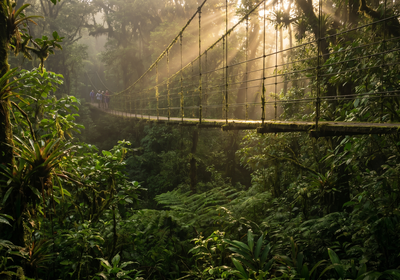


Major Highways: Coverage is strong along Route 27 (Autopista José María Castro Madriz) connecting San José to the Pacific coast and on the Inter-American Highway (Route 1) within the Central Valley. Expect frequent signal drops and dead zones on Route 32 through the dense rainforest of Braulio Carrillo National Park and on the Inter-American Highway (Route 2) over the high-altitude Cerro de la Muerte.
Incofer Commuter Train: This rail system operates primarily within the Greater Metropolitan Area, linking San José, Heredia, Alajuela, and Cartago. Because it travels through the most populated part of the country, cellular service is consistently reliable for the entire duration of these short-distance trips.
Mountain Passes: Driving through high-altitude areas will result in significant signal loss. The pass over Cerro de la Muerte (Route 2) is a well-known dead zone where connectivity is unavailable for long stretches. Similarly, roads through the Tilarán Mountain Range near Monteverde and Arenal have intermittent and unreliable service between towns.
Highway Tunnels: You will lose all mobile signal when transiting through the Zurquí Tunnel on Route 32. Service drops upon entry and is restored only after exiting the tunnel. Shorter tunnels on other routes will also cause brief but complete interruptions in connectivity.
Remote Regions: Expect very limited to no service in large parts of the Osa Peninsula, particularly within Corcovado National Park. The Nicoya Peninsula also has spotty coverage away from main tourist towns like Santa Teresa or Tamarindo. Rural areas along the northern border with Nicaragua often lack consistent signal.
How it works
Buy eSIM
Sign up and get your Global eSIM in just a few clicks.

Activate eSIM
Scan the QR code and get connected instantly — no physical SIM needed.

Pay as you go
Only pay for what you use. No contracts, no hidden fees.

Get your eSIM
“
I loved the per-country pricing model. I only paid for the countries I visited, and it was way cheaper than other eSIM providers. No hidden fees — just clear and simple.
“
The auto top-up feature is a lifesaver. I never have to check my balance — internet just works. And when I’m not traveling, I don’t pay. It’s fair and super convenient.


Angel Siphron
Rated
4.7


On Claro CR networks, Bcengi's data is priced at $4.86 per gigabyte. Billing is solely for the data you actively use, with no requirement for bundles or minimum purchase amounts.
No, there's no need to. Bcengi functions simultaneously with your current physical SIM due to dual-SIM technology. Your original SIM can remain in your device for making calls and sending texts.
Yes, provided your specific device supports eSIM capabilities (a feature found in most phones manufactured from 2019 onwards). You can verify compatibility by visiting bcengi.com/travelpass/esim-compatibility.
Coverage for eSIM in Costa Rica relies on the existing Claro CR network infrastructure. Generally, major urban centers and popular tourist spots benefit from robust signal. Conversely, remote locations might experience restricted or weaker signal availability.
Most visitors consume between 500 MB and 2 GB of data daily. A week of average usage would cost roughly $17.01 under the pay-as-you-go model.
Yes. A single Bcengi eSIM is compatible for use across more than 200 countries. Your existing balance automatically transfers, meaning you won't need to purchase a separate eSIM for each new destination.
You have the option to add more funds at any point by visiting travel.bcengi.com, or you can activate auto-refill to ensure your balance is continuously maintained.
No. Your Bcengi balance has no expiration date, remaining valid indefinitely whether you utilize it shortly or in the distant future.

$
4.86
/GB

Instant delivery

No expiry

24/7 support

Secure checkout

Pay As You Go
from
$
4.86
/GB
$10
POPULAR
$25
$50
$100
Select your starting balance
Get your eSIM
→

Secure Payments |
Powered by

Rated
4.7


💵 You add
$25
to your balance.
✈️ In
Costa Rica
you use
3GB
at
$
4.86
/GB
.
🌍
United States
3 months later -
3GB at $
1.68
/GB.
🔥 Your same balance covers both trips — one eSIM, no expiry, no wasted data, no new package.
How it works


Install once, keep it on your phone

Use balance only when you travel

Pay as you go, for actual use.

No fixed plans, no expiration

One eSIM for all trips, 200+ Countries.
Learn more
Just $
4.86
per GB.
No surprises, No bundles, No expiry.

Light Usage •
200 MB/day
$
0.00
/day
Maps, messaging, browsing

Moderate •
500 MB/day
$
0.00
/day

Heavy •
2 GB/day
$
0.00
/day
Streaming, uploads, video calls
San José: As the nation's capital, the Central Valley enjoys Costa Rica's most robust 4G and LTE coverage. Signal is strong across downtown, popular districts like Escazú and Barrio Escalante, and at Juan Santamaría International Airport (SJO). Indoor coverage in hotels and malls is generally good. The inter-urban train system is entirely above-ground, providing a consistent signal during travel between cities like Heredia and Cartago.
La Fortuna: In the town center, the base for visiting Arenal Volcano, you'll find reliable 4G service. Connectivity becomes less predictable as you venture out to the area's famous hot springs, remote eco-lodges, and hiking trails. Expect signal to be spotty or non-existent in dense rainforest sections and on the higher slopes of the volcano.
Tamarindo: This bustling Guanacaste beach town has strong 4G and LTE coverage along its main strip and popular beachfront areas. Most hotels and restaurants offer good indoor reception. The signal may weaken if you travel to more isolated beaches or into the rural countryside just outside the immediate town limits.
Manuel Antonio & Quepos: The service town of Quepos and the main road through the tourist area of Manuel Antonio have dependable 4G coverage. Inside Manuel Antonio National Park itself, the signal is inconsistent- you will likely have service near the entrance and on the main, crowded beaches, but it drops off quickly on the less-trafficked jungle trails.
Puerto Viejo de Talamanca: This Caribbean hotspot has solid 4G coverage in the main town area and along the coastal road to nearby beaches like Playa Cocles. However, the signal can be less reliable inside buildings with thick walls and will degrade significantly as you head inland or towards more remote areas like the Gandoca-Manzanillo Wildlife Refuge.
Major Highways: Coverage is strong along Route 27 (Autopista José María Castro Madriz) connecting San José to the Pacific coast and on the Inter-American Highway (Route 1) within the Central Valley. Expect frequent signal drops and dead zones on Route 32 through the dense rainforest of Braulio Carrillo National Park and on the Inter-American Highway (Route 2) over the high-altitude Cerro de la Muerte.
Incofer Commuter Train: This rail system operates primarily within the Greater Metropolitan Area, linking San José, Heredia, Alajuela, and Cartago. Because it travels through the most populated part of the country, cellular service is consistently reliable for the entire duration of these short-distance trips.
Mountain Passes: Driving through high-altitude areas will result in significant signal loss. The pass over Cerro de la Muerte (Route 2) is a well-known dead zone where connectivity is unavailable for long stretches. Similarly, roads through the Tilarán Mountain Range near Monteverde and Arenal have intermittent and unreliable service between towns.
Highway Tunnels: You will lose all mobile signal when transiting through the Zurquí Tunnel on Route 32. Service drops upon entry and is restored only after exiting the tunnel. Shorter tunnels on other routes will also cause brief but complete interruptions in connectivity.
Remote Regions: Expect very limited to no service in large parts of the Osa Peninsula, particularly within Corcovado National Park. The Nicoya Peninsula also has spotty coverage away from main tourist towns like Santa Teresa or Tamarindo. Rural areas along the northern border with Nicaragua often lack consistent signal.
Learn more about
Costa Rica
How it works

1. Buy eSIM
Sign up and get your Global eSIM in just a few clicks.

2. Activate eSIM
Scan the QR code and get connected instantly — no physical SIM needed.

3. Pay as you go
Only pay for what you use. No contracts, no hidden fees.
Get your eSIM
Rated
4.7
“
I loved the per-country pricing model. I only paid for the countries I visited, and it was way cheaper than other eSIM providers. No hidden fees — just clear and simple.


Kaylynn Mango


On Claro CR networks, Bcengi's data is priced at $4.86 per gigabyte. Billing is solely for the data you actively use, with no requirement for bundles or minimum purchase amounts.
No, there's no need to. Bcengi functions simultaneously with your current physical SIM due to dual-SIM technology. Your original SIM can remain in your device for making calls and sending texts.
Yes, provided your specific device supports eSIM capabilities (a feature found in most phones manufactured from 2019 onwards). You can verify compatibility by visiting bcengi.com/travelpass/esim-compatibility.
Coverage for eSIM in Costa Rica relies on the existing Claro CR network infrastructure. Generally, major urban centers and popular tourist spots benefit from robust signal. Conversely, remote locations might experience restricted or weaker signal availability.
Most visitors consume between 500 MB and 2 GB of data daily. A week of average usage would cost roughly $17.01 under the pay-as-you-go model.
Yes. A single Bcengi eSIM is compatible for use across more than 200 countries. Your existing balance automatically transfers, meaning you won't need to purchase a separate eSIM for each new destination.
You have the option to add more funds at any point by visiting travel.bcengi.com, or you can activate auto-refill to ensure your balance is continuously maintained.
No. Your Bcengi balance has no expiration date, remaining valid indefinitely whether you utilize it shortly or in the distant future.
$
4.86
/GB
Instant delivery

No expiry
24/7 support
Secure checkout

Bcengi TravelPass keeps you connected worldwide with one reusable eSIM - no expirations, no wasted data.


Settings
English

USD


Bcengi TravelPass keeps you connected worldwide with one reusable eSIM - no expirations, no wasted data.



Secure Payments | Powered by