
Personal Travel
Personal Travel


Guatemala

TIGO (former COMCEL)
Pay As You Go
from
$
4.44
/GB
$10
POPULAR
$25
$50
$100
Select your starting balance
Get your eSIM
→

Your payment is fully secured |
Powered by

Rated
4.7


Install once, keep it on your phone.

Pay as you go, for actual use.

No fixed plans, no expiration.

Use balance only when you travel.

One eSIM for all trips, 200+ Countries.
Pay As You Go data, wherever you travel
💵 You add
$25
to your balance.
✈️ In
Guatemala
you use
3GB
at
$
4.44
/GB
.
🌍
Peru
3 months later -
3GB at $
4.86
/GB.
🔥 Your same balance covers both trips -
one eSIM, no expiry, no wasted data, no new package.
Just $
4.44
per GB. No surprises, No bundles, No expiry.

Light Usage
~200 MB/day
$
0.00
/day
Maps, messaging, browsing

Moderate
~500 MB/day
$
0.00
/day

Heavy
~2 GB/day
$
0.00
/day
Streaming, uploads, video calls
Guatemala City: You'll find strong 4G/LTE coverage across most of the capital's zones, particularly in business and tourist districts like Zona 10 (Zona Viva) and around La Aurora International Airport. The Transmetro bus system offers consistent connectivity along its surface-level routes. Indoor reception is generally reliable in modern buildings but can be weaker inside older, thick-walled structures.
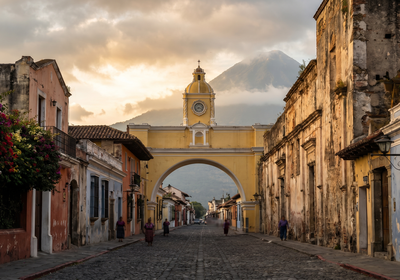
Antigua Guatemala: The historic center enjoys good 4G coverage for easy navigation and social sharing. However, the beautiful colonial architecture comes with a quirk - the thick stone and adobe walls of many hotels, cafes, and restaurants can significantly weaken indoor signals, often requiring you to be near a window for a stable connection.
Quetzaltenango (Xela): As Guatemala's second-largest city, Xela has reliable 4G service in its central park and main commercial areas. The signal remains fairly consistent in the urban core, but can become less stable as you travel to the city's outskirts or into the surrounding mountainous highlands.
Panajachel (Lake Atitlán): The main town of Panajachel is well-covered with a decent 4G signal. When traveling by boat (lancha) to other villages around the lake like San Pedro or San Marcos, expect connectivity to be intermittent, often dropping out completely between towns or when near the steep volcanic slopes.
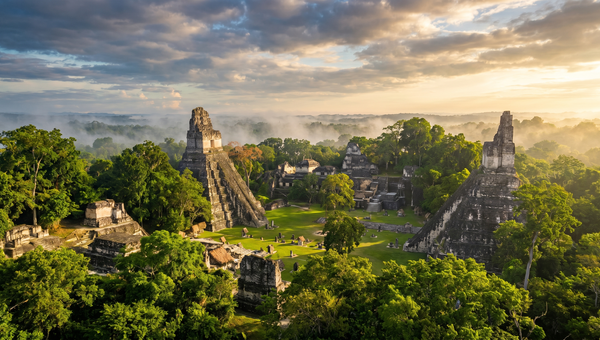
Flores / Tikal: The island town of Flores and the nearby mainland hub of Santa Elena have reliable 4G coverage. Crucially, once you travel into the vast Tikal National Park to visit the Mayan ruins, mobile service becomes extremely limited and is often non-existent due to the remote location and dense jungle canopy.


Major Highways (CA-1, CA-9): Coverage is generally reliable along the Pan-American Highway (CA-1) and CA-9 Sur near major urban centers like Guatemala City, Antigua, and Escuintla. However, signal becomes intermittent and can drop completely in the mountainous highlands sections of CA-1 between Chimaltenango and Huehuetenango.
Intercity Rail System: Guatemala does not currently operate a national intercity passenger rail network. Travelers will rely on road transport, where connectivity varies significantly by region and altitude.
Highland Mountain Roads: Expect frequent signal loss when traveling through the Sierra Madre and Cuchumatanes mountain ranges. Roads around Lake Atitlán and the winding routes through Alta Verapaz towards Cobán are known for having significant dead zones between towns and villages due to the challenging terrain.
Petén Department Lowlands: In the northern region of Petén, consistent mobile service is primarily available in the city of Flores, Santa Elena, and the main visitor areas of Tikal National Park. Travel by road from this region, for example towards Rio Dulce or Belize, involves very long stretches with little to no cellular signal.
How it works
Buy eSIM
Sign up and get your Global eSIM in just a few clicks.

Activate eSIM
Scan the QR code and get connected instantly — no physical SIM needed.

Pay as you go
Only pay for what you use. No contracts, no hidden fees.

Get your eSIM
“
I loved the per-country pricing model. I only paid for the countries I visited, and it was way cheaper than other eSIM providers. No hidden fees — just clear and simple.
“
The auto top-up feature is a lifesaver. I never have to check my balance — internet just works. And when I’m not traveling, I don’t pay. It’s fair and super convenient.


Angel Siphron
Rated
4.7


Bcengi data is priced at $4.44 per gigabyte when utilizing TIGO (formerly COMCEL) networks. You are only billed for the data you actively consume; there are no fixed package deals or minimum expenditure demands.
No. Bcengi functions concurrently with your current SIM card through dual-SIM capabilities. You can retain your standard SIM for making calls and sending text messages.
Yes, provided your specific device offers eSIM support, which includes most mobile phones manufactured from 2019 onwards. Verify compatibility on our website: bcengi.com/travelpass/esim-compatibility.
Availability is contingent upon the network infrastructure of TIGO (previously COMCEL). Significant urban centers and popular tourist destinations generally experience robust coverage, while more isolated regions might encounter restricted signal strength.
The majority of visitors consume between 500 MB and 2 GB daily. A week of moderate usage would incur an approximate cost of $15.54 under the pay-as-you-go tariff system.
Yes. A single Bcengi eSIM is valid in over 200 nations. Your existing balance transfers, removing the requirement to acquire a separate eSIM for every new destination.
You have the option to replenish your credit at any moment via travel.bcengi.com, or activate the auto-refill feature to ensure your balance remains continuously available.
No. Your Bcengi balance holds no expiration date, remaining valid regardless of whether you access it in the coming week or twelve months from now.

$
4.44
/GB

Instant delivery

No expiry

24/7 support

Secure checkout

Pay As You Go
from
$
4.44
/GB
$10
POPULAR
$25
$50
$100
Select your starting balance
Get your eSIM
→

Secure Payments |
Powered by

Rated
4.7


💵 You add
$25
to your balance.
✈️ In
Guatemala
you use
3GB
at
$
4.44
/GB
.
🌍
Peru
3 months later -
3GB at $
4.86
/GB.
🔥 Your same balance covers both trips — one eSIM, no expiry, no wasted data, no new package.
How it works


Install once, keep it on your phone

Use balance only when you travel

Pay as you go, for actual use.

No fixed plans, no expiration

One eSIM for all trips, 200+ Countries.
Learn more
Just $
4.44
per GB.
No surprises, No bundles, No expiry.

Light Usage •
200 MB/day
$
0.00
/day
Maps, messaging, browsing

Moderate •
500 MB/day
$
0.00
/day

Heavy •
2 GB/day
$
0.00
/day
Streaming, uploads, video calls
Guatemala City: You'll find strong 4G/LTE coverage across most of the capital's zones, particularly in business and tourist districts like Zona 10 (Zona Viva) and around La Aurora International Airport. The Transmetro bus system offers consistent connectivity along its surface-level routes. Indoor reception is generally reliable in modern buildings but can be weaker inside older, thick-walled structures.
Antigua Guatemala: The historic center enjoys good 4G coverage for easy navigation and social sharing. However, the beautiful colonial architecture comes with a quirk - the thick stone and adobe walls of many hotels, cafes, and restaurants can significantly weaken indoor signals, often requiring you to be near a window for a stable connection.
Quetzaltenango (Xela): As Guatemala's second-largest city, Xela has reliable 4G service in its central park and main commercial areas. The signal remains fairly consistent in the urban core, but can become less stable as you travel to the city's outskirts or into the surrounding mountainous highlands.
Panajachel (Lake Atitlán): The main town of Panajachel is well-covered with a decent 4G signal. When traveling by boat (lancha) to other villages around the lake like San Pedro or San Marcos, expect connectivity to be intermittent, often dropping out completely between towns or when near the steep volcanic slopes.
Flores / Tikal: The island town of Flores and the nearby mainland hub of Santa Elena have reliable 4G coverage. Crucially, once you travel into the vast Tikal National Park to visit the Mayan ruins, mobile service becomes extremely limited and is often non-existent due to the remote location and dense jungle canopy.
Major Highways (CA-1, CA-9): Coverage is generally reliable along the Pan-American Highway (CA-1) and CA-9 Sur near major urban centers like Guatemala City, Antigua, and Escuintla. However, signal becomes intermittent and can drop completely in the mountainous highlands sections of CA-1 between Chimaltenango and Huehuetenango.
Intercity Rail System: Guatemala does not currently operate a national intercity passenger rail network. Travelers will rely on road transport, where connectivity varies significantly by region and altitude.
Highland Mountain Roads: Expect frequent signal loss when traveling through the Sierra Madre and Cuchumatanes mountain ranges. Roads around Lake Atitlán and the winding routes through Alta Verapaz towards Cobán are known for having significant dead zones between towns and villages due to the challenging terrain.
Petén Department Lowlands: In the northern region of Petén, consistent mobile service is primarily available in the city of Flores, Santa Elena, and the main visitor areas of Tikal National Park. Travel by road from this region, for example towards Rio Dulce or Belize, involves very long stretches with little to no cellular signal.
Learn more about
Guatemala
How it works

1. Buy eSIM
Sign up and get your Global eSIM in just a few clicks.

2. Activate eSIM
Scan the QR code and get connected instantly — no physical SIM needed.

3. Pay as you go
Only pay for what you use. No contracts, no hidden fees.
Get your eSIM
Rated
4.7
“
I loved the per-country pricing model. I only paid for the countries I visited, and it was way cheaper than other eSIM providers. No hidden fees — just clear and simple.


Kaylynn Mango


Bcengi data is priced at $4.44 per gigabyte when utilizing TIGO (formerly COMCEL) networks. You are only billed for the data you actively consume; there are no fixed package deals or minimum expenditure demands.
No. Bcengi functions concurrently with your current SIM card through dual-SIM capabilities. You can retain your standard SIM for making calls and sending text messages.
Yes, provided your specific device offers eSIM support, which includes most mobile phones manufactured from 2019 onwards. Verify compatibility on our website: bcengi.com/travelpass/esim-compatibility.
Availability is contingent upon the network infrastructure of TIGO (previously COMCEL). Significant urban centers and popular tourist destinations generally experience robust coverage, while more isolated regions might encounter restricted signal strength.
The majority of visitors consume between 500 MB and 2 GB daily. A week of moderate usage would incur an approximate cost of $15.54 under the pay-as-you-go tariff system.
Yes. A single Bcengi eSIM is valid in over 200 nations. Your existing balance transfers, removing the requirement to acquire a separate eSIM for every new destination.
You have the option to replenish your credit at any moment via travel.bcengi.com, or activate the auto-refill feature to ensure your balance remains continuously available.
No. Your Bcengi balance holds no expiration date, remaining valid regardless of whether you access it in the coming week or twelve months from now.
$
4.44
/GB
Instant delivery

No expiry
24/7 support
Secure checkout

Bcengi TravelPass keeps you connected worldwide with one reusable eSIM - no expirations, no wasted data.


Settings
English

USD


Bcengi TravelPass keeps you connected worldwide with one reusable eSIM - no expirations, no wasted data.



Secure Payments | Powered by