

Personal Travel
Personal Travel



Italy

Iliad Italy, TIM, Wind Telecomunicazioni SpA
Pay As You Go
from
$
1.19
/GB
$10
POPULAR
$25
$50
$100
Select your starting balance
Get your eSIM
→

Your payment is fully secured |
Powered by

Rated
4.7


Install once, keep it on your phone.

Pay as you go, for actual use.

No fixed plans, no expiration.

Use balance only when you travel.

One eSIM for all trips, 200+ Countries.
Pay As You Go data, wherever you travel
💵 You add
$25
to your balance.
✈️ In
Italy
you use
3GB
at
$
1.19
/GB
.
🌍
United States
3 months later -
3GB at $
1.68
/GB.
🔥 Your same balance covers both trips -
one eSIM, no expiry, no wasted data, no new package.
Just $
1.19
per GB. No surprises, No bundles, No expiry.

Light Usage
~200 MB/day
$
0.00
/day
Maps, messaging, browsing

Moderate
~500 MB/day
$
0.00
/day

Heavy
~2 GB/day
$
0.00
/day
Streaming, uploads, video calls
Rome. Central Rome features robust mobile coverage, extending to sites like the Vatican museums and Colosseum precincts. The Rome Metro (Line A and B) provides partial signal at stations but very limited service in tunnels. Street-level 4G proves consistent throughout all central neighborhoods, including Trastevere, Prati, Pigneto, and EUR.
Milan. This city stands as Italy's most connected. The Milan Metro (MM) offers expanded 4G coverage across the majority of Line 1, Line 2, and Line 3, even within tunnels on key sections. 5G is active throughout the city centre, Porta Nuova, and the trade fair districts. Robust mobile service is available at Malpensa and Linate airports.
Florence. A compact city with robust coverage. Wireless signal proves reliable throughout the historic centre, including at the Uffizi and Piazzale Michelangelo. As there is no underground metro, transit connectivity issues are minimal.
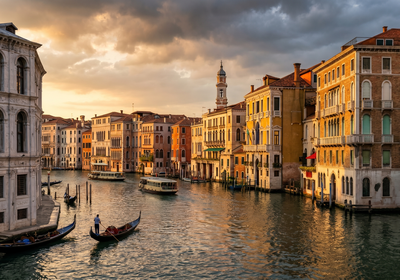
Venice. Mobile coverage across the main islands (Sestieri) is remarkably strong. Signal strength diminishes on vaporetto water buses while crossing the lagoon. The outer islands like Murano, Burano, and Torcello provide usable but less stable LTE service. Employing a mobile data connection greatly assists GPS navigation when traveling by boat.
Naples and the Amalfi Coast. Naples benefits from reliable urban 4G service. Along the Amalfi Coast road (SS163), towns feature coverage, yet the signal frequently vanishes within cliff tunnels. Positano, Ravello, and Amalfi town itself possess fair signal, but remote clifftop paths generally lack connectivity.
The Dolomites. Ski resort villages, including Cortina d'Ampezzo, Val Gardena, and Alta Badia, enjoy good mobile coverage. However, above the treeline on hiking trails and via ferrata, connectivity grows sporadic. It is advisable to download offline maps using Google Maps or Maps.me prior to venturing onto higher elevation routes.
Trenitalia and Italo trains. Both of these high-speed railway providers supply passengers with onboard WiFi. On Frecciarossa routes (connecting Milan, Rome, and Naples), the WiFi typically functions but lacks high bandwidth, sufficing for messages but inconsistent for video. For regional trains (Regionale Veloce services), onboard WiFi should not be depended upon. Mobile data accessed via the train window generally performs better across most intercity journeys, experiencing only short interruptions in tunnels that traverse the Apennines.

Major Autostrade Corridors: Coverage is generally strong along primary highways like the A1 (Autostrada del Sole) connecting Milan and Naples, and the A4 between Turin and Trieste. However, expect intermittent signal drops in the numerous tunnels and mountainous sections, particularly on the A1 stretch through the Apennines between Bologna and Florence.
High-Speed Rail (Trenitalia & Italo): Italy's high-speed train network offers reliable connectivity on major routes like Rome-Milan. Service can be inconsistent, with frequent signal loss inside the many long tunnels that are characteristic of the network, especially on the Florence-Bologna and Rome-Naples high-speed lines.
Alpine and Apennine Passes: Driving through mountain ranges results in significant signal loss. Both the northern Alps (e.g., Stelvio Pass, Brenner Pass) and the central Apennines have extensive areas with no service. Connectivity is typically restored only in towns and populated valleys.
Long Tunnels: Major road tunnels such as the Mont Blanc Tunnel, the Frejus Road Tunnel, and the Gran Sasso Tunnel often have no cellular reception inside. Shorter tunnels on the Autostrade network may also cause brief but complete signal interruptions.
Rural and Remote Regions: While populated areas are well-served, connectivity can be unreliable in the sparsely populated interiors of Sardinia and Sicily, as well as in remote parts of southern regions like Basilicata and Calabria. Signal strength diminishes significantly away from towns and major roads.
How it works
Buy eSIM
Sign up and get your Global eSIM in just a few clicks.

Activate eSIM
Scan the QR code and get connected instantly — no physical SIM needed.

Pay as you go
Only pay for what you use. No contracts, no hidden fees.

Get your eSIM
“
I loved the per-country pricing model. I only paid for the countries I visited, and it was way cheaper than other eSIM providers. No hidden fees — just clear and simple.
“
The auto top-up feature is a lifesaver. I never have to check my balance — internet just works. And when I’m not traveling, I don’t pay. It’s fair and super convenient.


Angel Siphron
Rated
4.7


Bcengi TravelPass is priced at $1.19/GB within Italy, operating on the TIM, Wind Telecomunicazioni SpA, and Vodafone networks. There is no minimum data purchase required, no expiration date, and any unused balance automatically carries over indefinitely.
No. TravelPass operates as an eSIM - a digital SIM that installs alongside your existing physical SIM card. Your traditional phone number, along with calls and text messages, will continue functioning on your physical SIM. The TravelPass eSIM manages data services independently.
Certainly, provided your device is eSIM-compatible. Supported models include the iPhone XS and subsequent versions, Google Pixel 3 and newer, and Samsung Galaxy S20 and later. Please refer to the complete compatibility roster for further details. Devices locked to a specific carrier might not be able to utilize third-party eSIM services.
Service coverage is solid across northern Italy, including Rome, Florence, Milan, and along principal intercity routes. However, it tends to be intermittent in rural southern Italy (specifically Calabria, Basilicata, and inland Puglia), within mountainous regions situated above inhabited valleys, and on smaller island territories. It is advisable to download offline maps for less accessible zones prior to your departure.
For an average week-long journey encompassing multiple cities (such as Rome, Florence, and Venice), plan for 2.5-4 GB of data - an estimated cost of $3-5 using TravelPass pricing. Increase this by 1-2 GB if you anticipate driving, taking local train day trips, or making frequent video calls.
Within the Dolomite resort villages like Cortina d'Ampezzo, Selva Gardena, Ortisei, and Arabba, signal strength is typically satisfactory. However, on high mountain trails, during rifugio treks, and on via ferrata routes exceeding 2,000m in altitude, the signal often proves intermittent. It is crucial to download offline maps prior to departing from the valley.
Across the majority of intercity train lines, mobile data functions well, though short signal interruptions may occur while passing through Apennine tunnels. Both Trenitalia and Italo services provide onboard WiFi on their Frecciarossa and Italo trains; this is suitable for basic messaging but lacks the reliability for video streaming. For using the Trenitalia application, receiving booking confirmations, and accessing live platform updates, mobile data offers greater reliability compared to the onboard WiFi service.
Affirmative, though with certain limitations. Within Palermo, Catania, Cagliari, and major coastal resort zones, the signal proves reliable. However, inland rural districts and minor islands (such as the Aeolian Islands and La Maddalena) experience restricted signal availability. Sicily's eastern coastline, including Taormina, Siracusa, and Ragusa, typically enjoys better coverage than its internal regions.
Practically speaking, yes. These two small, sovereign states are entirely encircled by Italian land. Your mobile device will generally continue to use Italian networks (TIM, Vodafone, WindTre) and will not switch to another country's service provider. Standard TravelPass pricing will be in effect.
In Italy, Uber functions exclusively as a licensed private car service (NCC) rather than a typical rideshare platform, which results in substantially higher costs compared to other international markets. FREE NOW presents itself as a viable option for booking taxis. For smaller urban centers and southern regions, traditional street-hailed taxis or local radio-taxi applications often prove more dependable than either of these digital platforms.

$
1.19
/GB

Instant delivery

No expiry

24/7 support

Secure checkout

Pay As You Go
from
$
1.19
/GB
$10
POPULAR
$25
$50
$100
Select your starting balance
Get your eSIM
→

Secure Payments |
Powered by

Rated
4.7


💵 You add
$25
to your balance.
✈️ In
Italy
you use
3GB
at
$
1.19
/GB
.
🌍
United States
3 months later -
3GB at $
1.68
/GB.
🔥 Your same balance covers both trips — one eSIM, no expiry, no wasted data, no new package.
How it works


Install once, keep it on your phone

Use balance only when you travel

Pay as you go, for actual use.

No fixed plans, no expiration

One eSIM for all trips, 200+ Countries.
Learn more
Just $
1.19
per GB.
No surprises, No bundles, No expiry.

Light Usage •
200 MB/day
$
0.00
/day
Maps, messaging, browsing

Moderate •
500 MB/day
$
0.00
/day

Heavy •
2 GB/day
$
0.00
/day
Streaming, uploads, video calls
Rome. Central Rome features robust mobile coverage, extending to sites like the Vatican museums and Colosseum precincts. The Rome Metro (Line A and B) provides partial signal at stations but very limited service in tunnels. Street-level 4G proves consistent throughout all central neighborhoods, including Trastevere, Prati, Pigneto, and EUR.
Milan. This city stands as Italy's most connected. The Milan Metro (MM) offers expanded 4G coverage across the majority of Line 1, Line 2, and Line 3, even within tunnels on key sections. 5G is active throughout the city centre, Porta Nuova, and the trade fair districts. Robust mobile service is available at Malpensa and Linate airports.
Florence. A compact city with robust coverage. Wireless signal proves reliable throughout the historic centre, including at the Uffizi and Piazzale Michelangelo. As there is no underground metro, transit connectivity issues are minimal.
Venice. Mobile coverage across the main islands (Sestieri) is remarkably strong. Signal strength diminishes on vaporetto water buses while crossing the lagoon. The outer islands like Murano, Burano, and Torcello provide usable but less stable LTE service. Employing a mobile data connection greatly assists GPS navigation when traveling by boat.
Naples and the Amalfi Coast. Naples benefits from reliable urban 4G service. Along the Amalfi Coast road (SS163), towns feature coverage, yet the signal frequently vanishes within cliff tunnels. Positano, Ravello, and Amalfi town itself possess fair signal, but remote clifftop paths generally lack connectivity.
The Dolomites. Ski resort villages, including Cortina d'Ampezzo, Val Gardena, and Alta Badia, enjoy good mobile coverage. However, above the treeline on hiking trails and via ferrata, connectivity grows sporadic. It is advisable to download offline maps using Google Maps or Maps.me prior to venturing onto higher elevation routes.
Trenitalia and Italo trains. Both of these high-speed railway providers supply passengers with onboard WiFi. On Frecciarossa routes (connecting Milan, Rome, and Naples), the WiFi typically functions but lacks high bandwidth, sufficing for messages but inconsistent for video. For regional trains (Regionale Veloce services), onboard WiFi should not be depended upon. Mobile data accessed via the train window generally performs better across most intercity journeys, experiencing only short interruptions in tunnels that traverse the Apennines.
Major Autostrade Corridors: Coverage is generally strong along primary highways like the A1 (Autostrada del Sole) connecting Milan and Naples, and the A4 between Turin and Trieste. However, expect intermittent signal drops in the numerous tunnels and mountainous sections, particularly on the A1 stretch through the Apennines between Bologna and Florence.
High-Speed Rail (Trenitalia & Italo): Italy's high-speed train network offers reliable connectivity on major routes like Rome-Milan. Service can be inconsistent, with frequent signal loss inside the many long tunnels that are characteristic of the network, especially on the Florence-Bologna and Rome-Naples high-speed lines.
Alpine and Apennine Passes: Driving through mountain ranges results in significant signal loss. Both the northern Alps (e.g., Stelvio Pass, Brenner Pass) and the central Apennines have extensive areas with no service. Connectivity is typically restored only in towns and populated valleys.
Long Tunnels: Major road tunnels such as the Mont Blanc Tunnel, the Frejus Road Tunnel, and the Gran Sasso Tunnel often have no cellular reception inside. Shorter tunnels on the Autostrade network may also cause brief but complete signal interruptions.
Rural and Remote Regions: While populated areas are well-served, connectivity can be unreliable in the sparsely populated interiors of Sardinia and Sicily, as well as in remote parts of southern regions like Basilicata and Calabria. Signal strength diminishes significantly away from towns and major roads.
Learn more about
Italy
How it works

1. Buy eSIM
Sign up and get your Global eSIM in just a few clicks.

2. Activate eSIM
Scan the QR code and get connected instantly — no physical SIM needed.

3. Pay as you go
Only pay for what you use. No contracts, no hidden fees.
Get your eSIM
Rated
4.7
“
I loved the per-country pricing model. I only paid for the countries I visited, and it was way cheaper than other eSIM providers. No hidden fees — just clear and simple.


Kaylynn Mango


Bcengi TravelPass is priced at $1.19/GB within Italy, operating on the TIM, Wind Telecomunicazioni SpA, and Vodafone networks. There is no minimum data purchase required, no expiration date, and any unused balance automatically carries over indefinitely.
No. TravelPass operates as an eSIM - a digital SIM that installs alongside your existing physical SIM card. Your traditional phone number, along with calls and text messages, will continue functioning on your physical SIM. The TravelPass eSIM manages data services independently.
Certainly, provided your device is eSIM-compatible. Supported models include the iPhone XS and subsequent versions, Google Pixel 3 and newer, and Samsung Galaxy S20 and later. Please refer to the complete compatibility roster for further details. Devices locked to a specific carrier might not be able to utilize third-party eSIM services.
Service coverage is solid across northern Italy, including Rome, Florence, Milan, and along principal intercity routes. However, it tends to be intermittent in rural southern Italy (specifically Calabria, Basilicata, and inland Puglia), within mountainous regions situated above inhabited valleys, and on smaller island territories. It is advisable to download offline maps for less accessible zones prior to your departure.
For an average week-long journey encompassing multiple cities (such as Rome, Florence, and Venice), plan for 2.5-4 GB of data - an estimated cost of $3-5 using TravelPass pricing. Increase this by 1-2 GB if you anticipate driving, taking local train day trips, or making frequent video calls.
Within the Dolomite resort villages like Cortina d'Ampezzo, Selva Gardena, Ortisei, and Arabba, signal strength is typically satisfactory. However, on high mountain trails, during rifugio treks, and on via ferrata routes exceeding 2,000m in altitude, the signal often proves intermittent. It is crucial to download offline maps prior to departing from the valley.
Across the majority of intercity train lines, mobile data functions well, though short signal interruptions may occur while passing through Apennine tunnels. Both Trenitalia and Italo services provide onboard WiFi on their Frecciarossa and Italo trains; this is suitable for basic messaging but lacks the reliability for video streaming. For using the Trenitalia application, receiving booking confirmations, and accessing live platform updates, mobile data offers greater reliability compared to the onboard WiFi service.
Affirmative, though with certain limitations. Within Palermo, Catania, Cagliari, and major coastal resort zones, the signal proves reliable. However, inland rural districts and minor islands (such as the Aeolian Islands and La Maddalena) experience restricted signal availability. Sicily's eastern coastline, including Taormina, Siracusa, and Ragusa, typically enjoys better coverage than its internal regions.
Practically speaking, yes. These two small, sovereign states are entirely encircled by Italian land. Your mobile device will generally continue to use Italian networks (TIM, Vodafone, WindTre) and will not switch to another country's service provider. Standard TravelPass pricing will be in effect.
In Italy, Uber functions exclusively as a licensed private car service (NCC) rather than a typical rideshare platform, which results in substantially higher costs compared to other international markets. FREE NOW presents itself as a viable option for booking taxis. For smaller urban centers and southern regions, traditional street-hailed taxis or local radio-taxi applications often prove more dependable than either of these digital platforms.
$
1.19
/GB
Instant delivery

No expiry
24/7 support
Secure checkout

Bcengi TravelPass keeps you connected worldwide with one reusable eSIM - no expirations, no wasted data.


Settings
English

USD


Bcengi TravelPass keeps you connected worldwide with one reusable eSIM - no expirations, no wasted data.



Secure Payments | Powered by