

Personal Travel
Personal Travel


Japan

DOCOMO, KDDI Corporation, Rakuten
Pay As You Go
from
$
2.82
/GB
$10
POPULAR
$25
$50
$100
Select your starting balance
Get your eSIM
→

Your payment is fully secured |
Powered by

Rated
4.7


Install once, keep it on your phone.

Pay as you go, for actual use.

No fixed plans, no expiration.

Use balance only when you travel.

One eSIM for all trips, 200+ Countries.
Pay As You Go data, wherever you travel
💵 You add
$25
to your balance.
✈️ In
Japan
you use
3GB
at
$
2.82
/GB
.
🌍
United States
3 months later -
3GB at $
1.68
/GB.
🔥 Your same balance covers both trips -
one eSIM, no expiry, no wasted data, no new package.
Just $
2.82
per GB. No surprises, No bundles, No expiry.

Light Usage
~200 MB/day
$
0.00
/day
Maps, messaging, browsing

Moderate
~500 MB/day
$
0.00
/day

Heavy
~2 GB/day
$
0.00
/day
Streaming, uploads, video calls
Tokyo: Japan's major networks provide exceptional 4G and 5G coverage across the vast metropolitan area, including districts like Shibuya, Shinjuku, and Ginza. Connectivity is famously reliable on the Tokyo Metro and Toei Subway systems, with continuous signal available in most stations and even between stops on many lines.
Osaka: You'll find strong, high-speed mobile data throughout Osaka's urban core, from the Umeda Sky Building to the Dotonbori canals. The Osaka Metro network is well-equipped with cellular service, ensuring you stay connected on platforms and during most underground journeys.
Kyoto: Coverage is excellent in central Kyoto and popular tourist areas like Gion, Arashiyama, and near Fushimi Inari shrine. While signal is generally strong, be aware that the traditional thick walls of some older ryokans or temples might slightly weaken indoor reception. The Kyoto Municipal Subway offers reliable connectivity.
Sapporo: Experience dependable 4G and 5G service across Sapporo, including the bustling Susukino district and Odori Park. The Sapporo Municipal Subway system provides consistent mobile signal coverage throughout its stations and tunnels, keeping you online even while travelling underground.
Fukuoka: As a major hub on Kyushu island, Fukuoka boasts excellent network performance in key areas like Hakata and Tenjin. The compact and efficient Fukuoka City Subway system has widespread mobile coverage, so you can easily navigate and stay connected.
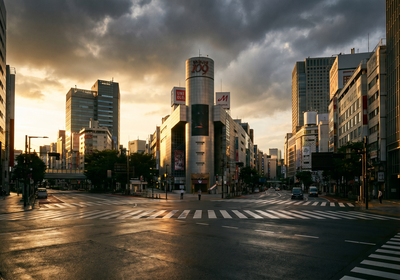

Expressways (Kōsoku-dōro): Japan's major expressways, such as the E1 Tōmei and Meishin corridors connecting Tokyo, Nagoya, and Osaka, offer very consistent and high-speed network coverage. Routes through more mountainous areas, like sections of the E20 Chūō Expressway, may experience brief signal drops in valleys or between tunnels.
Shinkansen (Bullet Train): The Shinkansen network, especially the busy Tōkaidō line between Tokyo and Osaka, provides reliable 4G/LTE and 5G service for most of the journey. Signal is generally strong, but expect drops inside the numerous long tunnels that enable the train's high-speed routes through mountainous terrain.
Mountainous Regions: Signal becomes intermittent or can be completely lost when traveling through Japan's mountainous interior. This includes the Japan Alps in the Chūbu region, remote parts of Hokkaidō, and the central mountain ranges of Shikoku and the Kii Peninsula. Plan for offline maps and downloads when driving or taking local trains through these areas.
Long Tunnels and Bridges: Expect a temporary loss of service inside long tunnels on both expressways and rail lines. While newer infrastructure sometimes has signal repeaters, many do not. Notable examples include the Kan-Etsu Tunnel on the E17 expressway and the undersea Seikan Tunnel connecting Honshu and Hokkaidō, where signal is available but can be spotty.
Remote Peninsulas and Islands: Coverage can be limited on remote peninsulas like the Noto Peninsula on the Sea of Japan coast or the Shimokita Peninsula in Aomori. Service on smaller, outlying islands away from Okinawa's main island or Kyushu can also be inconsistent, often relying on a single carrier with weaker signal strength.
How it works
Buy eSIM
Sign up and get your Global eSIM in just a few clicks.

Activate eSIM
Scan the QR code and get connected instantly — no physical SIM needed.

Pay as you go
Only pay for what you use. No contracts, no hidden fees.

Get your eSIM
“
I loved the per-country pricing model. I only paid for the countries I visited, and it was way cheaper than other eSIM providers. No hidden fees — just clear and simple.
“
The auto top-up feature is a lifesaver. I never have to check my balance — internet just works. And when I’m not traveling, I don’t pay. It’s fair and super convenient.


Angel Siphron
Rated
4.7


Bcengi TravelPass offers eSIM data in Japan for $2.82 per gigabyte, utilizing the networks of DOCOMO, KDDI Corporation, and Rakuten. There are no activation fees, no daily charges, and no minimum usage requirements; payment is solely for the data you use.
Indeed. The Tokaido Shinkansen line, connecting Tokyo, Kyoto, and Osaka, provides almost uninterrupted 4G coverage, with only short signal losses inside tunnels. Both DOCOMO and KDDI offer robust network coverage along the Shinkansen corridor. While other lines generally perform well, expect more frequent tunnel-related interruptions on routes traversing northern and mountainous regions.
Typically, for individuals traveling alone or in pairs, eSIM is the preferred option; there is no need to carry, charge, or return a separate device, and pay-as-you-go pricing ensures lower costs on days with minimal data use. However, pocket WiFi may prove more economical for groups of three or more who share a single unit.
The physical tap-to-pay feature of these cards operates without an internet connection. Nevertheless, processes such as integrating Suica into Apple Wallet, topping up its balance through your phone, or managing your account necessitate data access. It is advisable to complete your Suica setup while still connected to WiFi.
Combined, KDDI and DOCOMO provide network coverage to more than 99.9% of Japan's residents. Expect superb signal strength in urban centers, rural towns, and the majority of popular tourist destinations. Limited service may occur on isolated mountain paths, certain smaller outlying islands, and within subterranean indoor spaces.
There is no need. eSIM technology leverages your device's integrated chip, enabling it to function as a dual SIM configuration alongside your current SIM card.
Affirmative. Compatibility includes iPhone XS and subsequent models, Pixel 3 and newer, and Galaxy S20 and newer. For a complete roster of supported devices, please consult the full compatible device list.
DOCOMO provides the most robust rural network coverage throughout Japan. In Hokkaido, major cities and tourist zones like Sapporo, Otaru, Furano, and Hakodate typically experience good service. However, expect restricted signal in far-eastern Hokkaido and on certain mountain hiking paths. Rural parts of Honshu are generally well-served along primary roadways.
Negative. Public WiFi in Japan is inconsistent, frequently requires registration, and is not dependable for ongoing connectivity. While hotels typically offer satisfactory WiFi, once you leave your lodging, mobile data will be essential for navigation, public transportation, and making payments.
The majority of visitors typically consume between 300MB and 1GB of data daily, reflecting Japan's travel approach that heavily relies on public transit and navigation tools. Over a seven-day period, anticipate needing 2-7GB, which translates to approximately $2.82-$2.82 using TravelPass.

$
2.82
/GB

Instant delivery

No expiry

24/7 support

Secure checkout

Pay As You Go
from
$
2.82
/GB
$10
POPULAR
$25
$50
$100
Select your starting balance
Get your eSIM
→

Secure Payments |
Powered by

Rated
4.7


💵 You add
$25
to your balance.
✈️ In
Japan
you use
3GB
at
$
2.82
/GB
.
🌍
United States
3 months later -
3GB at $
1.68
/GB.
🔥 Your same balance covers both trips — one eSIM, no expiry, no wasted data, no new package.
How it works


Install once, keep it on your phone

Use balance only when you travel

Pay as you go, for actual use.

No fixed plans, no expiration

One eSIM for all trips, 200+ Countries.
Learn more
Just $
2.82
per GB.
No surprises, No bundles, No expiry.

Light Usage •
200 MB/day
$
0.00
/day
Maps, messaging, browsing

Moderate •
500 MB/day
$
0.00
/day

Heavy •
2 GB/day
$
0.00
/day
Streaming, uploads, video calls
Tokyo: Japan's major networks provide exceptional 4G and 5G coverage across the vast metropolitan area, including districts like Shibuya, Shinjuku, and Ginza. Connectivity is famously reliable on the Tokyo Metro and Toei Subway systems, with continuous signal available in most stations and even between stops on many lines.
Osaka: You'll find strong, high-speed mobile data throughout Osaka's urban core, from the Umeda Sky Building to the Dotonbori canals. The Osaka Metro network is well-equipped with cellular service, ensuring you stay connected on platforms and during most underground journeys.
Kyoto: Coverage is excellent in central Kyoto and popular tourist areas like Gion, Arashiyama, and near Fushimi Inari shrine. While signal is generally strong, be aware that the traditional thick walls of some older ryokans or temples might slightly weaken indoor reception. The Kyoto Municipal Subway offers reliable connectivity.
Sapporo: Experience dependable 4G and 5G service across Sapporo, including the bustling Susukino district and Odori Park. The Sapporo Municipal Subway system provides consistent mobile signal coverage throughout its stations and tunnels, keeping you online even while travelling underground.
Fukuoka: As a major hub on Kyushu island, Fukuoka boasts excellent network performance in key areas like Hakata and Tenjin. The compact and efficient Fukuoka City Subway system has widespread mobile coverage, so you can easily navigate and stay connected.
Expressways (Kōsoku-dōro): Japan's major expressways, such as the E1 Tōmei and Meishin corridors connecting Tokyo, Nagoya, and Osaka, offer very consistent and high-speed network coverage. Routes through more mountainous areas, like sections of the E20 Chūō Expressway, may experience brief signal drops in valleys or between tunnels.
Shinkansen (Bullet Train): The Shinkansen network, especially the busy Tōkaidō line between Tokyo and Osaka, provides reliable 4G/LTE and 5G service for most of the journey. Signal is generally strong, but expect drops inside the numerous long tunnels that enable the train's high-speed routes through mountainous terrain.
Mountainous Regions: Signal becomes intermittent or can be completely lost when traveling through Japan's mountainous interior. This includes the Japan Alps in the Chūbu region, remote parts of Hokkaidō, and the central mountain ranges of Shikoku and the Kii Peninsula. Plan for offline maps and downloads when driving or taking local trains through these areas.
Long Tunnels and Bridges: Expect a temporary loss of service inside long tunnels on both expressways and rail lines. While newer infrastructure sometimes has signal repeaters, many do not. Notable examples include the Kan-Etsu Tunnel on the E17 expressway and the undersea Seikan Tunnel connecting Honshu and Hokkaidō, where signal is available but can be spotty.
Remote Peninsulas and Islands: Coverage can be limited on remote peninsulas like the Noto Peninsula on the Sea of Japan coast or the Shimokita Peninsula in Aomori. Service on smaller, outlying islands away from Okinawa's main island or Kyushu can also be inconsistent, often relying on a single carrier with weaker signal strength.
Learn more about
Japan
How it works

1. Buy eSIM
Sign up and get your Global eSIM in just a few clicks.

2. Activate eSIM
Scan the QR code and get connected instantly — no physical SIM needed.

3. Pay as you go
Only pay for what you use. No contracts, no hidden fees.
Get your eSIM
Rated
4.7
“
I loved the per-country pricing model. I only paid for the countries I visited, and it was way cheaper than other eSIM providers. No hidden fees — just clear and simple.


Kaylynn Mango


Bcengi TravelPass offers eSIM data in Japan for $2.82 per gigabyte, utilizing the networks of DOCOMO, KDDI Corporation, and Rakuten. There are no activation fees, no daily charges, and no minimum usage requirements; payment is solely for the data you use.
Indeed. The Tokaido Shinkansen line, connecting Tokyo, Kyoto, and Osaka, provides almost uninterrupted 4G coverage, with only short signal losses inside tunnels. Both DOCOMO and KDDI offer robust network coverage along the Shinkansen corridor. While other lines generally perform well, expect more frequent tunnel-related interruptions on routes traversing northern and mountainous regions.
Typically, for individuals traveling alone or in pairs, eSIM is the preferred option; there is no need to carry, charge, or return a separate device, and pay-as-you-go pricing ensures lower costs on days with minimal data use. However, pocket WiFi may prove more economical for groups of three or more who share a single unit.
The physical tap-to-pay feature of these cards operates without an internet connection. Nevertheless, processes such as integrating Suica into Apple Wallet, topping up its balance through your phone, or managing your account necessitate data access. It is advisable to complete your Suica setup while still connected to WiFi.
Combined, KDDI and DOCOMO provide network coverage to more than 99.9% of Japan's residents. Expect superb signal strength in urban centers, rural towns, and the majority of popular tourist destinations. Limited service may occur on isolated mountain paths, certain smaller outlying islands, and within subterranean indoor spaces.
There is no need. eSIM technology leverages your device's integrated chip, enabling it to function as a dual SIM configuration alongside your current SIM card.
Affirmative. Compatibility includes iPhone XS and subsequent models, Pixel 3 and newer, and Galaxy S20 and newer. For a complete roster of supported devices, please consult the full compatible device list.
DOCOMO provides the most robust rural network coverage throughout Japan. In Hokkaido, major cities and tourist zones like Sapporo, Otaru, Furano, and Hakodate typically experience good service. However, expect restricted signal in far-eastern Hokkaido and on certain mountain hiking paths. Rural parts of Honshu are generally well-served along primary roadways.
Negative. Public WiFi in Japan is inconsistent, frequently requires registration, and is not dependable for ongoing connectivity. While hotels typically offer satisfactory WiFi, once you leave your lodging, mobile data will be essential for navigation, public transportation, and making payments.
The majority of visitors typically consume between 300MB and 1GB of data daily, reflecting Japan's travel approach that heavily relies on public transit and navigation tools. Over a seven-day period, anticipate needing 2-7GB, which translates to approximately $2.82-$2.82 using TravelPass.
$
2.82
/GB
Instant delivery

No expiry
24/7 support
Secure checkout

Bcengi TravelPass keeps you connected worldwide with one reusable eSIM - no expirations, no wasted data.


Settings
English

USD


Bcengi TravelPass keeps you connected worldwide with one reusable eSIM - no expirations, no wasted data.



Secure Payments | Powered by