
Personal Travel
Personal Travel



Kazakhstan

Beeline
Pay As You Go
from
$
1.68
/GB
$10
POPULAR
$25
$50
$100
Select your starting balance
Get your eSIM
→

Your payment is fully secured |
Powered by

Rated
4.7


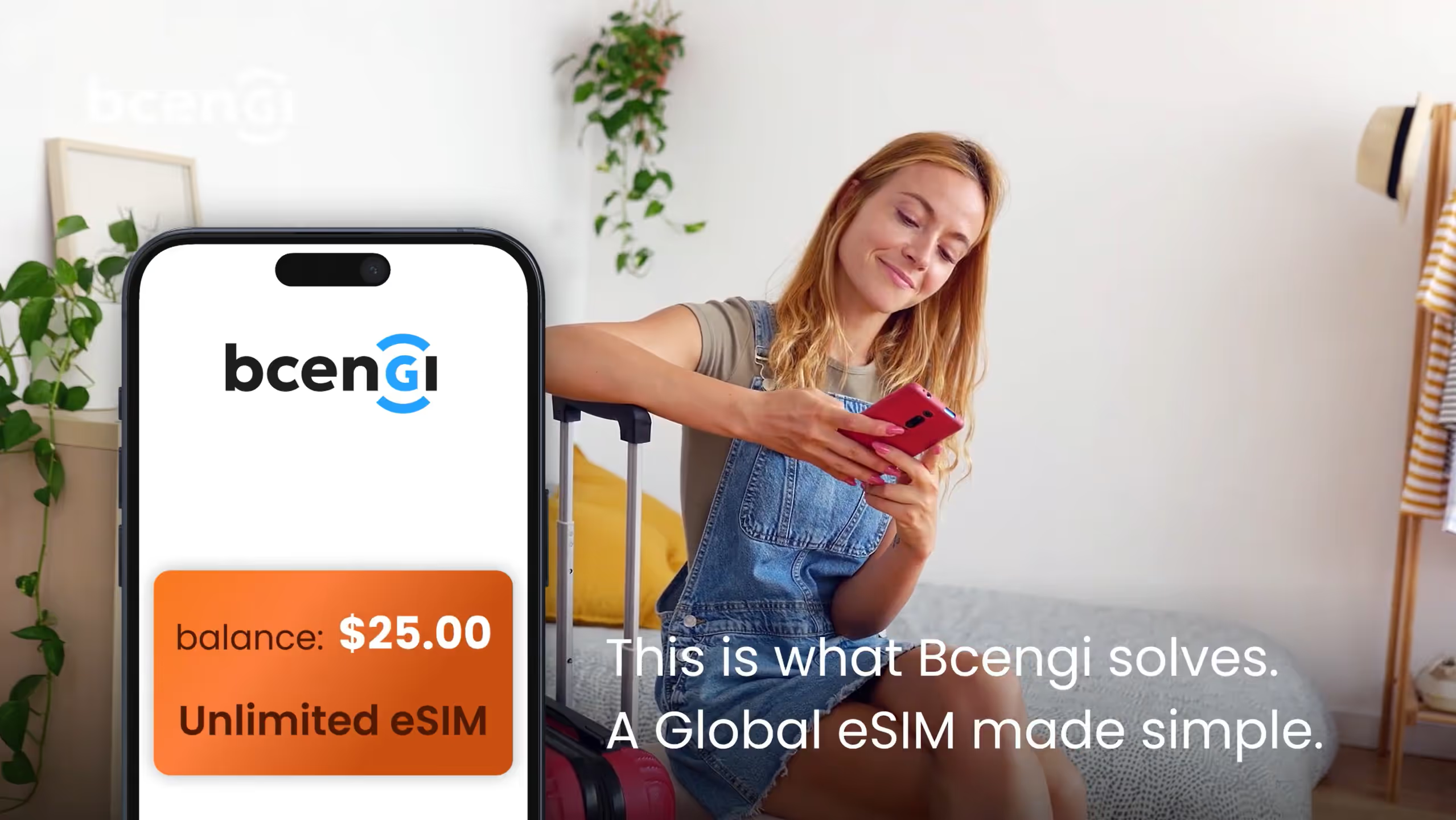
Install once, keep it on your phone.

Pay as you go, for actual use.

No fixed plans, no expiration.

Use balance only when you travel.

One eSIM for all trips, 200+ Countries.
Pay As You Go data, wherever you travel
💵 You add
$25
to your balance.
✈️ In
Kazakhstan
you use
3GB
at
$
1.68
/GB
.
🌍
Turkey
3 months later -
3GB at $
1.54
/GB.
🔥 Your same balance covers both trips -
one eSIM, no expiry, no wasted data, no new package.
Just $
1.68
per GB. No surprises, No bundles, No expiry.

Light Usage
~200 MB/day
$
0.00
/day
Maps, messaging, browsing

Moderate
~500 MB/day
$
0.00
/day

Heavy
~2 GB/day
$
0.00
/day
Streaming, uploads, video calls
Almaty: As Kazakhstan's largest city, Almaty has excellent 4G and expanding 5G coverage in the city center and key business districts. Tourist areas like Dostyk Avenue and the Kok-Tobe hill offer strong signal. The Almaty Metro provides good connectivity on station platforms, but connections frequently drop in the tunnels between stations. Indoor coverage in modern malls is reliable, but can be weaker inside older concrete apartment blocks.
Astana: The capital city features some of the best mobile infrastructure in the country, with widespread 4G and 5G, especially on the modern Left Bank around landmarks like Bayterek Tower and the EXPO complex. Since there is no underground transport system, you can expect a stable connection while moving around the city. Coverage inside the city's vast, modern buildings and shopping centers is generally very strong.
Shymkent: You'll find dependable 4G coverage across the main urban areas of Kazakhstan's third-largest city. The network is robust for navigation and communication in central districts and parks. While 5G is not as widespread as in the capital, the 4G network performs well. Signal may be less consistent inside densely built residential areas or on the city's periphery.
Aktau: This key Caspian Sea port city offers solid 4G connectivity throughout its core residential micro-districts and along the popular waterfront promenade. The network is optimized for the main city area where most business and leisure activities occur. However, signal strength can decrease significantly as you travel towards the industrial zones or further out into the surrounding steppe.


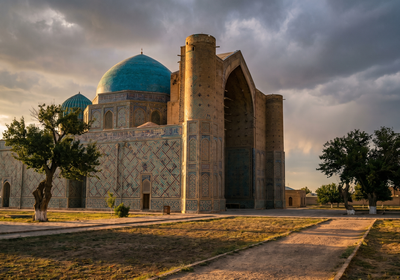
Major Highways (A- and M-series roads): Coverage is generally stable on key corridors like the A-2 (Almaty-Shymkent) and the A-1 (Astana-Almaty) when near cities and towns. However, expect long stretches of weak or non-existent signal when crossing the vast, open steppe between major population centers.
Kazakhstan Temir Zholy (KTZ) trains: On intercity routes, including the modern Tulpar-Talgo services, mobile signal is inconsistent. Service is available near populated areas but frequently drops out for extended periods while traversing the remote central and western regions of the country.
Tian Shan Mountain Passes: When driving in the mountainous regions southeast of Almaty, signal is highly unreliable. Routes through passes like the Korday Pass or into destinations like Shymbulak Ski Resort will experience intermittent service that often disappears completely in deep valleys or at higher altitudes.
Central Steppe and Desert Regions: The vast, sparsely inhabited steppe of central Kazakhstan and the desert areas in the southwest are significant dead zones for mobile coverage. Travelers on roads crossing regions like the Betpak-Dala desert should anticipate having no signal for several hours at a time.
How it works
Buy eSIM
Sign up and get your Global eSIM in just a few clicks.

Activate eSIM
Scan the QR code and get connected instantly — no physical SIM needed.

Pay as you go
Only pay for what you use. No contracts, no hidden fees.

Get your eSIM
“
I loved the per-country pricing model. I only paid for the countries I visited, and it was way cheaper than other eSIM providers. No hidden fees — just clear and simple.
“
The auto top-up feature is a lifesaver. I never have to check my balance — internet just works. And when I’m not traveling, I don’t pay. It’s fair and super convenient.


Angel Siphron
Rated
4.7


Bcengi offers data at $1.68 per gigabyte through Beeline networks. Payment is solely for consumed data, without requiring package purchases or minimum expenditures.
No, Bcengi operates concurrently with your current SIM card due to dual-SIM capabilities. Your standard SIM can remain in place for calls and text messages.
Yes, provided your specific device supports eSIM functionality, which applies to the majority of phones manufactured since 2019. You can verify compatibility at bcengi.com/travelpass/esim-compatibility.
Service availability is determined by the Beeline network infrastructure. Robust signal strength is generally found in prominent cities and popular visitor destinations, while more isolated locations might experience restricted coverage.
Most visitors typically consume between 500 MB to 2 GB of data daily. For a week of average usage, the cost would be around $5.88 when using pay-as-you-go rates.
Yes. A single Bcengi eSIM provides service in over 200 nations. Your remaining balance transfers, eliminating the requirement to purchase a new eSIM for every new place you visit.
You have the flexibility to add funds at any moment by visiting travel.bcengi.com, or you can activate an auto-refill feature to ensure your balance remains sufficient.
No, your Bcengi balance retains its validity indefinitely; it will not expire, regardless of whether you access it in the near future or much later.

$
1.68
/GB

Instant delivery

No expiry

24/7 support

Secure checkout

Pay As You Go
from
$
1.68
/GB
$10
POPULAR
$25
$50
$100
Select your starting balance
Get your eSIM
→

Secure Payments |
Powered by

Rated
4.7


💵 You add
$25
to your balance.
✈️ In
Kazakhstan
you use
3GB
at
$
1.68
/GB
.
🌍
Turkey
3 months later -
3GB at $
1.54
/GB.
🔥 Your same balance covers both trips — one eSIM, no expiry, no wasted data, no new package.
How it works


Install once, keep it on your phone

Use balance only when you travel

Pay as you go, for actual use.

No fixed plans, no expiration

One eSIM for all trips, 200+ Countries.
Learn more
Just $
1.68
per GB.
No surprises, No bundles, No expiry.

Light Usage •
200 MB/day
$
0.00
/day
Maps, messaging, browsing

Moderate •
500 MB/day
$
0.00
/day

Heavy •
2 GB/day
$
0.00
/day
Streaming, uploads, video calls
Almaty: As Kazakhstan's largest city, Almaty has excellent 4G and expanding 5G coverage in the city center and key business districts. Tourist areas like Dostyk Avenue and the Kok-Tobe hill offer strong signal. The Almaty Metro provides good connectivity on station platforms, but connections frequently drop in the tunnels between stations. Indoor coverage in modern malls is reliable, but can be weaker inside older concrete apartment blocks.
Astana: The capital city features some of the best mobile infrastructure in the country, with widespread 4G and 5G, especially on the modern Left Bank around landmarks like Bayterek Tower and the EXPO complex. Since there is no underground transport system, you can expect a stable connection while moving around the city. Coverage inside the city's vast, modern buildings and shopping centers is generally very strong.
Shymkent: You'll find dependable 4G coverage across the main urban areas of Kazakhstan's third-largest city. The network is robust for navigation and communication in central districts and parks. While 5G is not as widespread as in the capital, the 4G network performs well. Signal may be less consistent inside densely built residential areas or on the city's periphery.
Aktau: This key Caspian Sea port city offers solid 4G connectivity throughout its core residential micro-districts and along the popular waterfront promenade. The network is optimized for the main city area where most business and leisure activities occur. However, signal strength can decrease significantly as you travel towards the industrial zones or further out into the surrounding steppe.
Major Highways (A- and M-series roads): Coverage is generally stable on key corridors like the A-2 (Almaty-Shymkent) and the A-1 (Astana-Almaty) when near cities and towns. However, expect long stretches of weak or non-existent signal when crossing the vast, open steppe between major population centers.
Kazakhstan Temir Zholy (KTZ) trains: On intercity routes, including the modern Tulpar-Talgo services, mobile signal is inconsistent. Service is available near populated areas but frequently drops out for extended periods while traversing the remote central and western regions of the country.
Tian Shan Mountain Passes: When driving in the mountainous regions southeast of Almaty, signal is highly unreliable. Routes through passes like the Korday Pass or into destinations like Shymbulak Ski Resort will experience intermittent service that often disappears completely in deep valleys or at higher altitudes.
Central Steppe and Desert Regions: The vast, sparsely inhabited steppe of central Kazakhstan and the desert areas in the southwest are significant dead zones for mobile coverage. Travelers on roads crossing regions like the Betpak-Dala desert should anticipate having no signal for several hours at a time.
Learn more about
Kazakhstan
How it works

1. Buy eSIM
Sign up and get your Global eSIM in just a few clicks.

2. Activate eSIM
Scan the QR code and get connected instantly — no physical SIM needed.

3. Pay as you go
Only pay for what you use. No contracts, no hidden fees.
Get your eSIM
Rated
4.7
“
I loved the per-country pricing model. I only paid for the countries I visited, and it was way cheaper than other eSIM providers. No hidden fees — just clear and simple.


Kaylynn Mango


Bcengi offers data at $1.68 per gigabyte through Beeline networks. Payment is solely for consumed data, without requiring package purchases or minimum expenditures.
No, Bcengi operates concurrently with your current SIM card due to dual-SIM capabilities. Your standard SIM can remain in place for calls and text messages.
Yes, provided your specific device supports eSIM functionality, which applies to the majority of phones manufactured since 2019. You can verify compatibility at bcengi.com/travelpass/esim-compatibility.
Service availability is determined by the Beeline network infrastructure. Robust signal strength is generally found in prominent cities and popular visitor destinations, while more isolated locations might experience restricted coverage.
Most visitors typically consume between 500 MB to 2 GB of data daily. For a week of average usage, the cost would be around $5.88 when using pay-as-you-go rates.
Yes. A single Bcengi eSIM provides service in over 200 nations. Your remaining balance transfers, eliminating the requirement to purchase a new eSIM for every new place you visit.
You have the flexibility to add funds at any moment by visiting travel.bcengi.com, or you can activate an auto-refill feature to ensure your balance remains sufficient.
No, your Bcengi balance retains its validity indefinitely; it will not expire, regardless of whether you access it in the near future or much later.
$
1.68
/GB
Instant delivery

No expiry
24/7 support
Secure checkout

Bcengi TravelPass keeps you connected worldwide with one reusable eSIM - no expirations, no wasted data.


Settings
English

USD


Bcengi TravelPass keeps you connected worldwide with one reusable eSIM - no expirations, no wasted data.



Secure Payments | Powered by