

Personal Travel
Personal Travel

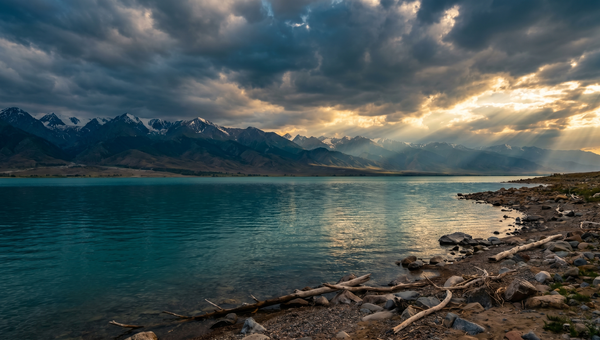

Kyrgyzstan

Beeline KG
Pay As You Go
from
$
1.96
/GB
$10
POPULAR
$25
$50
$100
Select your starting balance
Get your eSIM
→

Your payment is fully secured |
Powered by

Rated
4.7


Install once, keep it on your phone.

Pay as you go, for actual use.

No fixed plans, no expiration.

Use balance only when you travel.

One eSIM for all trips, 200+ Countries.
Pay As You Go data, wherever you travel
💵 You add
$25
to your balance.
✈️ In
Kyrgyzstan
you use
3GB
at
$
1.96
/GB
.
🌍
Turkey
3 months later -
3GB at $
1.54
/GB.
🔥 Your same balance covers both trips -
one eSIM, no expiry, no wasted data, no new package.
Just $
1.96
per GB. No surprises, No bundles, No expiry.

Light Usage
~200 MB/day
$
0.00
/day
Maps, messaging, browsing

Moderate
~500 MB/day
$
0.00
/day

Heavy
~2 GB/day
$
0.00
/day
Streaming, uploads, video calls
Bishkek: As the capital, Bishkek offers excellent 4G/LTE coverage across its central districts, including the area around Ala-Too Square and major shopping centers like Bishkek Park. Indoor reception in modern buildings is strong, though it can be weaker inside older, Soviet-era concrete structures. Public transport consists of above-ground buses and marshrutkas, ensuring a continuous connection while commuting.
Osh: Kyrgyzstan's southern hub has reliable 4G service in its core, especially around the UNESCO World Heritage site of Sulaiman-Too Sacred Mountain and the sprawling Jayma Bazaar. While the city center is well-covered, signal strength may fluctuate in denser market areas or as you move into the residential suburbs on the city's periphery.
Karakol: The town of Karakol, a popular base for trekkers, has good 4G connectivity for daily use. You will have a solid signal visiting local attractions like the Dungan Mosque or the Holy Trinity Cathedral. It is critical to note that mobile service diminishes rapidly and often disappears entirely once you venture into the nearby mountain valleys like Jeti-Oguz or towards Ala-Kul lake.
Cholpon-Ata: This major resort town on the northern shore of Issyk-Kul provides dependable 4G coverage along the main coastal road and within its numerous hotels and beach areas. During the peak summer tourist season from June to August, the network can experience high traffic, which may lead to slower data speeds. Coverage is strongest near the developed lakeside and less consistent further inland.
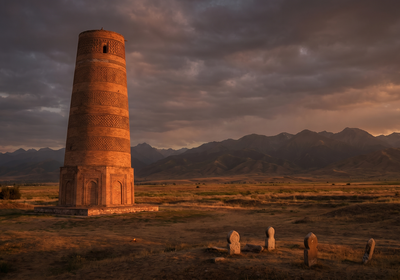


Bishkek-Osh Highway (M41): As the primary north-south route, you'll find reliable coverage near major cities like Bishkek, Jalal-Abad, and Osh. However, expect prolonged signal loss and dead zones in the high-altitude mountain sections, particularly between the Suusamyr Valley and the Fergana Valley.
Issyk-Kul Ring Road (A363/A365): Connectivity is generally good around the northern shore towns of Cholpon-Ata and Balykchy. The southern shore route can be less reliable, with intermittent signal in the more remote stretches and canyons away from villages.
Kyrgyz Railway (Kyrgyz Temir Jolu): On the main passenger route from Bishkek to Balykchy, the signal is strong near the capital but becomes weak to non-existent for long periods while passing through the mountainous Boom Gorge.
Mountain Passes & Tunnels: Expect a complete loss of mobile service when traversing high passes like Töö-Ashuu and Ala-Bel. Cellular signal does not penetrate the Töö-Ashuu Tunnel, and service only resumes upon exiting.
Naryn and Remote Regions: Vast areas of the Naryn region, including the routes to Kel-Suu Lake and Torugart Pass, have extremely sparse or no coverage outside of Naryn town. Remote mountain valleys and border areas in Batken and Issyk-Kul oblasts are also significant dead zones.
How it works
Buy eSIM
Sign up and get your Global eSIM in just a few clicks.

Activate eSIM
Scan the QR code and get connected instantly — no physical SIM needed.

Pay as you go
Only pay for what you use. No contracts, no hidden fees.

Get your eSIM
“
I loved the per-country pricing model. I only paid for the countries I visited, and it was way cheaper than other eSIM providers. No hidden fees — just clear and simple.
“
The auto top-up feature is a lifesaver. I never have to check my balance — internet just works. And when I’m not traveling, I don’t pay. It’s fair and super convenient.


Angel Siphron
Rated
4.7


Bcengi provides data services on Beeline KG networks at a rate of $1.96 per gigabyte. You are only charged for the data you actively consume; there are no mandatory bundles or minimum expenditure amounts.
No. Bcengi operates in conjunction with your current SIM card, leveraging dual-SIM technology. You can keep your regular SIM in place for making calls and sending text messages.
Yes, if your specific device offers eSIM support, which is a feature in most phones manufactured from 2019 onward. For compatibility verification, please visit bcengi.com/travelpass/esim-compatibility.
Coverage is dependent on the Beeline KG network infrastructure. Strong signal strength is generally available in major cities and popular tourist destinations. Conversely, remote locations might experience limited signal access.
Most travelers consume between 500 MB and 2 GB of data daily. A week of moderate usage would incur an approximate cost of $6.86, based on pay-as-you-go pricing.
Yes. A single Bcengi eSIM is valid in over 200 different countries. Your existing balance carries over, so there is no requirement to purchase a new eSIM for each new destination.
You have the option to top up your balance at any time via travel.bcengi.com, or you can activate an auto-refill function to ensure your balance never depletes.
No. Your Bcengi balance never expires, regardless of whether you choose to use it next week or at any point in the following year.

$
1.96
/GB

Instant delivery

No expiry

24/7 support

Secure checkout

Pay As You Go
from
$
1.96
/GB
$10
POPULAR
$25
$50
$100
Select your starting balance
Get your eSIM
→

Secure Payments |
Powered by

Rated
4.7


💵 You add
$25
to your balance.
✈️ In
Kyrgyzstan
you use
3GB
at
$
1.96
/GB
.
🌍
Turkey
3 months later -
3GB at $
1.54
/GB.
🔥 Your same balance covers both trips — one eSIM, no expiry, no wasted data, no new package.
How it works


Install once, keep it on your phone

Use balance only when you travel

Pay as you go, for actual use.

No fixed plans, no expiration

One eSIM for all trips, 200+ Countries.
Learn more
Just $
1.96
per GB.
No surprises, No bundles, No expiry.

Light Usage •
200 MB/day
$
0.00
/day
Maps, messaging, browsing

Moderate •
500 MB/day
$
0.00
/day

Heavy •
2 GB/day
$
0.00
/day
Streaming, uploads, video calls
Bishkek: As the capital, Bishkek offers excellent 4G/LTE coverage across its central districts, including the area around Ala-Too Square and major shopping centers like Bishkek Park. Indoor reception in modern buildings is strong, though it can be weaker inside older, Soviet-era concrete structures. Public transport consists of above-ground buses and marshrutkas, ensuring a continuous connection while commuting.
Osh: Kyrgyzstan's southern hub has reliable 4G service in its core, especially around the UNESCO World Heritage site of Sulaiman-Too Sacred Mountain and the sprawling Jayma Bazaar. While the city center is well-covered, signal strength may fluctuate in denser market areas or as you move into the residential suburbs on the city's periphery.
Karakol: The town of Karakol, a popular base for trekkers, has good 4G connectivity for daily use. You will have a solid signal visiting local attractions like the Dungan Mosque or the Holy Trinity Cathedral. It is critical to note that mobile service diminishes rapidly and often disappears entirely once you venture into the nearby mountain valleys like Jeti-Oguz or towards Ala-Kul lake.
Cholpon-Ata: This major resort town on the northern shore of Issyk-Kul provides dependable 4G coverage along the main coastal road and within its numerous hotels and beach areas. During the peak summer tourist season from June to August, the network can experience high traffic, which may lead to slower data speeds. Coverage is strongest near the developed lakeside and less consistent further inland.
Bishkek-Osh Highway (M41): As the primary north-south route, you'll find reliable coverage near major cities like Bishkek, Jalal-Abad, and Osh. However, expect prolonged signal loss and dead zones in the high-altitude mountain sections, particularly between the Suusamyr Valley and the Fergana Valley.
Issyk-Kul Ring Road (A363/A365): Connectivity is generally good around the northern shore towns of Cholpon-Ata and Balykchy. The southern shore route can be less reliable, with intermittent signal in the more remote stretches and canyons away from villages.
Kyrgyz Railway (Kyrgyz Temir Jolu): On the main passenger route from Bishkek to Balykchy, the signal is strong near the capital but becomes weak to non-existent for long periods while passing through the mountainous Boom Gorge.
Mountain Passes & Tunnels: Expect a complete loss of mobile service when traversing high passes like Töö-Ashuu and Ala-Bel. Cellular signal does not penetrate the Töö-Ashuu Tunnel, and service only resumes upon exiting.
Naryn and Remote Regions: Vast areas of the Naryn region, including the routes to Kel-Suu Lake and Torugart Pass, have extremely sparse or no coverage outside of Naryn town. Remote mountain valleys and border areas in Batken and Issyk-Kul oblasts are also significant dead zones.
Learn more about
Kyrgyzstan
How it works

1. Buy eSIM
Sign up and get your Global eSIM in just a few clicks.

2. Activate eSIM
Scan the QR code and get connected instantly — no physical SIM needed.

3. Pay as you go
Only pay for what you use. No contracts, no hidden fees.
Get your eSIM
Rated
4.7
“
I loved the per-country pricing model. I only paid for the countries I visited, and it was way cheaper than other eSIM providers. No hidden fees — just clear and simple.


Kaylynn Mango


Bcengi provides data services on Beeline KG networks at a rate of $1.96 per gigabyte. You are only charged for the data you actively consume; there are no mandatory bundles or minimum expenditure amounts.
No. Bcengi operates in conjunction with your current SIM card, leveraging dual-SIM technology. You can keep your regular SIM in place for making calls and sending text messages.
Yes, if your specific device offers eSIM support, which is a feature in most phones manufactured from 2019 onward. For compatibility verification, please visit bcengi.com/travelpass/esim-compatibility.
Coverage is dependent on the Beeline KG network infrastructure. Strong signal strength is generally available in major cities and popular tourist destinations. Conversely, remote locations might experience limited signal access.
Most travelers consume between 500 MB and 2 GB of data daily. A week of moderate usage would incur an approximate cost of $6.86, based on pay-as-you-go pricing.
Yes. A single Bcengi eSIM is valid in over 200 different countries. Your existing balance carries over, so there is no requirement to purchase a new eSIM for each new destination.
You have the option to top up your balance at any time via travel.bcengi.com, or you can activate an auto-refill function to ensure your balance never depletes.
No. Your Bcengi balance never expires, regardless of whether you choose to use it next week or at any point in the following year.
$
1.96
/GB
Instant delivery

No expiry
24/7 support
Secure checkout

Bcengi TravelPass keeps you connected worldwide with one reusable eSIM - no expirations, no wasted data.


Settings
English

USD


Bcengi TravelPass keeps you connected worldwide with one reusable eSIM - no expirations, no wasted data.



Secure Payments | Powered by