
Personal Travel
Personal Travel

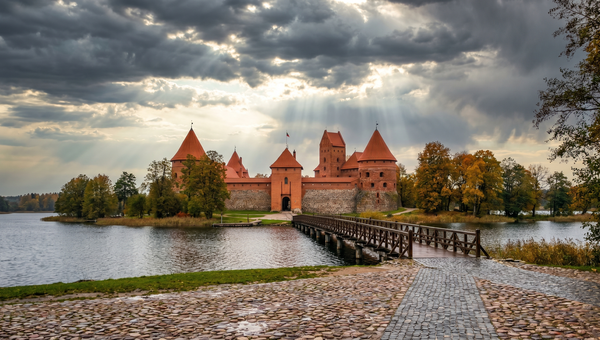

Lithuania

OMNITEL, TELE2
Pay As You Go
from
$
1.19
/GB
$10
POPULAR
$25
$50
$100
Select your starting balance
Get your eSIM
→

Your payment is fully secured |
Powered by

Rated
4.7


Install once, keep it on your phone.

Pay as you go, for actual use.

No fixed plans, no expiration.

Use balance only when you travel.

One eSIM for all trips, 200+ Countries.
Pay As You Go data, wherever you travel
💵 You add
$25
to your balance.
✈️ In
Lithuania
you use
3GB
at
$
1.19
/GB
.
🌍
Portugal
3 months later -
3GB at $
1.19
/GB.
🔥 Your same balance covers both trips -
one eSIM, no expiry, no wasted data, no new package.
Just $
1.19
per GB. No surprises, No bundles, No expiry.

Light Usage
~200 MB/day
$
0.00
/day
Maps, messaging, browsing

Moderate
~500 MB/day
$
0.00
/day

Heavy
~2 GB/day
$
0.00
/day
Streaming, uploads, video calls
Vilnius: Expect excellent 4G and 5G coverage across the capital. In the UNESCO-listed Old Town (Senamiestis), outdoor reception is strong, though the thick walls of historic buildings or basement-level restaurants can sometimes reduce indoor signal strength. Surface-level public transport like buses and trolleybuses maintains a reliable connection, as the city does not have an underground metro system.
Kaunas: You'll find consistently fast 4G and 5G service throughout Lithuania's second city, from the modern centre to the historic Old Town. While outdoor coverage is superb, signals may be weaker deep inside some older, dense Soviet-era apartment blocks or in subterranean cellars.
Klaipėda: This major port city offers comprehensive 4G and 5G coverage, including along its beaches and within the port area. The mobile connection remains stable during the short ferry crossing to the Curonian Spit. Inside the charming half-timbered buildings of the Old Town, indoor reception can occasionally be less consistent.
Palanga: As a prime seaside resort, Palanga is well-covered with strong 4G and 5G signals along its popular beaches, the main J. Basanavičiaus street, and the iconic pier. During peak tourist season in July and August, you may experience slightly slower data speeds in the most crowded spots due to network congestion, but the service is generally very dependable.



Main Highways (A1, A2, Via Baltica): Mobile coverage is generally excellent and consistent along Lithuania's primary motorways, including the A1 connecting Vilnius, Kaunas, and Klaipėda, and the A2 to Panevėžys. You can expect reliable 4G/LTE service for most of your drive. Signal strength may occasionally weaken on smaller regional roads that cut through dense forests or sparsely populated areas.
LTG Link Intercity Trains: The primary rail routes connecting Vilnius, Kaunas, Klaipėda, and Šiauliai offer good and stable connectivity, especially on the busy Vilnius-Kaunas line. On longer journeys through rural eastern or western Lithuania, you may experience brief periods of slower data speeds or signal drops between towns.
National Parks and Forests: As Lithuania is a relatively flat country, mountain-related signal loss is not a concern. However, in heavily forested areas like Dzūkija or Aukštaitija National Parks, mobile signal can become patchy or unavailable away from main roads and towns. Expect intermittent service when hiking or exploring deep within these regions.
Tunnels and Overpasses: Lithuania has very few long tunnels. You might experience a brief, temporary loss of signal when passing through the Kaunas railway tunnel. Connectivity is typically restored immediately upon exiting. Most road underpasses and bridges do not cause significant service interruptions.
Curonian Spit and Border Areas: While the main towns on the Curonian Spit (Kuršių nerija) like Nida and Juodkrantė have good coverage, the signal can weaken along the narrow stretch of land between them. Similarly, in remote areas along the eastern border with Belarus, network performance may be less consistent compared to the country's central regions.
How it works
Buy eSIM
Sign up and get your Global eSIM in just a few clicks.

Activate eSIM
Scan the QR code and get connected instantly — no physical SIM needed.

Pay as you go
Only pay for what you use. No contracts, no hidden fees.

Get your eSIM
“
I loved the per-country pricing model. I only paid for the countries I visited, and it was way cheaper than other eSIM providers. No hidden fees — just clear and simple.
“
The auto top-up feature is a lifesaver. I never have to check my balance — internet just works. And when I’m not traveling, I don’t pay. It’s fair and super convenient.


Angel Siphron
Rated
4.7


On the OMNITEL and TELE2 networks, Bcengi charges $1.19 per gigabyte. You only pay for the data you consume, without any forced bundles or minimum expenditure requirements.
No. Bcengi functions alongside your current SIM card due to its dual-SIM compatibility. You can keep your standard SIM card active for making calls and sending texts.
Yes, provided your device supports eSIM technology (which includes most smartphones released from 2019 onwards). You can verify your device's compatibility at bcengi.com/travelpass/esim-compatibility.
Coverage is reliant on the network infrastructure of OMNITEL and TELE2. While strong signal is generally available in major urban centers and popular tourist locations, more isolated regions might experience limited or no service.
Most travelers typically utilize between 500 MB and 2 GB of data daily. A week of moderate usage would cost approximately $4.17 when using the pay-as-you-go pricing model.
Absolutely. A single Bcengi eSIM is functional in over 200 countries. Your existing balance carries over between destinations, eliminating the need to purchase a new eSIM for each trip.
You can top up your balance at any time by visiting travel.bcengi.com, or you can activate the auto-refill feature to ensure your balance is continuously maintained.
No. Your Bcengi balance holds indefinite validity, whether you choose to use it next week or sometime next year.

$
1.19
/GB

Instant delivery

No expiry

24/7 support

Secure checkout

Pay As You Go
from
$
1.19
/GB
$10
POPULAR
$25
$50
$100
Select your starting balance
Get your eSIM
→

Secure Payments |
Powered by

Rated
4.7


💵 You add
$25
to your balance.
✈️ In
Lithuania
you use
3GB
at
$
1.19
/GB
.
🌍
Portugal
3 months later -
3GB at $
1.19
/GB.
🔥 Your same balance covers both trips — one eSIM, no expiry, no wasted data, no new package.
How it works


Install once, keep it on your phone

Use balance only when you travel

Pay as you go, for actual use.

No fixed plans, no expiration

One eSIM for all trips, 200+ Countries.
Learn more
Just $
1.19
per GB.
No surprises, No bundles, No expiry.

Light Usage •
200 MB/day
$
0.00
/day
Maps, messaging, browsing

Moderate •
500 MB/day
$
0.00
/day

Heavy •
2 GB/day
$
0.00
/day
Streaming, uploads, video calls
Vilnius: Expect excellent 4G and 5G coverage across the capital. In the UNESCO-listed Old Town (Senamiestis), outdoor reception is strong, though the thick walls of historic buildings or basement-level restaurants can sometimes reduce indoor signal strength. Surface-level public transport like buses and trolleybuses maintains a reliable connection, as the city does not have an underground metro system.
Kaunas: You'll find consistently fast 4G and 5G service throughout Lithuania's second city, from the modern centre to the historic Old Town. While outdoor coverage is superb, signals may be weaker deep inside some older, dense Soviet-era apartment blocks or in subterranean cellars.
Klaipėda: This major port city offers comprehensive 4G and 5G coverage, including along its beaches and within the port area. The mobile connection remains stable during the short ferry crossing to the Curonian Spit. Inside the charming half-timbered buildings of the Old Town, indoor reception can occasionally be less consistent.
Palanga: As a prime seaside resort, Palanga is well-covered with strong 4G and 5G signals along its popular beaches, the main J. Basanavičiaus street, and the iconic pier. During peak tourist season in July and August, you may experience slightly slower data speeds in the most crowded spots due to network congestion, but the service is generally very dependable.
Main Highways (A1, A2, Via Baltica): Mobile coverage is generally excellent and consistent along Lithuania's primary motorways, including the A1 connecting Vilnius, Kaunas, and Klaipėda, and the A2 to Panevėžys. You can expect reliable 4G/LTE service for most of your drive. Signal strength may occasionally weaken on smaller regional roads that cut through dense forests or sparsely populated areas.
LTG Link Intercity Trains: The primary rail routes connecting Vilnius, Kaunas, Klaipėda, and Šiauliai offer good and stable connectivity, especially on the busy Vilnius-Kaunas line. On longer journeys through rural eastern or western Lithuania, you may experience brief periods of slower data speeds or signal drops between towns.
National Parks and Forests: As Lithuania is a relatively flat country, mountain-related signal loss is not a concern. However, in heavily forested areas like Dzūkija or Aukštaitija National Parks, mobile signal can become patchy or unavailable away from main roads and towns. Expect intermittent service when hiking or exploring deep within these regions.
Tunnels and Overpasses: Lithuania has very few long tunnels. You might experience a brief, temporary loss of signal when passing through the Kaunas railway tunnel. Connectivity is typically restored immediately upon exiting. Most road underpasses and bridges do not cause significant service interruptions.
Curonian Spit and Border Areas: While the main towns on the Curonian Spit (Kuršių nerija) like Nida and Juodkrantė have good coverage, the signal can weaken along the narrow stretch of land between them. Similarly, in remote areas along the eastern border with Belarus, network performance may be less consistent compared to the country's central regions.
Learn more about
Lithuania
How it works

1. Buy eSIM
Sign up and get your Global eSIM in just a few clicks.

2. Activate eSIM
Scan the QR code and get connected instantly — no physical SIM needed.

3. Pay as you go
Only pay for what you use. No contracts, no hidden fees.
Get your eSIM
Rated
4.7
“
I loved the per-country pricing model. I only paid for the countries I visited, and it was way cheaper than other eSIM providers. No hidden fees — just clear and simple.


Kaylynn Mango


On the OMNITEL and TELE2 networks, Bcengi charges $1.19 per gigabyte. You only pay for the data you consume, without any forced bundles or minimum expenditure requirements.
No. Bcengi functions alongside your current SIM card due to its dual-SIM compatibility. You can keep your standard SIM card active for making calls and sending texts.
Yes, provided your device supports eSIM technology (which includes most smartphones released from 2019 onwards). You can verify your device's compatibility at bcengi.com/travelpass/esim-compatibility.
Coverage is reliant on the network infrastructure of OMNITEL and TELE2. While strong signal is generally available in major urban centers and popular tourist locations, more isolated regions might experience limited or no service.
Most travelers typically utilize between 500 MB and 2 GB of data daily. A week of moderate usage would cost approximately $4.17 when using the pay-as-you-go pricing model.
Absolutely. A single Bcengi eSIM is functional in over 200 countries. Your existing balance carries over between destinations, eliminating the need to purchase a new eSIM for each trip.
You can top up your balance at any time by visiting travel.bcengi.com, or you can activate the auto-refill feature to ensure your balance is continuously maintained.
No. Your Bcengi balance holds indefinite validity, whether you choose to use it next week or sometime next year.
$
1.19
/GB
Instant delivery

No expiry
24/7 support
Secure checkout

Bcengi TravelPass keeps you connected worldwide with one reusable eSIM - no expirations, no wasted data.


Settings
English

USD


Bcengi TravelPass keeps you connected worldwide with one reusable eSIM - no expirations, no wasted data.



Secure Payments | Powered by