
Personal Travel
Personal Travel



Madagascar

Telma Mobile
Pay As You Go
from
$
5
/GB
$10
POPULAR
$25
$50
$100
Select your starting balance
Get your eSIM
→

Your payment is fully secured |
Powered by

Rated
4.7


Install once, keep it on your phone.

Pay as you go, for actual use.

No fixed plans, no expiration.

Use balance only when you travel.

One eSIM for all trips, 200+ Countries.
Pay As You Go data, wherever you travel
💵 You add
$25
to your balance.
✈️ In
Madagascar
you use
3GB
at
$
5
/GB
.
🌍
France
3 months later -
3GB at $
1.19
/GB.
🔥 Your same balance covers both trips -
one eSIM, no expiry, no wasted data, no new package.
Just $
5
per GB. No surprises, No bundles, No expiry.

Light Usage
~200 MB/day
$
0.00
/day
Maps, messaging, browsing

Moderate
~500 MB/day
$
0.00
/day

Heavy
~2 GB/day
$
0.00
/day
Streaming, uploads, video calls
Antananarivo: As the capital, Antananarivo offers the most reliable mobile coverage in Madagascar. You'll find strong 4G/LTE signals in central districts like Analakely and the Haute-Ville (Upper Town). Connections remain stable along major thoroughfares, but can weaken inside older, thick-walled buildings or in the dense, hilly residential areas on the city's outskirts.
Toamasina: In Madagascar's primary port city, connectivity is concentrated around the bustling city center and the port facilities. 4G service is generally good for everyday use in these core areas. However, signal strength can become less consistent once you travel into the surrounding residential neighborhoods or within large industrial buildings.
Mahajanga: This popular west coast city provides decent 4G coverage in its central areas and along the famous seaside promenade, the "Bord". While you can expect a reliable connection for social media and maps in these tourist-frequented zones, the signal may become less stable in residential areas further from the city center.
Nosy Be: As a major tourist hotspot, the island's network is focused on key areas. You'll find good 4G/LTE performance in the main town of Hell-Ville and around popular beach resorts like Ambatoloaka. Be aware that venturing into the island's interior for nature reserves or to visit smaller villages will often result in a drop to 3G, 2G, or a complete loss of signal.


National Routes: On the main paved highways like the RN7 (Antananarivo to Toliara), RN2 (Antananarivo to Toamasina), and RN4 (Antananarivo to Mahajanga), you will find reliable signal within cities and larger towns. However, expect frequent and often lengthy signal drops in the rural and sparsely populated stretches between them.
Fianarantsoa-Côte Est Railway: This scenic train journey travels through dense eastern rainforests and is famous for its almost complete lack of mobile connectivity. Signal is extremely rare and should not be expected for the vast majority of the trip, with brief service possible only at a few station stops.
Central Highlands: Driving through the mountainous Central Highlands, especially along the winding sections of the RN7, results in highly intermittent service. Mobile signal is frequently lost in valleys and on remote stretches between towns like Antsirabe, Ambositra, and Fianarantsoa.
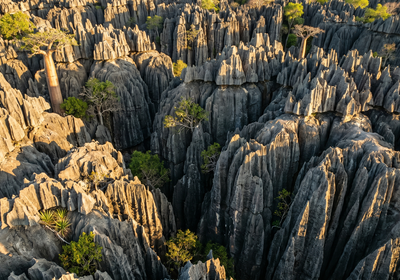
Western Madagascar (RN8): The route west toward Morondava and the unpaved roads used to access attractions like the Tsingy de Bemaraha National Park have extremely limited to non-existent coverage. Travelers should anticipate being completely offline for hours or days at a time in this region.
Deep South Routes: South of Isalo National Park, along the RN10 and RN13, the landscape becomes increasingly arid and remote. Mobile network coverage is very sparse and concentrated only in the few small towns along the way, with vast dead zones in between.
How it works
Buy eSIM
Sign up and get your Global eSIM in just a few clicks.

Activate eSIM
Scan the QR code and get connected instantly — no physical SIM needed.

Pay as you go
Only pay for what you use. No contracts, no hidden fees.

Get your eSIM
“
I loved the per-country pricing model. I only paid for the countries I visited, and it was way cheaper than other eSIM providers. No hidden fees — just clear and simple.
“
The auto top-up feature is a lifesaver. I never have to check my balance — internet just works. And when I’m not traveling, I don’t pay. It’s fair and super convenient.


Angel Siphron
Rated
4.7


Data through Bcengi costs $5 per gigabyte (GB) when using Telma Mobile's network infrastructure. You are billed solely for the data consumed, without any requirement for bundles or a minimum spend.
No, that's not necessary. Bcengi functions in conjunction with your current physical SIM card, leveraging dual-SIM technology. Your traditional SIM remains available for making calls and sending texts.
Yes, an eSIM can be used if your device offers eSIM support, which is true for most smartphones manufactured since 2019. Please confirm your device's compatibility by visiting bcengi.com/travelpass/esim-compatibility.
Coverage for eSIM services relies on the network infrastructure of Telma Mobile. You will generally find robust signal in major urban centers and popular tourist regions. However, more isolated locations might experience restricted signal reception.
Travelers typically consume between 500 MB and 2 GB of data daily. For a moderate week of usage, with pay-as-you-go rates, the estimated cost is approximately $17.50.
Yes, definitely. A single Bcengi eSIM functions across more than 200 countries. Your existing balance transfers, removing the need to acquire a separate eSIM for each new destination.
You have the option to add funds to your account at any point by visiting travel.bcengi.com. Another choice is to activate auto-refill, ensuring your balance is consistently topped up.
No, your Bcengi account balance is non-expiring. It remains valid for use, whether you need it next week or even next year.

$
5
/GB

Instant delivery

No expiry

24/7 support

Secure checkout

Pay As You Go
from
$
5
/GB
$10
POPULAR
$25
$50
$100
Select your starting balance
Get your eSIM
→

Secure Payments |
Powered by

Rated
4.7


💵 You add
$25
to your balance.
✈️ In
Madagascar
you use
3GB
at
$
5
/GB
.
🌍
France
3 months later -
3GB at $
1.19
/GB.
🔥 Your same balance covers both trips — one eSIM, no expiry, no wasted data, no new package.
How it works


Install once, keep it on your phone

Use balance only when you travel

Pay as you go, for actual use.

No fixed plans, no expiration

One eSIM for all trips, 200+ Countries.
Learn more
Just $
5
per GB.
No surprises, No bundles, No expiry.

Light Usage •
200 MB/day
$
0.00
/day
Maps, messaging, browsing

Moderate •
500 MB/day
$
0.00
/day

Heavy •
2 GB/day
$
0.00
/day
Streaming, uploads, video calls
Antananarivo: As the capital, Antananarivo offers the most reliable mobile coverage in Madagascar. You'll find strong 4G/LTE signals in central districts like Analakely and the Haute-Ville (Upper Town). Connections remain stable along major thoroughfares, but can weaken inside older, thick-walled buildings or in the dense, hilly residential areas on the city's outskirts.
Toamasina: In Madagascar's primary port city, connectivity is concentrated around the bustling city center and the port facilities. 4G service is generally good for everyday use in these core areas. However, signal strength can become less consistent once you travel into the surrounding residential neighborhoods or within large industrial buildings.
Mahajanga: This popular west coast city provides decent 4G coverage in its central areas and along the famous seaside promenade, the "Bord". While you can expect a reliable connection for social media and maps in these tourist-frequented zones, the signal may become less stable in residential areas further from the city center.
Nosy Be: As a major tourist hotspot, the island's network is focused on key areas. You'll find good 4G/LTE performance in the main town of Hell-Ville and around popular beach resorts like Ambatoloaka. Be aware that venturing into the island's interior for nature reserves or to visit smaller villages will often result in a drop to 3G, 2G, or a complete loss of signal.
National Routes: On the main paved highways like the RN7 (Antananarivo to Toliara), RN2 (Antananarivo to Toamasina), and RN4 (Antananarivo to Mahajanga), you will find reliable signal within cities and larger towns. However, expect frequent and often lengthy signal drops in the rural and sparsely populated stretches between them.
Fianarantsoa-Côte Est Railway: This scenic train journey travels through dense eastern rainforests and is famous for its almost complete lack of mobile connectivity. Signal is extremely rare and should not be expected for the vast majority of the trip, with brief service possible only at a few station stops.
Central Highlands: Driving through the mountainous Central Highlands, especially along the winding sections of the RN7, results in highly intermittent service. Mobile signal is frequently lost in valleys and on remote stretches between towns like Antsirabe, Ambositra, and Fianarantsoa.
Western Madagascar (RN8): The route west toward Morondava and the unpaved roads used to access attractions like the Tsingy de Bemaraha National Park have extremely limited to non-existent coverage. Travelers should anticipate being completely offline for hours or days at a time in this region.
Deep South Routes: South of Isalo National Park, along the RN10 and RN13, the landscape becomes increasingly arid and remote. Mobile network coverage is very sparse and concentrated only in the few small towns along the way, with vast dead zones in between.
Learn more about
Madagascar
How it works

1. Buy eSIM
Sign up and get your Global eSIM in just a few clicks.

2. Activate eSIM
Scan the QR code and get connected instantly — no physical SIM needed.

3. Pay as you go
Only pay for what you use. No contracts, no hidden fees.
Get your eSIM
Rated
4.7
“
I loved the per-country pricing model. I only paid for the countries I visited, and it was way cheaper than other eSIM providers. No hidden fees — just clear and simple.


Kaylynn Mango


Data through Bcengi costs $5 per gigabyte (GB) when using Telma Mobile's network infrastructure. You are billed solely for the data consumed, without any requirement for bundles or a minimum spend.
No, that's not necessary. Bcengi functions in conjunction with your current physical SIM card, leveraging dual-SIM technology. Your traditional SIM remains available for making calls and sending texts.
Yes, an eSIM can be used if your device offers eSIM support, which is true for most smartphones manufactured since 2019. Please confirm your device's compatibility by visiting bcengi.com/travelpass/esim-compatibility.
Coverage for eSIM services relies on the network infrastructure of Telma Mobile. You will generally find robust signal in major urban centers and popular tourist regions. However, more isolated locations might experience restricted signal reception.
Travelers typically consume between 500 MB and 2 GB of data daily. For a moderate week of usage, with pay-as-you-go rates, the estimated cost is approximately $17.50.
Yes, definitely. A single Bcengi eSIM functions across more than 200 countries. Your existing balance transfers, removing the need to acquire a separate eSIM for each new destination.
You have the option to add funds to your account at any point by visiting travel.bcengi.com. Another choice is to activate auto-refill, ensuring your balance is consistently topped up.
No, your Bcengi account balance is non-expiring. It remains valid for use, whether you need it next week or even next year.
$
5
/GB
Instant delivery

No expiry
24/7 support
Secure checkout

Bcengi TravelPass keeps you connected worldwide with one reusable eSIM - no expirations, no wasted data.


Settings
English

USD


Bcengi TravelPass keeps you connected worldwide with one reusable eSIM - no expirations, no wasted data.



Secure Payments | Powered by