
Personal Travel
Personal Travel


Mali

MALITEL, Orange MALI
Pay As You Go
from
$
7.35
/GB
$10
POPULAR
$25
$50
$100
Select your starting balance
Get your eSIM
→

Your payment is fully secured |
Powered by

Rated
4.7


Install once, keep it on your phone.

Pay as you go, for actual use.

No fixed plans, no expiration.

Use balance only when you travel.

One eSIM for all trips, 200+ Countries.
Pay As You Go data, wherever you travel
💵 You add
$25
to your balance.
✈️ In
Mali
you use
3GB
at
$
7.35
/GB
.
🌍
France
3 months later -
3GB at $
1.19
/GB.
🔥 Your same balance covers both trips -
one eSIM, no expiry, no wasted data, no new package.
Just $
7.35
per GB. No surprises, No bundles, No expiry.

Light Usage
~200 MB/day
$
0.00
/day
Maps, messaging, browsing

Moderate
~500 MB/day
$
0.00
/day

Heavy
~2 GB/day
$
0.00
/day
Streaming, uploads, video calls
Bamako: As the capital, Bamako offers the most reliable 4G and 3G coverage from providers like Orange and Malitel. Signal is strongest in central business and administrative districts such as ACI 2000, Hippodrome, and Quartier du Fleuve. While outdoor connectivity is generally excellent, the signal can be weaker inside large concrete government buildings, hotels, or basements. Coverage becomes less consistent in the city's sprawling outer residential areas.
Sikasso: In Mali's second city, you'll find dependable 3G and growing 4G access, particularly in the commercial center and around the main market. The network is well-suited for calls, messaging, and general browsing. As you travel away from the urban core and into the surrounding agricultural regions, expect the connection to slow down and become less stable.
Mopti: This vital river port city has functional 3G coverage concentrated around the port, the main market, and central administrative zones. The connection is generally sufficient for essential online services. Signal strength can be less predictable in areas further from the city center or directly along the riverbanks, where network congestion can also occasionally affect speeds.
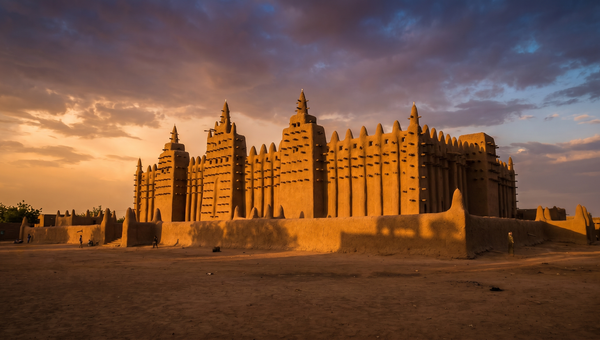
Djenné: Connectivity in this historic UNESCO World Heritage city is present but primarily limited to 3G. You can expect the best service in the open areas around the Great Mosque and the central market square. The thick mud-brick walls of the traditional homes and guesthouses can significantly impede the signal, often making indoor mobile data usage challenging.



Major National Roads: Connectivity is generally reliable on the main paved arteries in southern Mali, such as the RN6 between Bamako and Ségou and the RN7 to Sikasso. Expect signal to weaken or drop entirely in the long stretches between towns. North of Mopti towards Gao and Timbuktu, coverage becomes increasingly sparse and is often available only within the towns themselves.
Dakar-Niger Railway: The historic rail line connecting Bamako and Kayes has very limited to no regular passenger service. Should you travel on this route, do not expect continuous mobile signal. Coverage is typically lost shortly after leaving major towns like Kayes or Bamako and remains unavailable for most of the rural journey.
Bandiagara Escarpment (Dogon Country): While exploring the unique landscape of the Dogon Country, mobile signal is highly inconsistent. Coverage may be found in larger towns like Bandiagara, but it is often weak or non-existent when hiking or visiting the famous cliff-side villages. Plan for extended periods of being offline.
Northern Regions (Gao, Timbuktu, Kidal): The vast Saharan and Sahelian zones of northern Mali have extremely limited connectivity. While you can find a signal within the cities of Gao and Timbuktu, there is virtually no coverage on the roads or desert tracks connecting them. All travel in these regions involves complete loss of signal for many hours or days.
Inner Niger Delta: Traveling by road or boat through the Inner Niger Delta region around Mopti and Djenné involves frequent signal interruptions. While the main towns have service, the network does not extend reliably across the floodplains and waterways, leading to patchy coverage between villages and settlements.
How it works
Buy eSIM
Sign up and get your Global eSIM in just a few clicks.

Activate eSIM
Scan the QR code and get connected instantly — no physical SIM needed.

Pay as you go
Only pay for what you use. No contracts, no hidden fees.

Get your eSIM
“
I loved the per-country pricing model. I only paid for the countries I visited, and it was way cheaper than other eSIM providers. No hidden fees — just clear and simple.
“
The auto top-up feature is a lifesaver. I never have to check my balance — internet just works. And when I’m not traveling, I don’t pay. It’s fair and super convenient.


Angel Siphron
Rated
4.7


The cost of eSIM data from Bcengi in Mali is $7.35 per gigabyte when utilizing the MALITEL and Orange MALI networks. You are billed only for the data consumed, with no compulsory bundles or minimum spending thresholds.
It is not necessary to remove your existing physical SIM card. Bcengi operates in conjunction with your current SIM, leveraging dual-SIM technology. You can continue to use your regular SIM for making calls and sending texts.
eSIM functionality is available on compatible devices, including most iPhones and Android phones manufactured from 2019 onward. To confirm your device's compatibility, please visit bcengi.com/travelpass/esim-compatibility.
Coverage for eSIM services in Mali relies on the existing network infrastructure of MALITEL and Orange MALI. Strong signal is generally present in major cities and popular tourist destinations, while remote regions may experience limited service.
Most visitors to Mali typically use 500 MB to 2 GB of data daily. Based on pay-as-you-go pricing, an average week of data usage would cost approximately $25.72.
This single Bcengi eSIM can be used in over 200 countries worldwide. Your accumulated balance carries over across different destinations, eliminating the need to acquire a new eSIM for each country you visit.
Should your balance run low, you can replenish it at any time by visiting travel.bcengi.com. Alternatively, enabling the auto-refill option ensures your balance remains continuously active.
No, your Bcengi balance does not have an expiration date. It remains valid indefinitely, whether you plan to use it next week or next year.

$
7.35
/GB

Instant delivery

No expiry

24/7 support

Secure checkout

Pay As You Go
from
$
7.35
/GB
$10
POPULAR
$25
$50
$100
Select your starting balance
Get your eSIM
→

Secure Payments |
Powered by

Rated
4.7


💵 You add
$25
to your balance.
✈️ In
Mali
you use
3GB
at
$
7.35
/GB
.
🌍
France
3 months later -
3GB at $
1.19
/GB.
🔥 Your same balance covers both trips — one eSIM, no expiry, no wasted data, no new package.
How it works


Install once, keep it on your phone

Use balance only when you travel

Pay as you go, for actual use.

No fixed plans, no expiration

One eSIM for all trips, 200+ Countries.
Learn more
Just $
7.35
per GB.
No surprises, No bundles, No expiry.

Light Usage •
200 MB/day
$
0.00
/day
Maps, messaging, browsing

Moderate •
500 MB/day
$
0.00
/day

Heavy •
2 GB/day
$
0.00
/day
Streaming, uploads, video calls
Bamako: As the capital, Bamako offers the most reliable 4G and 3G coverage from providers like Orange and Malitel. Signal is strongest in central business and administrative districts such as ACI 2000, Hippodrome, and Quartier du Fleuve. While outdoor connectivity is generally excellent, the signal can be weaker inside large concrete government buildings, hotels, or basements. Coverage becomes less consistent in the city's sprawling outer residential areas.
Sikasso: In Mali's second city, you'll find dependable 3G and growing 4G access, particularly in the commercial center and around the main market. The network is well-suited for calls, messaging, and general browsing. As you travel away from the urban core and into the surrounding agricultural regions, expect the connection to slow down and become less stable.
Mopti: This vital river port city has functional 3G coverage concentrated around the port, the main market, and central administrative zones. The connection is generally sufficient for essential online services. Signal strength can be less predictable in areas further from the city center or directly along the riverbanks, where network congestion can also occasionally affect speeds.
Djenné: Connectivity in this historic UNESCO World Heritage city is present but primarily limited to 3G. You can expect the best service in the open areas around the Great Mosque and the central market square. The thick mud-brick walls of the traditional homes and guesthouses can significantly impede the signal, often making indoor mobile data usage challenging.
Major National Roads: Connectivity is generally reliable on the main paved arteries in southern Mali, such as the RN6 between Bamako and Ségou and the RN7 to Sikasso. Expect signal to weaken or drop entirely in the long stretches between towns. North of Mopti towards Gao and Timbuktu, coverage becomes increasingly sparse and is often available only within the towns themselves.
Dakar-Niger Railway: The historic rail line connecting Bamako and Kayes has very limited to no regular passenger service. Should you travel on this route, do not expect continuous mobile signal. Coverage is typically lost shortly after leaving major towns like Kayes or Bamako and remains unavailable for most of the rural journey.
Bandiagara Escarpment (Dogon Country): While exploring the unique landscape of the Dogon Country, mobile signal is highly inconsistent. Coverage may be found in larger towns like Bandiagara, but it is often weak or non-existent when hiking or visiting the famous cliff-side villages. Plan for extended periods of being offline.
Northern Regions (Gao, Timbuktu, Kidal): The vast Saharan and Sahelian zones of northern Mali have extremely limited connectivity. While you can find a signal within the cities of Gao and Timbuktu, there is virtually no coverage on the roads or desert tracks connecting them. All travel in these regions involves complete loss of signal for many hours or days.
Inner Niger Delta: Traveling by road or boat through the Inner Niger Delta region around Mopti and Djenné involves frequent signal interruptions. While the main towns have service, the network does not extend reliably across the floodplains and waterways, leading to patchy coverage between villages and settlements.
Learn more about
Mali
How it works

1. Buy eSIM
Sign up and get your Global eSIM in just a few clicks.

2. Activate eSIM
Scan the QR code and get connected instantly — no physical SIM needed.

3. Pay as you go
Only pay for what you use. No contracts, no hidden fees.
Get your eSIM
Rated
4.7
“
I loved the per-country pricing model. I only paid for the countries I visited, and it was way cheaper than other eSIM providers. No hidden fees — just clear and simple.


Kaylynn Mango


The cost of eSIM data from Bcengi in Mali is $7.35 per gigabyte when utilizing the MALITEL and Orange MALI networks. You are billed only for the data consumed, with no compulsory bundles or minimum spending thresholds.
It is not necessary to remove your existing physical SIM card. Bcengi operates in conjunction with your current SIM, leveraging dual-SIM technology. You can continue to use your regular SIM for making calls and sending texts.
eSIM functionality is available on compatible devices, including most iPhones and Android phones manufactured from 2019 onward. To confirm your device's compatibility, please visit bcengi.com/travelpass/esim-compatibility.
Coverage for eSIM services in Mali relies on the existing network infrastructure of MALITEL and Orange MALI. Strong signal is generally present in major cities and popular tourist destinations, while remote regions may experience limited service.
Most visitors to Mali typically use 500 MB to 2 GB of data daily. Based on pay-as-you-go pricing, an average week of data usage would cost approximately $25.72.
This single Bcengi eSIM can be used in over 200 countries worldwide. Your accumulated balance carries over across different destinations, eliminating the need to acquire a new eSIM for each country you visit.
Should your balance run low, you can replenish it at any time by visiting travel.bcengi.com. Alternatively, enabling the auto-refill option ensures your balance remains continuously active.
No, your Bcengi balance does not have an expiration date. It remains valid indefinitely, whether you plan to use it next week or next year.
$
7.35
/GB
Instant delivery

No expiry
24/7 support
Secure checkout

Bcengi TravelPass keeps you connected worldwide with one reusable eSIM - no expirations, no wasted data.


Settings
English

USD


Bcengi TravelPass keeps you connected worldwide with one reusable eSIM - no expirations, no wasted data.



Secure Payments | Powered by