

Personal Travel
Personal Travel


Nepal

Ncell
Pay As You Go
from
$
12.18
/GB
$10
POPULAR
$25
$50
$100
Select your starting balance
Get your eSIM
→

Your payment is fully secured |
Powered by

Rated
4.7


Install once, keep it on your phone.

Pay as you go, for actual use.

No fixed plans, no expiration.

Use balance only when you travel.

One eSIM for all trips, 200+ Countries.
Pay As You Go data, wherever you travel
💵 You add
$25
to your balance.
✈️ In
Nepal
you use
3GB
at
$
12.18
/GB
.
🌍
Qatar
3 months later -
3GB at $
2.78
/GB.
🔥 Your same balance covers both trips -
one eSIM, no expiry, no wasted data, no new package.
Just $
12.18
per GB. No surprises, No bundles, No expiry.

Light Usage
~200 MB/day
$
0.00
/day
Maps, messaging, browsing

Moderate
~500 MB/day
$
0.00
/day

Heavy
~2 GB/day
$
0.00
/day
Streaming, uploads, video calls
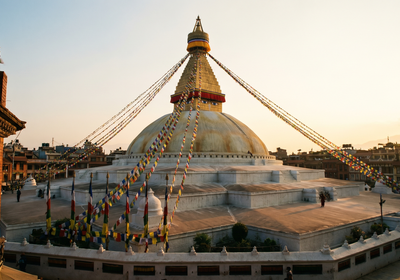
Kathmandu: Expect strong 4G/LTE coverage across the Kathmandu Valley, especially in tourist districts like Thamel, Boudhanath, and Patan. Signal can weaken inside the dense, traditional buildings of historic Durbar Squares or in deep basement restaurants. Network performance may slow during peak traffic hours due to congestion.
Pokhara: The popular Lakeside area and the main city enjoy excellent connectivity, perfect for sharing photos from Phewa Lake. The signal becomes less reliable as you gain elevation at viewpoints like Sarangkot or the World Peace Pagoda, and it will drop off significantly as you begin treks into the Annapurna region.
Chitwan (Sauraha): The primary tourist hub of Sauraha offers dependable 4G service for hotels and restaurants. Once you venture into Chitwan National Park for a jeep safari or a canoe trip on the Rapti River, expect the signal to be intermittent or completely non-existent.
Lumbini: The core UNESCO World Heritage site, including the Sacred Garden and the various international monasteries, has good mobile coverage to facilitate communication for pilgrims and tourists. Service can be less consistent in the surrounding rural villages outside the main development zone.
Biratnagar: As a major industrial city in the flat Terai region, Biratnagar maintains consistent and reliable 4G coverage throughout its urban center. The flat terrain ensures a stable signal, making it a dependable location for business communications.


Major Highways: The main East-West Highway (H01 Mahendra) and key routes connecting to Kathmandu like the Prithvi (H05) and Araniko (H03) highways maintain fair connectivity in and around cities. However, expect intermittent signal drops and slower data speeds in the hilly sections and remote plains between major towns.
Mountain Roads & Passes: On high-altitude roads such as the Karnali Highway (H13) or the road from Pokhara to Jomsom, connectivity is extremely limited. Signal is frequently non-existent for hours when crossing mountain passes or traveling through sparsely populated high-altitude terrain, with service typically only found in small villages.
Janakpur-Jayanagar Railway: As Nepal's primary operational rail line, this route runs through the flat and populated Terai region. Mobile signal remains generally stable and consistent for the duration of the short journey between Janakpur and the Indian border.
Remote Geographic Regions: Expect very poor to non-existent coverage when traveling overland in remote western regions like the Karnali Province or deep within conservation areas such as Annapurna or Sagarmatha (Everest) National Park. Connectivity is a rarity outside of the main towns or trekking hubs.
River Gorges & Tunnels: Nepal's landscape creates numerous deep river gorges that roads must navigate. When a highway enters a narrow valley, such as the section of the Prithvi Highway along the Trishuli River, signal can become weak or disappear completely. Similarly, expect no service inside road tunnels.
How it works
Buy eSIM
Sign up and get your Global eSIM in just a few clicks.

Activate eSIM
Scan the QR code and get connected instantly — no physical SIM needed.

Pay as you go
Only pay for what you use. No contracts, no hidden fees.

Get your eSIM
“
I loved the per-country pricing model. I only paid for the countries I visited, and it was way cheaper than other eSIM providers. No hidden fees — just clear and simple.
“
The auto top-up feature is a lifesaver. I never have to check my balance — internet just works. And when I’m not traveling, I don’t pay. It’s fair and super convenient.


Angel Siphron
Rated
4.7


Data from Bcengi is priced at $12.18 per gigabyte when using Ncell networks. You are billed exclusively for the data you consume, with no need for bundles or minimum spending requirements.
Not at all. Bcengi functions in conjunction with your current physical SIM card, utilizing dual-SIM capabilities. You can continue to use your standard SIM for voice calls and text messages.
Yes, provided your smartphone supports eSIM technology, which includes most models released from 2019 onwards. You can verify device compatibility at bcengi.com/travelpass/esim-compatibility.
Service availability relies on the Ncell network infrastructure. Primary urban centers and popular tourist destinations generally experience robust connectivity. However, more isolated regions might encounter restricted signal availability.
On average, travelers consume between 500 MB and 2 GB of data daily. A moderate week of usage, based on pay-as-you-go rates, would amount to approximately $42.63.
Absolutely. A single Bcengi eSIM is operational in over 200 countries. Your remaining credit transfers between destinations, removing the need to acquire a new eSIM for each place you visit.
You have the option to recharge your account at any moment by visiting travel.bcengi.com, or you may activate the auto-refill feature to guarantee uninterrupted service.
No. Your Bcengi account balance possesses no expiration date, remaining valid whether you choose to use it in the coming week or further down the line.

$
12.18
/GB

Instant delivery

No expiry

24/7 support

Secure checkout

Pay As You Go
from
$
12.18
/GB
$10
POPULAR
$25
$50
$100
Select your starting balance
Get your eSIM
→

Secure Payments |
Powered by

Rated
4.7


💵 You add
$25
to your balance.
✈️ In
Nepal
you use
3GB
at
$
12.18
/GB
.
🌍
Qatar
3 months later -
3GB at $
2.78
/GB.
🔥 Your same balance covers both trips — one eSIM, no expiry, no wasted data, no new package.
How it works


Install once, keep it on your phone

Use balance only when you travel

Pay as you go, for actual use.

No fixed plans, no expiration

One eSIM for all trips, 200+ Countries.
Learn more
Just $
12.18
per GB.
No surprises, No bundles, No expiry.

Light Usage •
200 MB/day
$
0.00
/day
Maps, messaging, browsing

Moderate •
500 MB/day
$
0.00
/day

Heavy •
2 GB/day
$
0.00
/day
Streaming, uploads, video calls
Kathmandu: Expect strong 4G/LTE coverage across the Kathmandu Valley, especially in tourist districts like Thamel, Boudhanath, and Patan. Signal can weaken inside the dense, traditional buildings of historic Durbar Squares or in deep basement restaurants. Network performance may slow during peak traffic hours due to congestion.
Pokhara: The popular Lakeside area and the main city enjoy excellent connectivity, perfect for sharing photos from Phewa Lake. The signal becomes less reliable as you gain elevation at viewpoints like Sarangkot or the World Peace Pagoda, and it will drop off significantly as you begin treks into the Annapurna region.
Chitwan (Sauraha): The primary tourist hub of Sauraha offers dependable 4G service for hotels and restaurants. Once you venture into Chitwan National Park for a jeep safari or a canoe trip on the Rapti River, expect the signal to be intermittent or completely non-existent.
Lumbini: The core UNESCO World Heritage site, including the Sacred Garden and the various international monasteries, has good mobile coverage to facilitate communication for pilgrims and tourists. Service can be less consistent in the surrounding rural villages outside the main development zone.
Biratnagar: As a major industrial city in the flat Terai region, Biratnagar maintains consistent and reliable 4G coverage throughout its urban center. The flat terrain ensures a stable signal, making it a dependable location for business communications.
Major Highways: The main East-West Highway (H01 Mahendra) and key routes connecting to Kathmandu like the Prithvi (H05) and Araniko (H03) highways maintain fair connectivity in and around cities. However, expect intermittent signal drops and slower data speeds in the hilly sections and remote plains between major towns.
Mountain Roads & Passes: On high-altitude roads such as the Karnali Highway (H13) or the road from Pokhara to Jomsom, connectivity is extremely limited. Signal is frequently non-existent for hours when crossing mountain passes or traveling through sparsely populated high-altitude terrain, with service typically only found in small villages.
Janakpur-Jayanagar Railway: As Nepal's primary operational rail line, this route runs through the flat and populated Terai region. Mobile signal remains generally stable and consistent for the duration of the short journey between Janakpur and the Indian border.
Remote Geographic Regions: Expect very poor to non-existent coverage when traveling overland in remote western regions like the Karnali Province or deep within conservation areas such as Annapurna or Sagarmatha (Everest) National Park. Connectivity is a rarity outside of the main towns or trekking hubs.
River Gorges & Tunnels: Nepal's landscape creates numerous deep river gorges that roads must navigate. When a highway enters a narrow valley, such as the section of the Prithvi Highway along the Trishuli River, signal can become weak or disappear completely. Similarly, expect no service inside road tunnels.
Learn more about
Nepal
How it works

1. Buy eSIM
Sign up and get your Global eSIM in just a few clicks.

2. Activate eSIM
Scan the QR code and get connected instantly — no physical SIM needed.

3. Pay as you go
Only pay for what you use. No contracts, no hidden fees.
Get your eSIM
Rated
4.7
“
I loved the per-country pricing model. I only paid for the countries I visited, and it was way cheaper than other eSIM providers. No hidden fees — just clear and simple.


Kaylynn Mango


Data from Bcengi is priced at $12.18 per gigabyte when using Ncell networks. You are billed exclusively for the data you consume, with no need for bundles or minimum spending requirements.
Not at all. Bcengi functions in conjunction with your current physical SIM card, utilizing dual-SIM capabilities. You can continue to use your standard SIM for voice calls and text messages.
Yes, provided your smartphone supports eSIM technology, which includes most models released from 2019 onwards. You can verify device compatibility at bcengi.com/travelpass/esim-compatibility.
Service availability relies on the Ncell network infrastructure. Primary urban centers and popular tourist destinations generally experience robust connectivity. However, more isolated regions might encounter restricted signal availability.
On average, travelers consume between 500 MB and 2 GB of data daily. A moderate week of usage, based on pay-as-you-go rates, would amount to approximately $42.63.
Absolutely. A single Bcengi eSIM is operational in over 200 countries. Your remaining credit transfers between destinations, removing the need to acquire a new eSIM for each place you visit.
You have the option to recharge your account at any moment by visiting travel.bcengi.com, or you may activate the auto-refill feature to guarantee uninterrupted service.
No. Your Bcengi account balance possesses no expiration date, remaining valid whether you choose to use it in the coming week or further down the line.
$
12.18
/GB
Instant delivery

No expiry
24/7 support
Secure checkout

Bcengi TravelPass keeps you connected worldwide with one reusable eSIM - no expirations, no wasted data.


Settings
English

USD


Bcengi TravelPass keeps you connected worldwide with one reusable eSIM - no expirations, no wasted data.



Secure Payments | Powered by