
Personal Travel
Personal Travel

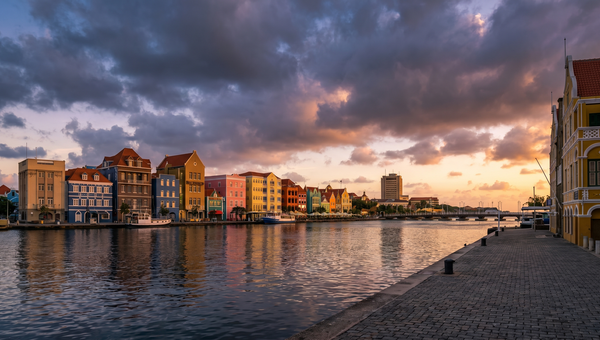

Netherlands Antilles

UTS Wireless Curacao
Pay As You Go
from
$
6.24
/GB
$10
POPULAR
$25
$50
$100
Select your starting balance
Get your eSIM
→

Your payment is fully secured |
Powered by

Rated
4.7


Install once, keep it on your phone.

Pay as you go, for actual use.

No fixed plans, no expiration.

Use balance only when you travel.

One eSIM for all trips, 200+ Countries.
Pay As You Go data, wherever you travel
💵 You add
$25
to your balance.
✈️ In
Netherlands Antilles
you use
3GB
at
$
6.24
/GB
.
🌍
Netherlands
3 months later -
3GB at $
1.19
/GB.
🔥 Your same balance covers both trips -
one eSIM, no expiry, no wasted data, no new package.
Just $
6.24
per GB. No surprises, No bundles, No expiry.

Light Usage
~200 MB/day
$
0.00
/day
Maps, messaging, browsing

Moderate
~500 MB/day
$
0.00
/day

Heavy
~2 GB/day
$
0.00
/day
Streaming, uploads, video calls
Willemstad: Strong 4G/LTE connectivity is standard across Curaçao's capital, including the historic Punda and Otrobanda districts. Tourist areas like the Handelskade waterfront and Mambo Beach have reliable service. Indoor signal can occasionally be weaker inside the thick-walled colonial buildings and larger concrete hotels.
Philipsburg: You'll find excellent 4G/LTE coverage throughout Sint Maarten's capital, especially around the cruise port, Great Bay, and the bustling Front Street. Connectivity remains strong in popular tourist spots like Maho Beach and Simpson Bay. Be aware that proximity to the French side (Saint-Martin) can trigger roaming on different networks.
Kralendijk: Bonaire's main town offers dependable 4G/LTE service along its waterfront and in nearby resort areas, optimized for the populated coastal strip. However, expect mobile service to become very patchy or unavailable once you venture into the rugged terrain of Washington Slagbaai National Park or the remote southern tip of the island.
Oranjestad: On Sint Eustatius, coverage is focused and reliable within the capital, Oranjestad, and its immediate vicinity. The signal is generally good for exploring the historic Upper and Lower Towns. As a small volcanic island, the main connectivity challenge is geographic- expect service to drop significantly if you are hiking the trails of The Quill volcano.



Main Island Roads: Mobile signal is generally strong along the primary road networks of the main islands, such as the Schottegatweg ring road in Curaçao and Route 1 in Aruba. Coverage can become intermittent when traveling on secondary roads to more remote areas, like the routes towards Westpunt in Curaçao or through the interior of Bonaire away from Kralendijk.
National Parks and Nature Reserves: Expect significant signal degradation or complete loss of service within the major national parks. Areas like Curaçao's Christoffelpark, Aruba's Arikok National Park, and Bonaire's Washington Slagbaai National Park have very limited to non-existent coverage due to rugged terrain and lack of infrastructure.
Hilly and Mountainous Terrain: On mountainous islands like Saba, the extreme topography affects connectivity. The famous winding route known as "The Road" may have fluctuating signal strength between its many switchbacks. Similarly, the hilly interiors of Sint Maarten and Sint Eustatius can present challenges for maintaining a consistent connection.
Inter-Island Travel (Air and Sea): Service is unavailable on short-haul flights between the islands. When traveling by ferry or boat, your connection to land-based towers will be lost shortly after departure. You will have no signal until you are close to your destination island, unless you connect to a specific maritime satellite service.
Remote Coastlines: The less developed, rugged coastlines, particularly the windward (eastern) sides of Aruba, Bonaire, and Curaçao, often have spotty or unreliable coverage. Signal is strongest along the more populated leeward (western) coasts where most towns, hotels, and tourist activities are concentrated.
How it works
Buy eSIM
Sign up and get your Global eSIM in just a few clicks.

Activate eSIM
Scan the QR code and get connected instantly — no physical SIM needed.

Pay as you go
Only pay for what you use. No contracts, no hidden fees.

Get your eSIM
“
I loved the per-country pricing model. I only paid for the countries I visited, and it was way cheaper than other eSIM providers. No hidden fees — just clear and simple.
“
The auto top-up feature is a lifesaver. I never have to check my balance — internet just works. And when I’m not traveling, I don’t pay. It’s fair and super convenient.


Angel Siphron
Rated
4.7


The cost of Bcengi eSIM data in Netherlands Antilles is $6.24 per gigabyte, available on UTS Wireless Curacao networks. You are only charged for the data actively consumed, with no fixed bundles or minimum expenditure required.
No, removing your physical SIM card is not necessary. Bcengi operates alongside your current SIM through dual-SIM technology, enabling you to keep your regular SIM active for making calls and sending texts.
Yes, you can use eSIM on your iPhone or Android, provided your device is eSIM-compatible (a feature commonly found in most phones manufactured from 2019 onward). Verify device compatibility at bcengi.com/travelpass/esim-compatibility.
Esim coverage across Netherlands Antilles is dependent on the UTS Wireless Curacao network infrastructure. Major cities and popular tourist destinations generally offer robust signal strength. However, coverage can be limited in more remote or less populated areas.
For a one-week trip to Netherlands Antilles, most travelers typically utilize between 500 MB and 2 GB of data each day. A moderate weekly usage would amount to approximately $21.84 under pay-as-you-go pricing.
Yes. A single Bcengi eSIM functions in over 200 countries. Your existing balance is carried over, removing the need to acquire a new eSIM for each different destination.
Should your balance run low, you can top up at any time via travel.bcengi.com. Alternatively, activate the auto-refill option to maintain continuous service.
No. Your Bcengi balance has no expiration date, remaining valid for future use whether you access it next week or next year.

$
6.24
/GB

Instant delivery

No expiry

24/7 support

Secure checkout

Pay As You Go
from
$
6.24
/GB
$10
POPULAR
$25
$50
$100
Select your starting balance
Get your eSIM
→

Secure Payments |
Powered by

Rated
4.7


💵 You add
$25
to your balance.
✈️ In
Netherlands Antilles
you use
3GB
at
$
6.24
/GB
.
🌍
Netherlands
3 months later -
3GB at $
1.19
/GB.
🔥 Your same balance covers both trips — one eSIM, no expiry, no wasted data, no new package.
How it works


Install once, keep it on your phone

Use balance only when you travel

Pay as you go, for actual use.

No fixed plans, no expiration

One eSIM for all trips, 200+ Countries.
Learn more
Just $
6.24
per GB.
No surprises, No bundles, No expiry.

Light Usage •
200 MB/day
$
0.00
/day
Maps, messaging, browsing

Moderate •
500 MB/day
$
0.00
/day

Heavy •
2 GB/day
$
0.00
/day
Streaming, uploads, video calls
Willemstad: Strong 4G/LTE connectivity is standard across Curaçao's capital, including the historic Punda and Otrobanda districts. Tourist areas like the Handelskade waterfront and Mambo Beach have reliable service. Indoor signal can occasionally be weaker inside the thick-walled colonial buildings and larger concrete hotels.
Philipsburg: You'll find excellent 4G/LTE coverage throughout Sint Maarten's capital, especially around the cruise port, Great Bay, and the bustling Front Street. Connectivity remains strong in popular tourist spots like Maho Beach and Simpson Bay. Be aware that proximity to the French side (Saint-Martin) can trigger roaming on different networks.
Kralendijk: Bonaire's main town offers dependable 4G/LTE service along its waterfront and in nearby resort areas, optimized for the populated coastal strip. However, expect mobile service to become very patchy or unavailable once you venture into the rugged terrain of Washington Slagbaai National Park or the remote southern tip of the island.
Oranjestad: On Sint Eustatius, coverage is focused and reliable within the capital, Oranjestad, and its immediate vicinity. The signal is generally good for exploring the historic Upper and Lower Towns. As a small volcanic island, the main connectivity challenge is geographic- expect service to drop significantly if you are hiking the trails of The Quill volcano.
Main Island Roads: Mobile signal is generally strong along the primary road networks of the main islands, such as the Schottegatweg ring road in Curaçao and Route 1 in Aruba. Coverage can become intermittent when traveling on secondary roads to more remote areas, like the routes towards Westpunt in Curaçao or through the interior of Bonaire away from Kralendijk.
National Parks and Nature Reserves: Expect significant signal degradation or complete loss of service within the major national parks. Areas like Curaçao's Christoffelpark, Aruba's Arikok National Park, and Bonaire's Washington Slagbaai National Park have very limited to non-existent coverage due to rugged terrain and lack of infrastructure.
Hilly and Mountainous Terrain: On mountainous islands like Saba, the extreme topography affects connectivity. The famous winding route known as "The Road" may have fluctuating signal strength between its many switchbacks. Similarly, the hilly interiors of Sint Maarten and Sint Eustatius can present challenges for maintaining a consistent connection.
Inter-Island Travel (Air and Sea): Service is unavailable on short-haul flights between the islands. When traveling by ferry or boat, your connection to land-based towers will be lost shortly after departure. You will have no signal until you are close to your destination island, unless you connect to a specific maritime satellite service.
Remote Coastlines: The less developed, rugged coastlines, particularly the windward (eastern) sides of Aruba, Bonaire, and Curaçao, often have spotty or unreliable coverage. Signal is strongest along the more populated leeward (western) coasts where most towns, hotels, and tourist activities are concentrated.
Learn more about
Netherlands Antilles
How it works

1. Buy eSIM
Sign up and get your Global eSIM in just a few clicks.

2. Activate eSIM
Scan the QR code and get connected instantly — no physical SIM needed.

3. Pay as you go
Only pay for what you use. No contracts, no hidden fees.
Get your eSIM
Rated
4.7
“
I loved the per-country pricing model. I only paid for the countries I visited, and it was way cheaper than other eSIM providers. No hidden fees — just clear and simple.


Kaylynn Mango


The cost of Bcengi eSIM data in Netherlands Antilles is $6.24 per gigabyte, available on UTS Wireless Curacao networks. You are only charged for the data actively consumed, with no fixed bundles or minimum expenditure required.
No, removing your physical SIM card is not necessary. Bcengi operates alongside your current SIM through dual-SIM technology, enabling you to keep your regular SIM active for making calls and sending texts.
Yes, you can use eSIM on your iPhone or Android, provided your device is eSIM-compatible (a feature commonly found in most phones manufactured from 2019 onward). Verify device compatibility at bcengi.com/travelpass/esim-compatibility.
Esim coverage across Netherlands Antilles is dependent on the UTS Wireless Curacao network infrastructure. Major cities and popular tourist destinations generally offer robust signal strength. However, coverage can be limited in more remote or less populated areas.
For a one-week trip to Netherlands Antilles, most travelers typically utilize between 500 MB and 2 GB of data each day. A moderate weekly usage would amount to approximately $21.84 under pay-as-you-go pricing.
Yes. A single Bcengi eSIM functions in over 200 countries. Your existing balance is carried over, removing the need to acquire a new eSIM for each different destination.
Should your balance run low, you can top up at any time via travel.bcengi.com. Alternatively, activate the auto-refill option to maintain continuous service.
No. Your Bcengi balance has no expiration date, remaining valid for future use whether you access it next week or next year.
$
6.24
/GB
Instant delivery

No expiry
24/7 support
Secure checkout

Bcengi TravelPass keeps you connected worldwide with one reusable eSIM - no expirations, no wasted data.


Settings
English

USD


Bcengi TravelPass keeps you connected worldwide with one reusable eSIM - no expirations, no wasted data.



Secure Payments | Powered by