
Personal Travel
Personal Travel


Nicaragua

movistarNI
Pay As You Go
from
$
4.44
/GB
$10
POPULAR
$25
$50
$100
Select your starting balance
Get your eSIM
→

Your payment is fully secured |
Powered by

Rated
4.7


Install once, keep it on your phone.

Pay as you go, for actual use.

No fixed plans, no expiration.

Use balance only when you travel.

One eSIM for all trips, 200+ Countries.
Pay As You Go data, wherever you travel
💵 You add
$25
to your balance.
✈️ In
Nicaragua
you use
3GB
at
$
4.44
/GB
.
🌍
Colombia
3 months later -
3GB at $
4.44
/GB.
🔥 Your same balance covers both trips -
one eSIM, no expiry, no wasted data, no new package.
Just $
4.44
per GB. No surprises, No bundles, No expiry.

Light Usage
~200 MB/day
$
0.00
/day
Maps, messaging, browsing

Moderate
~500 MB/day
$
0.00
/day

Heavy
~2 GB/day
$
0.00
/day
Streaming, uploads, video calls
Managua: As Nicaragua's capital, Managua boasts the country's most reliable 4G/LTE coverage, particularly in commercial centers like Metrocentro and the business district around Carretera a Masaya. While outdoor and in-vehicle signals are strong, coverage can be less consistent inside large concrete buildings or basements. The city's public transport consists of buses, so you can expect a stable connection while moving through the main urban zones.
Granada: You will find excellent 4G connectivity in the heart of this colonial tourist hub, especially around the Parque Central and the bustling Calle La Calzada. The signal is strong throughout the city center, but the thick adobe walls of historic hotels and restaurants can sometimes weaken it indoors. When taking boat trips to the nearby Islets of Granada, expect the signal to become less stable the further you get from the shore.
León: Another major colonial city, León offers dependable 4G/LTE service across its downtown core, university areas, and main thoroughfares. The network is well-suited for navigation and daily use. Similar to Granada, some of the older, traditionally constructed buildings may have weaker indoor reception, but the signal is generally robust once you are outdoors.
San Juan del Sur: This popular Pacific surf town has solid 4G coverage within the main town area, allowing for easy connectivity at local cafes, hotels, and along the main beachfront. However, service becomes significantly less reliable as you travel to the more remote beaches to the north or south. Expect patchy signals or a drop to 3G in areas like Playa Maderas or Playa Hermosa, especially in valleys or areas shielded by hills.
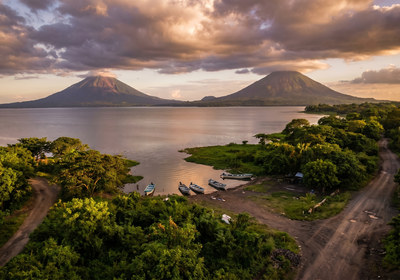
Ometepe Island: Connectivity on this volcanic island is concentrated in the main towns of Moyogalpa and Altagracia, where you can generally find a usable 4G signal. Outside of these hubs, service is highly variable and often non-existent. Expect little to no signal when hiking the volcanoes, visiting remote farms, or exploring secluded beaches on the island's eastern side.

Pan-American Highway (NIC-1): Coverage is generally strong along this primary north-south artery, connecting the Costa Rican border through Managua, Estelí, and up to the Honduran border. You will find reliable signal in and around major cities, with only brief, minor drops in the most rural segments between population centers.
Route to the Caribbean Coast: When traveling from the Pacific side towards the Caribbean, for example along NIC-7 towards El Rama, mobile signal degrades significantly. Once you enter the vast and sparsely populated Caribbean Coast Autonomous Regions, reliable connectivity is often restricted to the towns of Bluefields and Puerto Cabezas, with very long stretches of road and river travel having no service.
Northern Highlands: In the mountainous coffee-growing regions of Matagalpa and Jinotega, connectivity is inconsistent. While the main cities have good coverage, the winding highways like NIC-3 that pass through steep valleys and remote rural areas frequently experience signal loss.
Ometepe Island: On the popular volcanic island of Ometepe in Lake Nicaragua, signal is best in the primary towns of Moyogalpa and Altagracia. As you travel to more remote areas, such as the trails on the Maderas and Concepción volcanoes or secluded beaches, expect service to be patchy or completely unavailable.
Remote Nature Reserves: Areas like the Bosawás Biosphere Reserve, the Indio Maíz Biological Reserve, and the Río San Juan department have almost no cellular infrastructure. Travelers venturing into these regions should plan for being completely offline and not rely on mobile phones for safety or navigation.
How it works
Buy eSIM
Sign up and get your Global eSIM in just a few clicks.

Activate eSIM
Scan the QR code and get connected instantly — no physical SIM needed.

Pay as you go
Only pay for what you use. No contracts, no hidden fees.

Get your eSIM
“
I loved the per-country pricing model. I only paid for the countries I visited, and it was way cheaper than other eSIM providers. No hidden fees — just clear and simple.
“
The auto top-up feature is a lifesaver. I never have to check my balance — internet just works. And when I’m not traveling, I don’t pay. It’s fair and super convenient.


Angel Siphron
Rated
4.7


Bcengi charges $4.44 per GB when utilizing movistarNI networks. You are billed only for the data you consume - there are no package deals or minimum spending requirements.
No. Bcengi functions alongside your current SIM card, leveraging dual-SIM technology. You can keep your regular SIM active for making calls and sending text messages.
Yes, if your specific device supports eSIM capabilities (this includes most phone models from 2019 onwards). Please check for compatibility at bcengi.com/travelpass/esim-compatibility.
Coverage is dependent on the movistarNI network infrastructure. Typically, major urban centers and popular tourist destinations enjoy robust coverage, whereas more remote regions might experience limited signal availability.
Most travelers use between 500 MB and 2 GB of data daily. A typical week's usage would cost approximately $15.54 under pay-as-you-go pricing.
Yes. A single Bcengi eSIM is functional in over 200 countries. Your remaining balance carries over, meaning there's no need to purchase a new eSIM for each new destination.
You have the option to add funds at any time via travel.bcengi.com, or you can activate the auto-refill feature to ensure your balance never depletes.
No. Your Bcengi balance remains valid indefinitely, whether you choose to use it next week or next year.

$
4.44
/GB

Instant delivery

No expiry

24/7 support

Secure checkout

Pay As You Go
from
$
4.44
/GB
$10
POPULAR
$25
$50
$100
Select your starting balance
Get your eSIM
→

Secure Payments |
Powered by

Rated
4.7


💵 You add
$25
to your balance.
✈️ In
Nicaragua
you use
3GB
at
$
4.44
/GB
.
🌍
Colombia
3 months later -
3GB at $
4.44
/GB.
🔥 Your same balance covers both trips — one eSIM, no expiry, no wasted data, no new package.
How it works


Install once, keep it on your phone

Use balance only when you travel

Pay as you go, for actual use.

No fixed plans, no expiration

One eSIM for all trips, 200+ Countries.
Learn more
Just $
4.44
per GB.
No surprises, No bundles, No expiry.

Light Usage •
200 MB/day
$
0.00
/day
Maps, messaging, browsing

Moderate •
500 MB/day
$
0.00
/day

Heavy •
2 GB/day
$
0.00
/day
Streaming, uploads, video calls
Managua: As Nicaragua's capital, Managua boasts the country's most reliable 4G/LTE coverage, particularly in commercial centers like Metrocentro and the business district around Carretera a Masaya. While outdoor and in-vehicle signals are strong, coverage can be less consistent inside large concrete buildings or basements. The city's public transport consists of buses, so you can expect a stable connection while moving through the main urban zones.
Granada: You will find excellent 4G connectivity in the heart of this colonial tourist hub, especially around the Parque Central and the bustling Calle La Calzada. The signal is strong throughout the city center, but the thick adobe walls of historic hotels and restaurants can sometimes weaken it indoors. When taking boat trips to the nearby Islets of Granada, expect the signal to become less stable the further you get from the shore.
León: Another major colonial city, León offers dependable 4G/LTE service across its downtown core, university areas, and main thoroughfares. The network is well-suited for navigation and daily use. Similar to Granada, some of the older, traditionally constructed buildings may have weaker indoor reception, but the signal is generally robust once you are outdoors.
San Juan del Sur: This popular Pacific surf town has solid 4G coverage within the main town area, allowing for easy connectivity at local cafes, hotels, and along the main beachfront. However, service becomes significantly less reliable as you travel to the more remote beaches to the north or south. Expect patchy signals or a drop to 3G in areas like Playa Maderas or Playa Hermosa, especially in valleys or areas shielded by hills.
Ometepe Island: Connectivity on this volcanic island is concentrated in the main towns of Moyogalpa and Altagracia, where you can generally find a usable 4G signal. Outside of these hubs, service is highly variable and often non-existent. Expect little to no signal when hiking the volcanoes, visiting remote farms, or exploring secluded beaches on the island's eastern side.
Pan-American Highway (NIC-1): Coverage is generally strong along this primary north-south artery, connecting the Costa Rican border through Managua, Estelí, and up to the Honduran border. You will find reliable signal in and around major cities, with only brief, minor drops in the most rural segments between population centers.
Route to the Caribbean Coast: When traveling from the Pacific side towards the Caribbean, for example along NIC-7 towards El Rama, mobile signal degrades significantly. Once you enter the vast and sparsely populated Caribbean Coast Autonomous Regions, reliable connectivity is often restricted to the towns of Bluefields and Puerto Cabezas, with very long stretches of road and river travel having no service.
Northern Highlands: In the mountainous coffee-growing regions of Matagalpa and Jinotega, connectivity is inconsistent. While the main cities have good coverage, the winding highways like NIC-3 that pass through steep valleys and remote rural areas frequently experience signal loss.
Ometepe Island: On the popular volcanic island of Ometepe in Lake Nicaragua, signal is best in the primary towns of Moyogalpa and Altagracia. As you travel to more remote areas, such as the trails on the Maderas and Concepción volcanoes or secluded beaches, expect service to be patchy or completely unavailable.
Remote Nature Reserves: Areas like the Bosawás Biosphere Reserve, the Indio Maíz Biological Reserve, and the Río San Juan department have almost no cellular infrastructure. Travelers venturing into these regions should plan for being completely offline and not rely on mobile phones for safety or navigation.
Learn more about
Nicaragua
How it works

1. Buy eSIM
Sign up and get your Global eSIM in just a few clicks.

2. Activate eSIM
Scan the QR code and get connected instantly — no physical SIM needed.

3. Pay as you go
Only pay for what you use. No contracts, no hidden fees.
Get your eSIM
Rated
4.7
“
I loved the per-country pricing model. I only paid for the countries I visited, and it was way cheaper than other eSIM providers. No hidden fees — just clear and simple.


Kaylynn Mango


Bcengi charges $4.44 per GB when utilizing movistarNI networks. You are billed only for the data you consume - there are no package deals or minimum spending requirements.
No. Bcengi functions alongside your current SIM card, leveraging dual-SIM technology. You can keep your regular SIM active for making calls and sending text messages.
Yes, if your specific device supports eSIM capabilities (this includes most phone models from 2019 onwards). Please check for compatibility at bcengi.com/travelpass/esim-compatibility.
Coverage is dependent on the movistarNI network infrastructure. Typically, major urban centers and popular tourist destinations enjoy robust coverage, whereas more remote regions might experience limited signal availability.
Most travelers use between 500 MB and 2 GB of data daily. A typical week's usage would cost approximately $15.54 under pay-as-you-go pricing.
Yes. A single Bcengi eSIM is functional in over 200 countries. Your remaining balance carries over, meaning there's no need to purchase a new eSIM for each new destination.
You have the option to add funds at any time via travel.bcengi.com, or you can activate the auto-refill feature to ensure your balance never depletes.
No. Your Bcengi balance remains valid indefinitely, whether you choose to use it next week or next year.
$
4.44
/GB
Instant delivery

No expiry
24/7 support
Secure checkout

Bcengi TravelPass keeps you connected worldwide with one reusable eSIM - no expirations, no wasted data.


Settings
English

USD


Bcengi TravelPass keeps you connected worldwide with one reusable eSIM - no expirations, no wasted data.



Secure Payments | Powered by