
Personal Travel
Personal Travel


Poland

Orange, P4
Pay As You Go
from
$
1.19
/GB
$10
POPULAR
$25
$50
$100
Select your starting balance
Get your eSIM
→

Your payment is fully secured |
Powered by

Rated
4.7


Install once, keep it on your phone.

Pay as you go, for actual use.

No fixed plans, no expiration.

Use balance only when you travel.

One eSIM for all trips, 200+ Countries.
Pay As You Go data, wherever you travel
💵 You add
$25
to your balance.
✈️ In
Poland
you use
3GB
at
$
1.19
/GB
.
🌍
United States
3 months later -
3GB at $
1.68
/GB.
🔥 Your same balance covers both trips -
one eSIM, no expiry, no wasted data, no new package.
Just $
1.19
per GB. No surprises, No bundles, No expiry.

Light Usage
~200 MB/day
$
0.00
/day
Maps, messaging, browsing

Moderate
~500 MB/day
$
0.00
/day

Heavy
~2 GB/day
$
0.00
/day
Streaming, uploads, video calls
Warsaw: You'll find excellent 4G and 5G coverage throughout the capital, from the bustling city center and business districts to the historic Old Town. The Warsaw Metro (Metro Warszawskie) offers reliable connectivity on most platforms and inside trains, though you might experience brief drop-outs between some of the deeper stations on the older M1 line. Indoor coverage is strong, but signals can weaken inside older, thick-walled buildings in districts like Praga.
Kraków: Mobile coverage is consistently strong across Kraków's most popular areas, including the Main Market Square, Wawel Castle, and the historic Kazimierz district. As the city's tram system operates entirely above ground, your connection remains stable while traveling. Be aware that the many unique underground cellars and basement bars in the Old Town often have very limited or no mobile signal due to their thick stone walls.
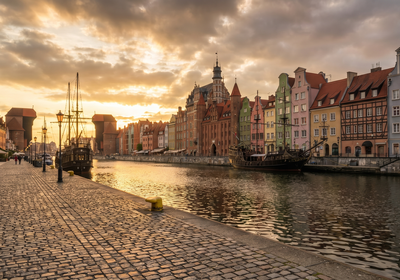
Gdańsk: Expect reliable 4G and growing 5G service across Gdańsk and the wider Tricity (Trójmiasto) area, including Sopot and Gdynia. Connectivity is excellent in the tourist-heavy Main Town and along the Motława river. The SKM urban rail system, which connects the three cities, provides a stable connection as it runs almost entirely at ground level or on elevated tracks.
Wrocław: This vibrant city boasts comprehensive 4G/LTE and expanding 5G coverage. You'll have a strong, dependable signal in key tourist spots like the Market Square, Cathedral Island (Ostrów Tumski), and around the university. The city's transport is primarily an overground tram network, so your connection will not be interrupted while you move around. Indoor reception is generally very good, though some older, large buildings may have weaker spots deep inside.
Major motorways and expressways: Coverage is generally reliable along key transport arteries like the A1 (north-south), A2 (east-west), and A4 motorways, as well as major expressways like the S7 and S8. However, signal can weaken or temporarily drop in less populated sections, particularly when passing through dense forests such as the Tuchola Forest.
PKP Intercity trains: Connectivity on Polish railways varies. On high-speed Express InterCity Premium (EIP) routes between major cities like Warsaw, Kraków, and Gdańsk, the signal is mostly stable, though on-board Wi-Fi can be a better option. On slower InterCity (IC) or TLK trains, especially those crossing rural areas in eastern Poland, expect intermittent signal and periods with no service.
Mountain regions: Mobile signal is significantly reduced in the mountainous south. In the Tatra Mountains near Zakopane and the remote Bieszczady Mountains in the southeast, coverage is often limited to towns and main roads. Once you are in valleys or on hiking trails within national parks, do not expect a consistent connection.
Road tunnels: While Poland has few very long road tunnels, key ones like the tunnel under the Vistula River in Gdańsk or the new tunnel on the S7 expressway south of Kraków can cause complete signal loss. Service typically resumes immediately upon exiting, but do not rely on a connection while inside.
Forests and Lake Districts: Vast, sparsely populated areas like the Masurian Lake District (Mazury) and the primeval Białowieża Forest are notorious for patchy coverage. While main towns have service, driving on local roads, boating on lakes, or hiking can result in long periods with no signal from any operator.
How it works
Buy eSIM
Sign up and get your Global eSIM in just a few clicks.

Activate eSIM
Scan the QR code and get connected instantly — no physical SIM needed.

Pay as you go
Only pay for what you use. No contracts, no hidden fees.

Get your eSIM
“
I loved the per-country pricing model. I only paid for the countries I visited, and it was way cheaper than other eSIM providers. No hidden fees — just clear and simple.
“
The auto top-up feature is a lifesaver. I never have to check my balance — internet just works. And when I’m not traveling, I don’t pay. It’s fair and super convenient.


Angel Siphron
Rated
4.7


Data from Bcengi costs $1.19 per gigabyte when using the Orange and P4 networks. Payment is solely for consumed data - there are no bundles or required minimum expenditure.
No, Bcengi operates concurrently with your current SIM through dual-SIM functionality. You can retain your usual SIM card for voice calls and text messages.
Yes, provided your device supports eSIM functionality, which applies to the majority of phones manufactured since 2019. Verify device compatibility at bcengi.com/travelpass/esim-compatibility.
Service availability relies on the network infrastructure of Orange and P4. You'll generally find robust coverage in primary cities and popular tourist destinations. However, signal strength might be restricted in more secluded regions.
The majority of travelers consume between 500 MB and 2 GB of data daily. For a week of moderate usage, the cost is roughly $4.17 when utilizing pay-as-you-go rates.
Yes. A single Bcengi eSIM functions across more than 200 nations. Your existing balance transfers, eliminating the requirement to purchase a separate eSIM for every new location.
You have the option to add funds at any time by visiting travel.bcengi.com, or you can activate auto-refill to ensure your balance remains continuously available.
No. Your Bcengi account balance does not have an expiration date, regardless of whether you plan to utilize it in the near future or much later.

$
1.19
/GB

Instant delivery

No expiry

24/7 support

Secure checkout

Pay As You Go
from
$
1.19
/GB
$10
POPULAR
$25
$50
$100
Select your starting balance
Get your eSIM
→

Secure Payments |
Powered by

Rated
4.7


💵 You add
$25
to your balance.
✈️ In
Poland
you use
3GB
at
$
1.19
/GB
.
🌍
United States
3 months later -
3GB at $
1.68
/GB.
🔥 Your same balance covers both trips — one eSIM, no expiry, no wasted data, no new package.
How it works


Install once, keep it on your phone

Use balance only when you travel

Pay as you go, for actual use.

No fixed plans, no expiration

One eSIM for all trips, 200+ Countries.
Learn more
Just $
1.19
per GB.
No surprises, No bundles, No expiry.

Light Usage •
200 MB/day
$
0.00
/day
Maps, messaging, browsing

Moderate •
500 MB/day
$
0.00
/day

Heavy •
2 GB/day
$
0.00
/day
Streaming, uploads, video calls
Warsaw: You'll find excellent 4G and 5G coverage throughout the capital, from the bustling city center and business districts to the historic Old Town. The Warsaw Metro (Metro Warszawskie) offers reliable connectivity on most platforms and inside trains, though you might experience brief drop-outs between some of the deeper stations on the older M1 line. Indoor coverage is strong, but signals can weaken inside older, thick-walled buildings in districts like Praga.
Kraków: Mobile coverage is consistently strong across Kraków's most popular areas, including the Main Market Square, Wawel Castle, and the historic Kazimierz district. As the city's tram system operates entirely above ground, your connection remains stable while traveling. Be aware that the many unique underground cellars and basement bars in the Old Town often have very limited or no mobile signal due to their thick stone walls.
Gdańsk: Expect reliable 4G and growing 5G service across Gdańsk and the wider Tricity (Trójmiasto) area, including Sopot and Gdynia. Connectivity is excellent in the tourist-heavy Main Town and along the Motława river. The SKM urban rail system, which connects the three cities, provides a stable connection as it runs almost entirely at ground level or on elevated tracks.
Wrocław: This vibrant city boasts comprehensive 4G/LTE and expanding 5G coverage. You'll have a strong, dependable signal in key tourist spots like the Market Square, Cathedral Island (Ostrów Tumski), and around the university. The city's transport is primarily an overground tram network, so your connection will not be interrupted while you move around. Indoor reception is generally very good, though some older, large buildings may have weaker spots deep inside.
Major motorways and expressways: Coverage is generally reliable along key transport arteries like the A1 (north-south), A2 (east-west), and A4 motorways, as well as major expressways like the S7 and S8. However, signal can weaken or temporarily drop in less populated sections, particularly when passing through dense forests such as the Tuchola Forest.
PKP Intercity trains: Connectivity on Polish railways varies. On high-speed Express InterCity Premium (EIP) routes between major cities like Warsaw, Kraków, and Gdańsk, the signal is mostly stable, though on-board Wi-Fi can be a better option. On slower InterCity (IC) or TLK trains, especially those crossing rural areas in eastern Poland, expect intermittent signal and periods with no service.
Mountain regions: Mobile signal is significantly reduced in the mountainous south. In the Tatra Mountains near Zakopane and the remote Bieszczady Mountains in the southeast, coverage is often limited to towns and main roads. Once you are in valleys or on hiking trails within national parks, do not expect a consistent connection.
Road tunnels: While Poland has few very long road tunnels, key ones like the tunnel under the Vistula River in Gdańsk or the new tunnel on the S7 expressway south of Kraków can cause complete signal loss. Service typically resumes immediately upon exiting, but do not rely on a connection while inside.
Forests and Lake Districts: Vast, sparsely populated areas like the Masurian Lake District (Mazury) and the primeval Białowieża Forest are notorious for patchy coverage. While main towns have service, driving on local roads, boating on lakes, or hiking can result in long periods with no signal from any operator.
Learn more about
Poland
How it works

1. Buy eSIM
Sign up and get your Global eSIM in just a few clicks.

2. Activate eSIM
Scan the QR code and get connected instantly — no physical SIM needed.

3. Pay as you go
Only pay for what you use. No contracts, no hidden fees.
Get your eSIM
Rated
4.7
“
I loved the per-country pricing model. I only paid for the countries I visited, and it was way cheaper than other eSIM providers. No hidden fees — just clear and simple.


Kaylynn Mango


Data from Bcengi costs $1.19 per gigabyte when using the Orange and P4 networks. Payment is solely for consumed data - there are no bundles or required minimum expenditure.
No, Bcengi operates concurrently with your current SIM through dual-SIM functionality. You can retain your usual SIM card for voice calls and text messages.
Yes, provided your device supports eSIM functionality, which applies to the majority of phones manufactured since 2019. Verify device compatibility at bcengi.com/travelpass/esim-compatibility.
Service availability relies on the network infrastructure of Orange and P4. You'll generally find robust coverage in primary cities and popular tourist destinations. However, signal strength might be restricted in more secluded regions.
The majority of travelers consume between 500 MB and 2 GB of data daily. For a week of moderate usage, the cost is roughly $4.17 when utilizing pay-as-you-go rates.
Yes. A single Bcengi eSIM functions across more than 200 nations. Your existing balance transfers, eliminating the requirement to purchase a separate eSIM for every new location.
You have the option to add funds at any time by visiting travel.bcengi.com, or you can activate auto-refill to ensure your balance remains continuously available.
No. Your Bcengi account balance does not have an expiration date, regardless of whether you plan to utilize it in the near future or much later.
$
1.19
/GB
Instant delivery

No expiry
24/7 support
Secure checkout

Bcengi TravelPass keeps you connected worldwide with one reusable eSIM - no expirations, no wasted data.


Settings
English

USD


Bcengi TravelPass keeps you connected worldwide with one reusable eSIM - no expirations, no wasted data.



Secure Payments | Powered by