

Personal Travel
Personal Travel



Rwanda

Airtel Rwanda, TIGO RWANDA
Pay As You Go
from
$
8.32
/GB
$10
POPULAR
$25
$50
$100
Select your starting balance
Get your eSIM
→

Your payment is fully secured |
Powered by

Rated
4.7


Install once, keep it on your phone.

Pay as you go, for actual use.

No fixed plans, no expiration.

Use balance only when you travel.

One eSIM for all trips, 200+ Countries.
Pay As You Go data, wherever you travel
💵 You add
$25
to your balance.
✈️ In
Rwanda
you use
3GB
at
$
8.32
/GB
.
🌍
Belgium
3 months later -
3GB at $
1.19
/GB.
🔥 Your same balance covers both trips -
one eSIM, no expiry, no wasted data, no new package.
Just $
8.32
per GB. No surprises, No bundles, No expiry.

Light Usage
~200 MB/day
$
0.00
/day
Maps, messaging, browsing

Moderate
~500 MB/day
$
0.00
/day

Heavy
~2 GB/day
$
0.00
/day
Streaming, uploads, video calls
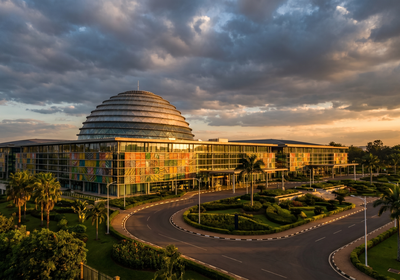
Kigali: Strong 4G and growing 5G coverage is available across the capital's districts, including the Central Business District and Kimihurura. Signal is reliable in most buildings, though deep indoor coverage in large concrete structures like the Kigali Convention Centre can sometimes be weaker. Public transport is above ground, ensuring consistent connectivity on buses and moto-taxis.
Musanze: Expect excellent 4G connectivity within the town center, perfect for preparing for your excursions. Coverage is strong in hotels and along main roads. However, be aware that as you enter Volcanoes National Park for gorilla trekking, the signal becomes intermittent and is often unavailable in the dense forest and on higher mountain slopes.
Rubavu: This popular city on the shores of Lake Kivu offers reliable 4G coverage, especially along the lakefront, in hotels, and throughout the main town. You can expect a consistent connection for most activities, with only occasional weaker spots in areas further from the town center.
Huye: As Rwanda's intellectual capital, Huye provides robust 4G network coverage throughout the city and around the University of Rwanda campus. The connection is generally stable, although signal strength can be slightly reduced inside some of the older, thick-walled university and colonial-era buildings.

National Roads: Major paved routes like the RN1 (Kigali-Kayonza), RN3 (Kigali-Gicumbi), and RN4 (Kigali-Musanze) offer generally reliable 4G coverage. You may experience brief signal drops in less populated rural valleys between major towns and cities.
Nyungwe Forest National Park: The main highway traversing this dense, mountainous rainforest experiences significant and prolonged signal loss. Expect to be offline for large portions of the drive between the districts of Nyamagabe and Rusizi.
Virunga Mountains Region: While the city of Musanze has strong service, coverage becomes intermittent to non-existent on the smaller roads ascending into Volcanoes National Park. Signal typically drops as you approach park boundaries and trekking trailheads.
Lake Kivu Scenic Route: The winding roads connecting the lakeside towns of Rubavu, Karongi, and Rusizi offer stunning views but have inconsistent mobile connectivity. The steep terrain and remote stretches between settlements frequently cause the signal to weaken or disappear.
Akagera National Park: Cellular service is concentrated around the park's main entrance and major lodges. Once you are on game drive tracks deep within the savannah and wetland areas, expect very limited or no signal for most of your visit.
How it works
Buy eSIM
Sign up and get your Global eSIM in just a few clicks.

Activate eSIM
Scan the QR code and get connected instantly — no physical SIM needed.

Pay as you go
Only pay for what you use. No contracts, no hidden fees.

Get your eSIM
“
I loved the per-country pricing model. I only paid for the countries I visited, and it was way cheaper than other eSIM providers. No hidden fees — just clear and simple.
“
The auto top-up feature is a lifesaver. I never have to check my balance — internet just works. And when I’m not traveling, I don’t pay. It’s fair and super convenient.


Angel Siphron
Rated
4.7


Bcengi charges $8.32 per GB on the Airtel Rwanda and TIGO RWANDA networks. You are billed solely for the data consumed, without any bundles or minimum spending requirements.
No. Bcengi operates alongside your existing SIM card, leveraging dual-SIM technology. You can keep your regular SIM for making calls and sending texts.
Yes, provided your device supports eSIM (this includes most phones manufactured since 2019). Verify device compatibility at bcengi.com/travelpass/esim-compatibility.
Coverage is determined by the network infrastructure of Airtel Rwanda and TIGO RWANDA. Strong signals are generally found in major urban centers and popular tourist spots. Connectivity may be limited in more isolated regions.
Most travelers typically use between 500 MB and 2 GB daily. A week of moderate usage would cost approximately $29.12 with pay-as-you-go rates.
Yes. A single Bcengi eSIM functions in over 200 countries. Your existing balance transfers, removing the need to acquire a new eSIM for each new destination.
You have the option to add funds at any time by visiting travel.bcengi.com, or you can activate auto-refill to ensure your balance is continuously maintained.
No. Your Bcengi balance never expires, whether you intend to use it next week or in the coming year.

$
8.32
/GB

Instant delivery

No expiry

24/7 support

Secure checkout

Pay As You Go
from
$
8.32
/GB
$10
POPULAR
$25
$50
$100
Select your starting balance
Get your eSIM
→

Secure Payments |
Powered by

Rated
4.7


💵 You add
$25
to your balance.
✈️ In
Rwanda
you use
3GB
at
$
8.32
/GB
.
🌍
Belgium
3 months later -
3GB at $
1.19
/GB.
🔥 Your same balance covers both trips — one eSIM, no expiry, no wasted data, no new package.
How it works


Install once, keep it on your phone

Use balance only when you travel

Pay as you go, for actual use.

No fixed plans, no expiration

One eSIM for all trips, 200+ Countries.
Learn more
Just $
8.32
per GB.
No surprises, No bundles, No expiry.

Light Usage •
200 MB/day
$
0.00
/day
Maps, messaging, browsing

Moderate •
500 MB/day
$
0.00
/day

Heavy •
2 GB/day
$
0.00
/day
Streaming, uploads, video calls
Kigali: Strong 4G and growing 5G coverage is available across the capital's districts, including the Central Business District and Kimihurura. Signal is reliable in most buildings, though deep indoor coverage in large concrete structures like the Kigali Convention Centre can sometimes be weaker. Public transport is above ground, ensuring consistent connectivity on buses and moto-taxis.
Musanze: Expect excellent 4G connectivity within the town center, perfect for preparing for your excursions. Coverage is strong in hotels and along main roads. However, be aware that as you enter Volcanoes National Park for gorilla trekking, the signal becomes intermittent and is often unavailable in the dense forest and on higher mountain slopes.
Rubavu: This popular city on the shores of Lake Kivu offers reliable 4G coverage, especially along the lakefront, in hotels, and throughout the main town. You can expect a consistent connection for most activities, with only occasional weaker spots in areas further from the town center.
Huye: As Rwanda's intellectual capital, Huye provides robust 4G network coverage throughout the city and around the University of Rwanda campus. The connection is generally stable, although signal strength can be slightly reduced inside some of the older, thick-walled university and colonial-era buildings.
National Roads: Major paved routes like the RN1 (Kigali-Kayonza), RN3 (Kigali-Gicumbi), and RN4 (Kigali-Musanze) offer generally reliable 4G coverage. You may experience brief signal drops in less populated rural valleys between major towns and cities.
Nyungwe Forest National Park: The main highway traversing this dense, mountainous rainforest experiences significant and prolonged signal loss. Expect to be offline for large portions of the drive between the districts of Nyamagabe and Rusizi.
Virunga Mountains Region: While the city of Musanze has strong service, coverage becomes intermittent to non-existent on the smaller roads ascending into Volcanoes National Park. Signal typically drops as you approach park boundaries and trekking trailheads.
Lake Kivu Scenic Route: The winding roads connecting the lakeside towns of Rubavu, Karongi, and Rusizi offer stunning views but have inconsistent mobile connectivity. The steep terrain and remote stretches between settlements frequently cause the signal to weaken or disappear.
Akagera National Park: Cellular service is concentrated around the park's main entrance and major lodges. Once you are on game drive tracks deep within the savannah and wetland areas, expect very limited or no signal for most of your visit.
Learn more about
Rwanda
How it works

1. Buy eSIM
Sign up and get your Global eSIM in just a few clicks.

2. Activate eSIM
Scan the QR code and get connected instantly — no physical SIM needed.

3. Pay as you go
Only pay for what you use. No contracts, no hidden fees.
Get your eSIM
Rated
4.7
“
I loved the per-country pricing model. I only paid for the countries I visited, and it was way cheaper than other eSIM providers. No hidden fees — just clear and simple.


Kaylynn Mango


Bcengi charges $8.32 per GB on the Airtel Rwanda and TIGO RWANDA networks. You are billed solely for the data consumed, without any bundles or minimum spending requirements.
No. Bcengi operates alongside your existing SIM card, leveraging dual-SIM technology. You can keep your regular SIM for making calls and sending texts.
Yes, provided your device supports eSIM (this includes most phones manufactured since 2019). Verify device compatibility at bcengi.com/travelpass/esim-compatibility.
Coverage is determined by the network infrastructure of Airtel Rwanda and TIGO RWANDA. Strong signals are generally found in major urban centers and popular tourist spots. Connectivity may be limited in more isolated regions.
Most travelers typically use between 500 MB and 2 GB daily. A week of moderate usage would cost approximately $29.12 with pay-as-you-go rates.
Yes. A single Bcengi eSIM functions in over 200 countries. Your existing balance transfers, removing the need to acquire a new eSIM for each new destination.
You have the option to add funds at any time by visiting travel.bcengi.com, or you can activate auto-refill to ensure your balance is continuously maintained.
No. Your Bcengi balance never expires, whether you intend to use it next week or in the coming year.
$
8.32
/GB
Instant delivery

No expiry
24/7 support
Secure checkout

Bcengi TravelPass keeps you connected worldwide with one reusable eSIM - no expirations, no wasted data.


Settings
English

USD


Bcengi TravelPass keeps you connected worldwide with one reusable eSIM - no expirations, no wasted data.



Secure Payments | Powered by