
Personal Travel
Personal Travel


Singapore

StarHub
Pay As You Go
from
$
1.54
/GB
$10
POPULAR
$25
$50
$100
Select your starting balance
Get your eSIM
→

Your payment is fully secured |
Powered by

Rated
4.7


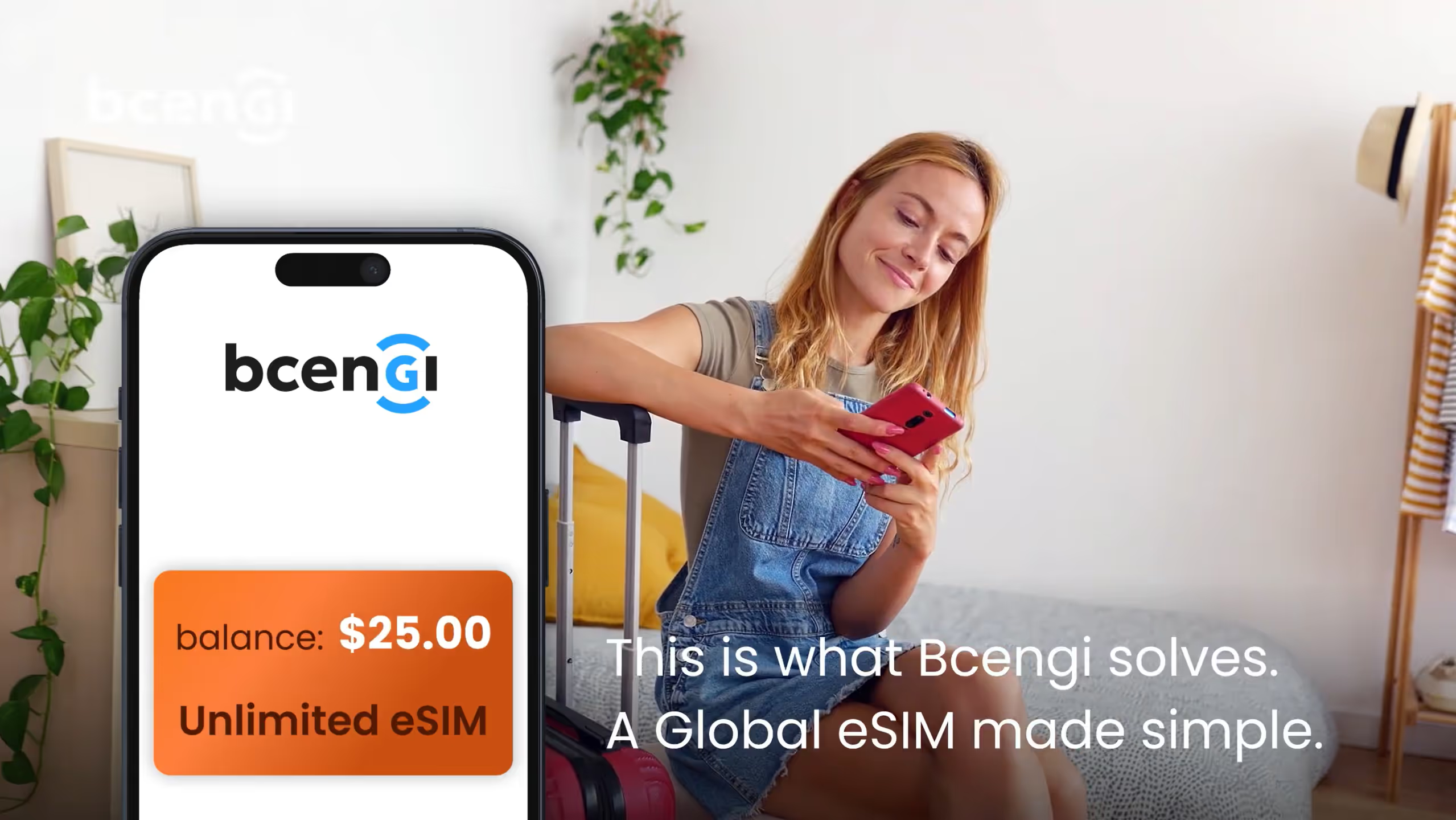
Install once, keep it on your phone.

Pay as you go, for actual use.

No fixed plans, no expiration.

Use balance only when you travel.

One eSIM for all trips, 200+ Countries.
Pay As You Go data, wherever you travel
💵 You add
$25
to your balance.
✈️ In
Singapore
you use
3GB
at
$
1.54
/GB
.
🌍
Australia
3 months later -
3GB at $
1.58
/GB.
🔥 Your same balance covers both trips -
one eSIM, no expiry, no wasted data, no new package.
Just $
1.54
per GB. No surprises, No bundles, No expiry.

Light Usage
~200 MB/day
$
0.00
/day
Maps, messaging, browsing

Moderate
~500 MB/day
$
0.00
/day

Heavy
~2 GB/day
$
0.00
/day
Streaming, uploads, video calls
Downtown Core: Expect exceptional 4G and 5G coverage across the central business district, Marina Bay, and the Orchard Road shopping belt. Indoor signal is very strong in malls and hotels. Singapore's MRT (Mass Rapid Transit) system is a standout, providing continuous, reliable cellular service on station platforms and even while travelling through underground tunnels.
Sentosa Island: This popular resort island has excellent network coverage across its main attractions, including Universal Studios Singapore, the beaches, and major hotels. You might experience slightly weaker signals on some of the more secluded nature trails or on the cable car line between stations, but core tourist areas are very well-served.
Jurong East: As a major commercial and transport hub in the west, Jurong East provides robust and fast connectivity. Signal is strong in the large shopping centres like JEM and Westgate. While coverage is broadly excellent, deep basement levels of some older buildings may have slightly reduced signal strength compared to the newer developments.
Changi: Connectivity is world-class within the entire Changi Airport complex, including all terminals and the Jewel. The network is built to handle massive user density, ensuring stable connections upon arrival. This strong coverage extends to the surrounding Changi Business Park and residential zones.
Woodlands: This northern regional centre bordering Malaysia has very reliable network performance. Coverage is particularly strong around the Woodlands MRT station, Causeway Point shopping mall, and the Woodlands Checkpoint, ensuring a stable connection for those transiting to or from Malaysia.
Singapore Expressways (PIE, AYE, CTE): Mobile coverage is continuous and strong across nearly all of Singapore's expressway network. You can expect a reliable connection for navigation and streaming while driving. The only exceptions are brief signal handovers or slight degradation when entering long underground sections like the Kallang-Paya Lebar Expressway (KPE).
Mass Rapid Transit (MRT) System: All above-ground MRT lines and stations offer excellent, uninterrupted mobile signal. On underground lines, such as the Downtown Line or Circle Line, stations are fully equipped with cellular and Wi-Fi access, but signal can sometimes weaken or drop for a few moments in the tunnels between stations.
Underground Road Tunnels (KPE, MCE): Singapore's major road tunnels, like the Marina Coastal Expressway and Kallang-Paya Lebar Expressway, are fitted with cellular repeaters. However, signal strength can be lower than above ground, and data-intensive tasks may experience brief interruptions during transit through the longest sections.
Nature Reserves and Parks: While Singapore is highly urbanized, signal strength can dip in the dense foliage of nature reserves like the Central Catchment or Sungei Buloh Wetland Reserve. Coverage is generally available but may be less reliable for high-speed data compared to the city center.
Offshore Islands: Connectivity on Singapore's main island is superb, but signal on smaller offshore islands like Pulau Ubin or the Southern Islands (St. John's Island, Kusu Island) can be inconsistent. You will typically have a usable signal near the jetties, but it may become weak or unavailable in more remote parts of these islands.
How it works
Buy eSIM
Sign up and get your Global eSIM in just a few clicks.

Activate eSIM
Scan the QR code and get connected instantly — no physical SIM needed.

Pay as you go
Only pay for what you use. No contracts, no hidden fees.

Get your eSIM
“
I loved the per-country pricing model. I only paid for the countries I visited, and it was way cheaper than other eSIM providers. No hidden fees — just clear and simple.
“
The auto top-up feature is a lifesaver. I never have to check my balance — internet just works. And when I’m not traveling, I don’t pay. It’s fair and super convenient.


Angel Siphron
Rated
4.7


Through Bcengi TravelPass, data on the StarHub network is priced at $1.54 per GB. This service has no daily charges, fixed bundles, or expiration. You are only charged for your actual usage.
No. The eSIM integrates with your existing SIM card. Your original phone number will continue to function for calls and SMS, with the eSIM managing your cellular data connection. No hardware alterations are needed.
Yes, assuming your smartphone supports eSIM technology. Compatible models include iPhone XS and subsequent versions, Google Pixel 3 and newer, and Samsung Galaxy S20 and later. If you're uncertain, please refer to the complete compatibility list.
Yes. Singapore's StarHub network ensures comprehensive coverage throughout the entire island, encompassing underground MRT stations, retail complexes, Changi Airport, Sentosa, and all residential and visitor districts. There are no noteworthy areas without service.
The majority of travelers utilize 300-800 MB over a three-day period, particularly when hotel and venue WiFi is accessible. Plan for a $5 TravelPass balance for light-to-moderate data needs; allocate $10-15 if you intend extensive use of Grab or will primarily rely on cellular data. Any remaining balance will be available for your next journey.
WiFi connections in hotels and shopping malls are typically robust. However, the free public Wireless@SG network demands registration through Singpass or a local phone number, neither of which most tourists possess. For services such as Grab, navigating outdoors, and general transit within the city, mobile data proves more dependable than relying on public WiFi options.
Yes. Sentosa enjoys full coverage from StarHub. Strong 4G/5G signals are available at Universal Studios, the resort hotels, the cable car, and the beaches. No specific additional arrangements are required.
TravelPass functions in both Malaysia and Singapore. For those taking a day trip to Johor Bahru or continuing on to Kuala Lumpur, your existing balance will transfer, and the eSIM will seamlessly switch to the appropriate local network. Please visit the Malaysia eSIM page for specific rates and operators within Malaysia.
Yes. Full coverage is provided across above-ground MRT sections and stations. Underground platforms on more recent lines (Circle, Downtown, Thomson-East Coast) also feature in-station coverage. Minor, temporary signal disruptions are a possibility in some older underground tunnel portions, though these are rare.

$
1.54
/GB

Instant delivery

No expiry

24/7 support

Secure checkout

Pay As You Go
from
$
1.54
/GB
$10
POPULAR
$25
$50
$100
Select your starting balance
Get your eSIM
→

Secure Payments |
Powered by

Rated
4.7


💵 You add
$25
to your balance.
✈️ In
Singapore
you use
3GB
at
$
1.54
/GB
.
🌍
Australia
3 months later -
3GB at $
1.58
/GB.
🔥 Your same balance covers both trips — one eSIM, no expiry, no wasted data, no new package.
How it works


Install once, keep it on your phone

Use balance only when you travel

Pay as you go, for actual use.

No fixed plans, no expiration

One eSIM for all trips, 200+ Countries.
Learn more
Just $
1.54
per GB.
No surprises, No bundles, No expiry.

Light Usage •
200 MB/day
$
0.00
/day
Maps, messaging, browsing

Moderate •
500 MB/day
$
0.00
/day

Heavy •
2 GB/day
$
0.00
/day
Streaming, uploads, video calls
Downtown Core: Expect exceptional 4G and 5G coverage across the central business district, Marina Bay, and the Orchard Road shopping belt. Indoor signal is very strong in malls and hotels. Singapore's MRT (Mass Rapid Transit) system is a standout, providing continuous, reliable cellular service on station platforms and even while travelling through underground tunnels.
Sentosa Island: This popular resort island has excellent network coverage across its main attractions, including Universal Studios Singapore, the beaches, and major hotels. You might experience slightly weaker signals on some of the more secluded nature trails or on the cable car line between stations, but core tourist areas are very well-served.
Jurong East: As a major commercial and transport hub in the west, Jurong East provides robust and fast connectivity. Signal is strong in the large shopping centres like JEM and Westgate. While coverage is broadly excellent, deep basement levels of some older buildings may have slightly reduced signal strength compared to the newer developments.
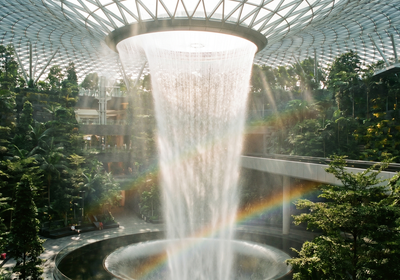
Changi: Connectivity is world-class within the entire Changi Airport complex, including all terminals and the Jewel. The network is built to handle massive user density, ensuring stable connections upon arrival. This strong coverage extends to the surrounding Changi Business Park and residential zones.
Woodlands: This northern regional centre bordering Malaysia has very reliable network performance. Coverage is particularly strong around the Woodlands MRT station, Causeway Point shopping mall, and the Woodlands Checkpoint, ensuring a stable connection for those transiting to or from Malaysia.
Singapore Expressways (PIE, AYE, CTE): Mobile coverage is continuous and strong across nearly all of Singapore's expressway network. You can expect a reliable connection for navigation and streaming while driving. The only exceptions are brief signal handovers or slight degradation when entering long underground sections like the Kallang-Paya Lebar Expressway (KPE).
Mass Rapid Transit (MRT) System: All above-ground MRT lines and stations offer excellent, uninterrupted mobile signal. On underground lines, such as the Downtown Line or Circle Line, stations are fully equipped with cellular and Wi-Fi access, but signal can sometimes weaken or drop for a few moments in the tunnels between stations.
Underground Road Tunnels (KPE, MCE): Singapore's major road tunnels, like the Marina Coastal Expressway and Kallang-Paya Lebar Expressway, are fitted with cellular repeaters. However, signal strength can be lower than above ground, and data-intensive tasks may experience brief interruptions during transit through the longest sections.
Nature Reserves and Parks: While Singapore is highly urbanized, signal strength can dip in the dense foliage of nature reserves like the Central Catchment or Sungei Buloh Wetland Reserve. Coverage is generally available but may be less reliable for high-speed data compared to the city center.
Offshore Islands: Connectivity on Singapore's main island is superb, but signal on smaller offshore islands like Pulau Ubin or the Southern Islands (St. John's Island, Kusu Island) can be inconsistent. You will typically have a usable signal near the jetties, but it may become weak or unavailable in more remote parts of these islands.
Learn more about
Singapore
How it works

1. Buy eSIM
Sign up and get your Global eSIM in just a few clicks.

2. Activate eSIM
Scan the QR code and get connected instantly — no physical SIM needed.

3. Pay as you go
Only pay for what you use. No contracts, no hidden fees.
Get your eSIM
Rated
4.7
“
I loved the per-country pricing model. I only paid for the countries I visited, and it was way cheaper than other eSIM providers. No hidden fees — just clear and simple.


Kaylynn Mango


Through Bcengi TravelPass, data on the StarHub network is priced at $1.54 per GB. This service has no daily charges, fixed bundles, or expiration. You are only charged for your actual usage.
No. The eSIM integrates with your existing SIM card. Your original phone number will continue to function for calls and SMS, with the eSIM managing your cellular data connection. No hardware alterations are needed.
Yes, assuming your smartphone supports eSIM technology. Compatible models include iPhone XS and subsequent versions, Google Pixel 3 and newer, and Samsung Galaxy S20 and later. If you're uncertain, please refer to the complete compatibility list.
Yes. Singapore's StarHub network ensures comprehensive coverage throughout the entire island, encompassing underground MRT stations, retail complexes, Changi Airport, Sentosa, and all residential and visitor districts. There are no noteworthy areas without service.
The majority of travelers utilize 300-800 MB over a three-day period, particularly when hotel and venue WiFi is accessible. Plan for a $5 TravelPass balance for light-to-moderate data needs; allocate $10-15 if you intend extensive use of Grab or will primarily rely on cellular data. Any remaining balance will be available for your next journey.
WiFi connections in hotels and shopping malls are typically robust. However, the free public Wireless@SG network demands registration through Singpass or a local phone number, neither of which most tourists possess. For services such as Grab, navigating outdoors, and general transit within the city, mobile data proves more dependable than relying on public WiFi options.
Yes. Sentosa enjoys full coverage from StarHub. Strong 4G/5G signals are available at Universal Studios, the resort hotels, the cable car, and the beaches. No specific additional arrangements are required.
TravelPass functions in both Malaysia and Singapore. For those taking a day trip to Johor Bahru or continuing on to Kuala Lumpur, your existing balance will transfer, and the eSIM will seamlessly switch to the appropriate local network. Please visit the Malaysia eSIM page for specific rates and operators within Malaysia.
Yes. Full coverage is provided across above-ground MRT sections and stations. Underground platforms on more recent lines (Circle, Downtown, Thomson-East Coast) also feature in-station coverage. Minor, temporary signal disruptions are a possibility in some older underground tunnel portions, though these are rare.
$
1.54
/GB
Instant delivery

No expiry
24/7 support
Secure checkout

Bcengi TravelPass keeps you connected worldwide with one reusable eSIM - no expirations, no wasted data.


Settings
English

USD


Bcengi TravelPass keeps you connected worldwide with one reusable eSIM - no expirations, no wasted data.



Secure Payments | Powered by