
Personal Travel
Personal Travel



Sudan

zain SD
Pay As You Go
from
$
25.32
/GB
$10
POPULAR
$25
$50
$100
Select your starting balance
Get your eSIM
→

Your payment is fully secured |
Powered by

Rated
4.7


Install once, keep it on your phone.

Pay as you go, for actual use.

No fixed plans, no expiration.

Use balance only when you travel.

One eSIM for all trips, 200+ Countries.
Pay As You Go data, wherever you travel
💵 You add
$25
to your balance.
✈️ In
Sudan
you use
3GB
at
$
25.32
/GB
.
🌍
Turkey
3 months later -
3GB at $
1.54
/GB.
🔥 Your same balance covers both trips -
one eSIM, no expiry, no wasted data, no new package.
Just $
25.32
per GB. No surprises, No bundles, No expiry.

Light Usage
~200 MB/day
$
0.00
/day
Maps, messaging, browsing

Moderate
~500 MB/day
$
0.00
/day

Heavy
~2 GB/day
$
0.00
/day
Streaming, uploads, video calls
Khartoum: As the capital and a center of ongoing conflict, mobile connectivity is extremely unstable and subject to frequent, prolonged outages. While 4G infrastructure exists in central districts, service is highly unpredictable. Expect intermittent signals for calls and data even in previously well-covered areas. Indoor coverage within dense concrete buildings is particularly challenging.
Omdurman: Part of the Khartoum metropolitan area, Omdurman faces similar severe connectivity challenges. The network is heavily impacted by the conflict, with infrastructure damage leading to unreliable service. In bustling areas like the main souk (market), any available signal may be heavily congested and intermittent. Stable data connections are not guaranteed.
Port Sudan: As the country's primary port on the Red Sea, connectivity here is generally more stable than in the capital region. You can expect more reliable 3G and 4G coverage in the city center and around the port area. However, the network can experience congestion due to the increased population. Signal strength may weaken in residential areas further from the city core and inside older buildings.
Kassala: Located in eastern Sudan, Kassala generally offers more consistent mobile service than the conflict-affected central region. The city center has fair 3G and basic 4G coverage, suitable for messaging and light browsing. However, the signal can become significantly weaker on the city's outskirts and is often limited near natural landmarks like the Taka Mountains.


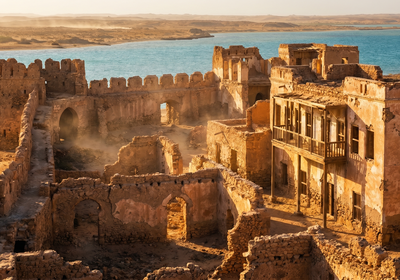
Major Highways: Connectivity is concentrated around urban centers. Along the main A1 highway connecting Khartoum, Atbara, and Port Sudan, you can expect a signal near towns, but there are extensive dead zones for many kilometers while crossing the desert plains. Similarly, roads south towards Kosti and El-Obeid have inconsistent service outside of populated areas.
Sudan Railways Network: Mobile coverage on intercity trains is extremely limited. Service is generally only available when passing through or stopped at major towns and cities along the route, such as Atbara or Wad Madani. Expect to be completely without a signal for the vast majority of long-distance journeys, especially through the Nubian Desert.
Red Sea Hills and Jebel Marra: Traveling through mountainous terrain results in significant signal loss. The Red Sea Hills region, between the coast and the Nile Valley, has very poor and patchy coverage. In the western region of Darfur, the Jebel Marra mountain range is a remote area with virtually no reliable network service available.
Desert Regions: Vast areas of Sudan, including the Nubian Desert in the northeast and the Bayuda Desert west of the Nile, lack cellular infrastructure. When traveling overland through these regions, do not expect any mobile signal for hundreds of kilometers at a time. Service is typically only found in the few oases or towns scattered throughout the desert.
How it works
Buy eSIM
Sign up and get your Global eSIM in just a few clicks.

Activate eSIM
Scan the QR code and get connected instantly — no physical SIM needed.

Pay as you go
Only pay for what you use. No contracts, no hidden fees.

Get your eSIM
“
I loved the per-country pricing model. I only paid for the countries I visited, and it was way cheaper than other eSIM providers. No hidden fees — just clear and simple.
“
The auto top-up feature is a lifesaver. I never have to check my balance — internet just works. And when I’m not traveling, I don’t pay. It’s fair and super convenient.


Angel Siphron
Rated
4.7


On zain SD networks, Bcengi's rate is $25.32 per gigabyte. You are billed solely for the data consumed, without any required packages or minimum expenditure.
No, Bcengi operates concurrently with your current SIM, thanks to dual-SIM functionality. You can continue to use your standard SIM for making calls and sending texts.
Absolutely, provided your device supports eSIM (this applies to the majority of phones manufactured from 2019 onward). You can verify device compatibility at bcengi.com/travelpass/esim-compatibility.
Signal availability relies on the zain SD network's infrastructure. Robust coverage is generally found in prominent cities and popular tourist destinations. Conversely, isolated regions might experience restricted signal.
The majority of visitors consume between 500 MB and 2 GB daily. For a typical week, the cost would be around $88.62, utilizing pay-as-you-go rates.
Yes, a single Bcengi eSIM is operational in over 200 countries. Your remaining balance transfers, eliminating the requirement to purchase a separate eSIM for every new place you visit.
You have the option to add funds whenever needed at travel.bcengi.com, or activate the auto-refill feature to ensure your balance remains continuously active.
No, your Bcengi balance retains its validity indefinitely, regardless of whether you access it in the near future or much later.

$
25.32
/GB

Instant delivery

No expiry

24/7 support

Secure checkout

Pay As You Go
from
$
25.32
/GB
$10
POPULAR
$25
$50
$100
Select your starting balance
Get your eSIM
→

Secure Payments |
Powered by

Rated
4.7


💵 You add
$25
to your balance.
✈️ In
Sudan
you use
3GB
at
$
25.32
/GB
.
🌍
Turkey
3 months later -
3GB at $
1.54
/GB.
🔥 Your same balance covers both trips — one eSIM, no expiry, no wasted data, no new package.
How it works


Install once, keep it on your phone

Use balance only when you travel

Pay as you go, for actual use.

No fixed plans, no expiration

One eSIM for all trips, 200+ Countries.
Learn more
Just $
25.32
per GB.
No surprises, No bundles, No expiry.

Light Usage •
200 MB/day
$
0.00
/day
Maps, messaging, browsing

Moderate •
500 MB/day
$
0.00
/day

Heavy •
2 GB/day
$
0.00
/day
Streaming, uploads, video calls
Khartoum: As the capital and a center of ongoing conflict, mobile connectivity is extremely unstable and subject to frequent, prolonged outages. While 4G infrastructure exists in central districts, service is highly unpredictable. Expect intermittent signals for calls and data even in previously well-covered areas. Indoor coverage within dense concrete buildings is particularly challenging.
Omdurman: Part of the Khartoum metropolitan area, Omdurman faces similar severe connectivity challenges. The network is heavily impacted by the conflict, with infrastructure damage leading to unreliable service. In bustling areas like the main souk (market), any available signal may be heavily congested and intermittent. Stable data connections are not guaranteed.
Port Sudan: As the country's primary port on the Red Sea, connectivity here is generally more stable than in the capital region. You can expect more reliable 3G and 4G coverage in the city center and around the port area. However, the network can experience congestion due to the increased population. Signal strength may weaken in residential areas further from the city core and inside older buildings.
Kassala: Located in eastern Sudan, Kassala generally offers more consistent mobile service than the conflict-affected central region. The city center has fair 3G and basic 4G coverage, suitable for messaging and light browsing. However, the signal can become significantly weaker on the city's outskirts and is often limited near natural landmarks like the Taka Mountains.
Major Highways: Connectivity is concentrated around urban centers. Along the main A1 highway connecting Khartoum, Atbara, and Port Sudan, you can expect a signal near towns, but there are extensive dead zones for many kilometers while crossing the desert plains. Similarly, roads south towards Kosti and El-Obeid have inconsistent service outside of populated areas.
Sudan Railways Network: Mobile coverage on intercity trains is extremely limited. Service is generally only available when passing through or stopped at major towns and cities along the route, such as Atbara or Wad Madani. Expect to be completely without a signal for the vast majority of long-distance journeys, especially through the Nubian Desert.
Red Sea Hills and Jebel Marra: Traveling through mountainous terrain results in significant signal loss. The Red Sea Hills region, between the coast and the Nile Valley, has very poor and patchy coverage. In the western region of Darfur, the Jebel Marra mountain range is a remote area with virtually no reliable network service available.
Desert Regions: Vast areas of Sudan, including the Nubian Desert in the northeast and the Bayuda Desert west of the Nile, lack cellular infrastructure. When traveling overland through these regions, do not expect any mobile signal for hundreds of kilometers at a time. Service is typically only found in the few oases or towns scattered throughout the desert.
Learn more about
Sudan
How it works

1. Buy eSIM
Sign up and get your Global eSIM in just a few clicks.

2. Activate eSIM
Scan the QR code and get connected instantly — no physical SIM needed.

3. Pay as you go
Only pay for what you use. No contracts, no hidden fees.
Get your eSIM
Rated
4.7
“
I loved the per-country pricing model. I only paid for the countries I visited, and it was way cheaper than other eSIM providers. No hidden fees — just clear and simple.


Kaylynn Mango


On zain SD networks, Bcengi's rate is $25.32 per gigabyte. You are billed solely for the data consumed, without any required packages or minimum expenditure.
No, Bcengi operates concurrently with your current SIM, thanks to dual-SIM functionality. You can continue to use your standard SIM for making calls and sending texts.
Absolutely, provided your device supports eSIM (this applies to the majority of phones manufactured from 2019 onward). You can verify device compatibility at bcengi.com/travelpass/esim-compatibility.
Signal availability relies on the zain SD network's infrastructure. Robust coverage is generally found in prominent cities and popular tourist destinations. Conversely, isolated regions might experience restricted signal.
The majority of visitors consume between 500 MB and 2 GB daily. For a typical week, the cost would be around $88.62, utilizing pay-as-you-go rates.
Yes, a single Bcengi eSIM is operational in over 200 countries. Your remaining balance transfers, eliminating the requirement to purchase a separate eSIM for every new place you visit.
You have the option to add funds whenever needed at travel.bcengi.com, or activate the auto-refill feature to ensure your balance remains continuously active.
No, your Bcengi balance retains its validity indefinitely, regardless of whether you access it in the near future or much later.
$
25.32
/GB
Instant delivery

No expiry
24/7 support
Secure checkout

Bcengi TravelPass keeps you connected worldwide with one reusable eSIM - no expirations, no wasted data.


Settings
English

USD


Bcengi TravelPass keeps you connected worldwide with one reusable eSIM - no expirations, no wasted data.



Secure Payments | Powered by