

Personal Travel
Personal Travel

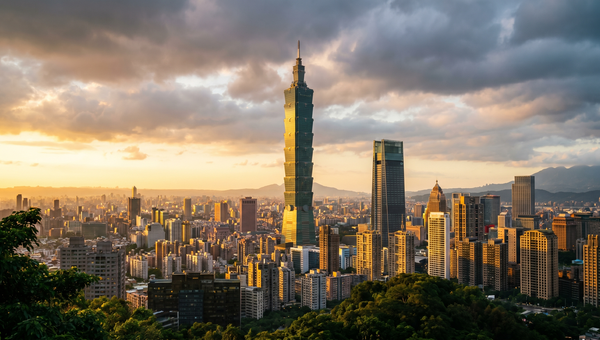

Taiwan

Taiwan Mobile
Pay As You Go
from
$
1.81
/GB
$10
POPULAR
$25
$50
$100
Select your starting balance
Get your eSIM
→

Your payment is fully secured |
Powered by

Rated
4.7


Install once, keep it on your phone.

Pay as you go, for actual use.

No fixed plans, no expiration.

Use balance only when you travel.

One eSIM for all trips, 200+ Countries.
Pay As You Go data, wherever you travel
💵 You add
$25
to your balance.
✈️ In
Taiwan
you use
3GB
at
$
1.81
/GB
.
🌍
Thailand
3 months later -
3GB at $
1.81
/GB.
🔥 Your same balance covers both trips -
one eSIM, no expiry, no wasted data, no new package.
Just $
1.81
per GB. No surprises, No bundles, No expiry.

Light Usage
~200 MB/day
$
0.00
/day
Maps, messaging, browsing

Moderate
~500 MB/day
$
0.00
/day

Heavy
~2 GB/day
$
0.00
/day
Streaming, uploads, video calls
Taipei: Excellent 4G and 5G coverage across all major districts like Xinyi and Da'an. The Taipei Metro (MRT) is a standout, offering continuous, reliable connectivity on platforms and even while moving through underground tunnels. Indoor signal in malls and offices is strong, though some deeper basement levels may have weaker reception.
Kaohsiung: Strong and consistent connectivity throughout Taiwan's southern metropolis, from the bustling port to the city center. The Kaohsiung MRT (KMRT) provides reliable service in its underground stations and tunnels, ensuring you stay connected on the go. Areas like the Pier-2 Art Center and major night markets are very well-covered.
Taichung: Enjoy robust 4G and 5G service across central Taiwan's main hub. As the Taichung Metro is primarily elevated, you can expect an uninterrupted signal while traveling. Coverage is excellent in popular areas like the Feng Chia Night Market, though dense concrete buildings may occasionally reduce indoor signal strength.
Tainan: Reliable coverage throughout Taiwan's historic former capital. While Tainan has no metro system, street-level connectivity is strong in tourist-heavy areas like the Anping District and around the Chimei Museum. You may notice slightly weaker signals when navigating the narrow, traditional alleyways in older parts of the city.
Hualien: The city of Hualien itself offers solid network performance for planning your east coast adventures. However, be aware that while traveling into the mountains, such as within Taroko National Park, mobile signal can become patchy or completely unavailable in deep gorges and more remote hiking trails.



National Highways & Expressways: Major western corridors like National Highway 1 and National Highway 3 maintain excellent and continuous 4G/5G coverage between all major cities from Taipei to Kaohsiung. In contrast, mountainous routes like the Central Cross-Island Highway (Provincial Highway 8) and parts of the South Cross-Island Highway (Provincial Highway 20) have extensive dead zones where signal is completely unavailable.
Taiwan High Speed Rail (THSR): The high-speed train running down the west coast offers very reliable connectivity. Service is strong inside the trains, but you may experience brief, intermittent drops when passing through the numerous tunnels at high speed. The conventional Taiwan Railways (TRA) network also has good coverage, though the eastern Hualien-Taitung line can have weaker signal in more rural sections.
Central Mountain Range: Any travel deep into Taiwan's interior mountains will lead to significant loss of service. Popular areas such as Alishan National Scenic Area, Yushan National Park, and remote parts of Taroko Gorge have very limited to no mobile signal outside of main visitor centers and small villages. Do not expect reliable connectivity while hiking or driving on mountain passes like Hehuanshan.
Tunnels & Bridges: Modern, long tunnels on the national highway system, like the Hsuehshan Tunnel on Highway 5 connecting Taipei to Yilan, are equipped with cellular systems providing uninterrupted service. However, many shorter and older tunnels found on provincial highways and the TRA rail lines, particularly on the east coast, will cause a temporary loss of signal.
East Coast Corridor: While cities and towns along the scenic east coast (e.g., Hualien, Taitung) have strong network coverage, the signal can become patchy or drop out completely on stretches of Provincial Highway 11 and Provincial Highway 9 that run through less populated coastal and valley regions between these urban centers.
How it works
Buy eSIM
Sign up and get your Global eSIM in just a few clicks.

Activate eSIM
Scan the QR code and get connected instantly — no physical SIM needed.

Pay as you go
Only pay for what you use. No contracts, no hidden fees.

Get your eSIM
“
I loved the per-country pricing model. I only paid for the countries I visited, and it was way cheaper than other eSIM providers. No hidden fees — just clear and simple.
“
The auto top-up feature is a lifesaver. I never have to check my balance — internet just works. And when I’m not traveling, I don’t pay. It’s fair and super convenient.


Angel Siphron
Rated
4.7


TravelPass costs $1.81 per gigabyte when operating on the Taiwan Mobile network. Daily fees, bundles, and expiration dates are not part of the plan; you are only charged for data consumed, with billing occurring per megabyte.
No, it is not necessary. TravelPass functions as an additional line on your mobile device. Your existing physical SIM remains active for voice calls and messages, with TravelPass managing data services within Taiwan.
Indeed, if your device supports eSIM technology. Models such as the iPhone XS and subsequent versions, Google Pixel 3 and its successors, and Samsung Galaxy S20 and newer models offer eSIM functionality. Refer to the compatibility page for a comprehensive list of supported devices.
The Taiwan Mobile network provides robust coverage throughout western Taiwan and its principal urban centers. However, signal strength is restricted within areas like Taroko Gorge, the interior of the Central Mountain Range, and along parts of the eastern coastal railway link connecting Hualien and Taitung. It is advisable to download maps for these regions for offline use prior to your journey.
Typically, travelers consume between 2 and 4 GB of data during a seven-day trip. Days spent in mountainous or gorge regions often reduce this average considerably, as signal availability is inherently scarce in such locations. A 3 GB allowance is a good starting point, which you can modify according to your specific data consumption habits.
Coverage is partial. Signal is available in the town of Hualien and at the entrance to the gorge, yet the canyon's deeper sections - including Swallow Grotto, the Tunnel of Nine Turns, and Tiansiang - experience weak or no service. This limitation affects all mobile operators, as the challenging terrain itself obstructs network signals irrespective of your chosen provider. Ensure you download offline maps, for example through Google Maps, before venturing into the park.
Typically, yes. The Taiwan High Speed Rail line traverses the extensively covered western region, providing signal availability for the predominant part of the ride. Although brief interruptions may occur in tunnels, the 90-minute route between Taipei and Kaohsiung offers functional connectivity for most of its duration.
LINE serves as the predominant messaging application in Taiwan, enjoying greater usage among residents than platforms like WhatsApp or iMessage. For interactions with guesthouses, reserving tour guides, or liaising with Taiwanese individuals, LINE is the generally anticipated communication method. It is advisable to install it prior to your visit.
Signal coverage is inconsistent. The South Link Railway travels through isolated mountainous areas where network signal is frequently lost for significant durations. Prepare by downloading your journey maps offline and anticipate a trip with restricted connectivity. Despite this, it remains one of Taiwan's most picturesque train routes, with the scenery offsetting any signal deficiencies.
Affirmative. TravelPass is operational throughout East Asia. Your remaining data balance transfers across different nations; therefore, if your itinerary includes a Taiwan-Japan journey (or extends to South Korea), you will utilize the identical account and eSIM. Pricing differs by country; consult the pricing page to ascertain rates for Japan and South Korea prior to your departure.

$
1.81
/GB

Instant delivery

No expiry

24/7 support

Secure checkout

Pay As You Go
from
$
1.81
/GB
$10
POPULAR
$25
$50
$100
Select your starting balance
Get your eSIM
→

Secure Payments |
Powered by

Rated
4.7


💵 You add
$25
to your balance.
✈️ In
Taiwan
you use
3GB
at
$
1.81
/GB
.
🌍
Thailand
3 months later -
3GB at $
1.81
/GB.
🔥 Your same balance covers both trips — one eSIM, no expiry, no wasted data, no new package.
How it works


Install once, keep it on your phone

Use balance only when you travel

Pay as you go, for actual use.

No fixed plans, no expiration

One eSIM for all trips, 200+ Countries.
Learn more
Just $
1.81
per GB.
No surprises, No bundles, No expiry.

Light Usage •
200 MB/day
$
0.00
/day
Maps, messaging, browsing

Moderate •
500 MB/day
$
0.00
/day

Heavy •
2 GB/day
$
0.00
/day
Streaming, uploads, video calls
Taipei: Excellent 4G and 5G coverage across all major districts like Xinyi and Da'an. The Taipei Metro (MRT) is a standout, offering continuous, reliable connectivity on platforms and even while moving through underground tunnels. Indoor signal in malls and offices is strong, though some deeper basement levels may have weaker reception.
Kaohsiung: Strong and consistent connectivity throughout Taiwan's southern metropolis, from the bustling port to the city center. The Kaohsiung MRT (KMRT) provides reliable service in its underground stations and tunnels, ensuring you stay connected on the go. Areas like the Pier-2 Art Center and major night markets are very well-covered.
Taichung: Enjoy robust 4G and 5G service across central Taiwan's main hub. As the Taichung Metro is primarily elevated, you can expect an uninterrupted signal while traveling. Coverage is excellent in popular areas like the Feng Chia Night Market, though dense concrete buildings may occasionally reduce indoor signal strength.
Tainan: Reliable coverage throughout Taiwan's historic former capital. While Tainan has no metro system, street-level connectivity is strong in tourist-heavy areas like the Anping District and around the Chimei Museum. You may notice slightly weaker signals when navigating the narrow, traditional alleyways in older parts of the city.
Hualien: The city of Hualien itself offers solid network performance for planning your east coast adventures. However, be aware that while traveling into the mountains, such as within Taroko National Park, mobile signal can become patchy or completely unavailable in deep gorges and more remote hiking trails.
National Highways & Expressways: Major western corridors like National Highway 1 and National Highway 3 maintain excellent and continuous 4G/5G coverage between all major cities from Taipei to Kaohsiung. In contrast, mountainous routes like the Central Cross-Island Highway (Provincial Highway 8) and parts of the South Cross-Island Highway (Provincial Highway 20) have extensive dead zones where signal is completely unavailable.
Taiwan High Speed Rail (THSR): The high-speed train running down the west coast offers very reliable connectivity. Service is strong inside the trains, but you may experience brief, intermittent drops when passing through the numerous tunnels at high speed. The conventional Taiwan Railways (TRA) network also has good coverage, though the eastern Hualien-Taitung line can have weaker signal in more rural sections.
Central Mountain Range: Any travel deep into Taiwan's interior mountains will lead to significant loss of service. Popular areas such as Alishan National Scenic Area, Yushan National Park, and remote parts of Taroko Gorge have very limited to no mobile signal outside of main visitor centers and small villages. Do not expect reliable connectivity while hiking or driving on mountain passes like Hehuanshan.
Tunnels & Bridges: Modern, long tunnels on the national highway system, like the Hsuehshan Tunnel on Highway 5 connecting Taipei to Yilan, are equipped with cellular systems providing uninterrupted service. However, many shorter and older tunnels found on provincial highways and the TRA rail lines, particularly on the east coast, will cause a temporary loss of signal.
East Coast Corridor: While cities and towns along the scenic east coast (e.g., Hualien, Taitung) have strong network coverage, the signal can become patchy or drop out completely on stretches of Provincial Highway 11 and Provincial Highway 9 that run through less populated coastal and valley regions between these urban centers.
Learn more about
Taiwan
How it works

1. Buy eSIM
Sign up and get your Global eSIM in just a few clicks.

2. Activate eSIM
Scan the QR code and get connected instantly — no physical SIM needed.

3. Pay as you go
Only pay for what you use. No contracts, no hidden fees.
Get your eSIM
Rated
4.7
“
I loved the per-country pricing model. I only paid for the countries I visited, and it was way cheaper than other eSIM providers. No hidden fees — just clear and simple.


Kaylynn Mango


TravelPass costs $1.81 per gigabyte when operating on the Taiwan Mobile network. Daily fees, bundles, and expiration dates are not part of the plan; you are only charged for data consumed, with billing occurring per megabyte.
No, it is not necessary. TravelPass functions as an additional line on your mobile device. Your existing physical SIM remains active for voice calls and messages, with TravelPass managing data services within Taiwan.
Indeed, if your device supports eSIM technology. Models such as the iPhone XS and subsequent versions, Google Pixel 3 and its successors, and Samsung Galaxy S20 and newer models offer eSIM functionality. Refer to the compatibility page for a comprehensive list of supported devices.
The Taiwan Mobile network provides robust coverage throughout western Taiwan and its principal urban centers. However, signal strength is restricted within areas like Taroko Gorge, the interior of the Central Mountain Range, and along parts of the eastern coastal railway link connecting Hualien and Taitung. It is advisable to download maps for these regions for offline use prior to your journey.
Typically, travelers consume between 2 and 4 GB of data during a seven-day trip. Days spent in mountainous or gorge regions often reduce this average considerably, as signal availability is inherently scarce in such locations. A 3 GB allowance is a good starting point, which you can modify according to your specific data consumption habits.
Coverage is partial. Signal is available in the town of Hualien and at the entrance to the gorge, yet the canyon's deeper sections - including Swallow Grotto, the Tunnel of Nine Turns, and Tiansiang - experience weak or no service. This limitation affects all mobile operators, as the challenging terrain itself obstructs network signals irrespective of your chosen provider. Ensure you download offline maps, for example through Google Maps, before venturing into the park.
Typically, yes. The Taiwan High Speed Rail line traverses the extensively covered western region, providing signal availability for the predominant part of the ride. Although brief interruptions may occur in tunnels, the 90-minute route between Taipei and Kaohsiung offers functional connectivity for most of its duration.
LINE serves as the predominant messaging application in Taiwan, enjoying greater usage among residents than platforms like WhatsApp or iMessage. For interactions with guesthouses, reserving tour guides, or liaising with Taiwanese individuals, LINE is the generally anticipated communication method. It is advisable to install it prior to your visit.
Signal coverage is inconsistent. The South Link Railway travels through isolated mountainous areas where network signal is frequently lost for significant durations. Prepare by downloading your journey maps offline and anticipate a trip with restricted connectivity. Despite this, it remains one of Taiwan's most picturesque train routes, with the scenery offsetting any signal deficiencies.
Affirmative. TravelPass is operational throughout East Asia. Your remaining data balance transfers across different nations; therefore, if your itinerary includes a Taiwan-Japan journey (or extends to South Korea), you will utilize the identical account and eSIM. Pricing differs by country; consult the pricing page to ascertain rates for Japan and South Korea prior to your departure.
$
1.81
/GB
Instant delivery

No expiry
24/7 support
Secure checkout

Bcengi TravelPass keeps you connected worldwide with one reusable eSIM - no expirations, no wasted data.


Settings
English

USD


Bcengi TravelPass keeps you connected worldwide with one reusable eSIM - no expirations, no wasted data.



Secure Payments | Powered by